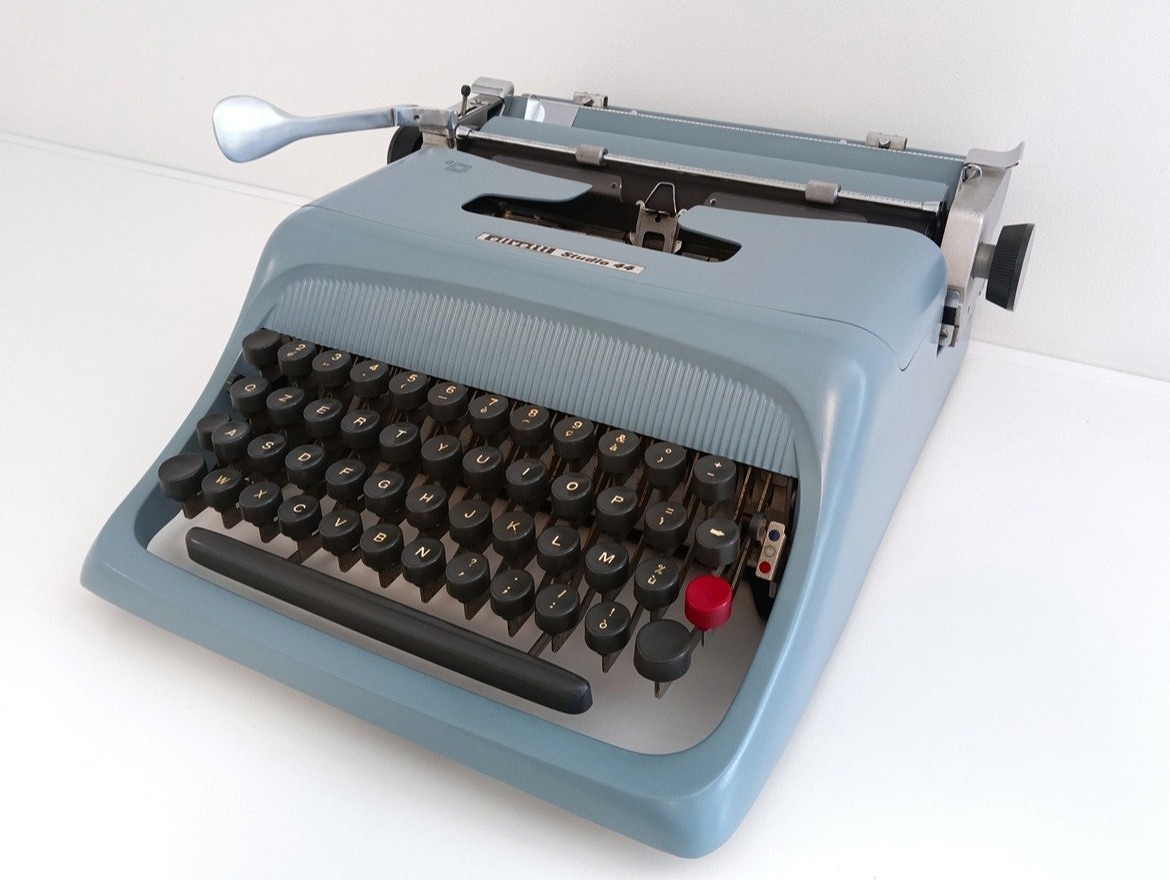

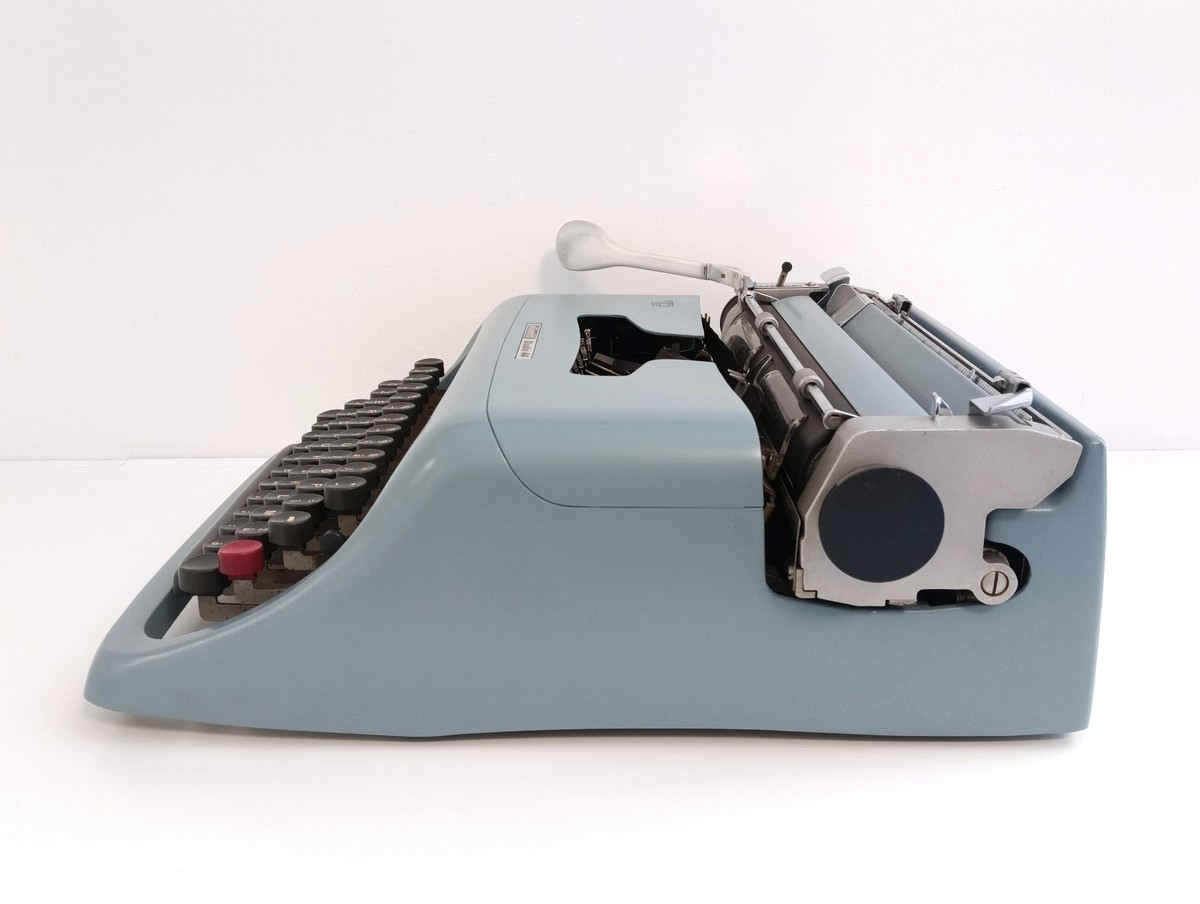
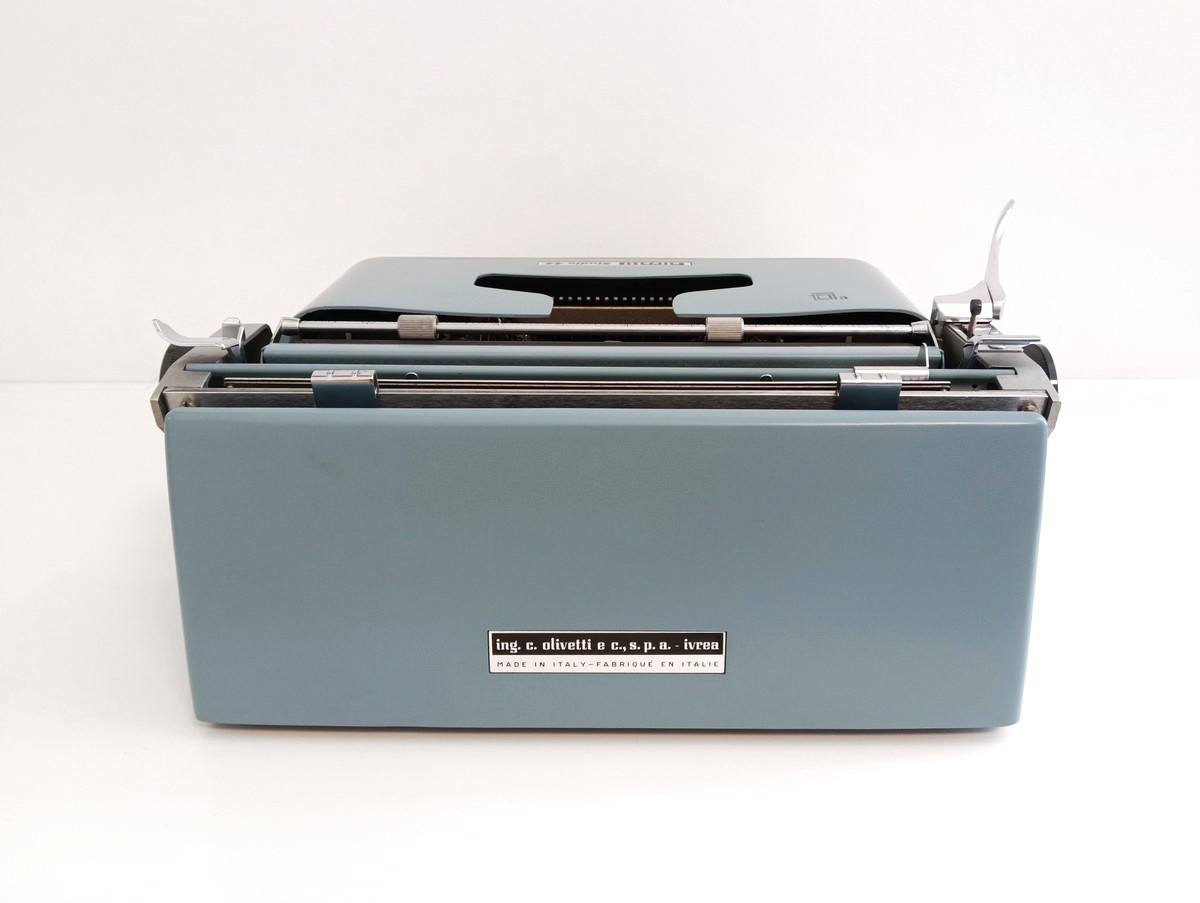



The Olivetti Studio 44 was introduced in 1952 to replace the by then outdated Studio 42. However, it inherited little more than its name, as mechanically it had been so extensively redesigned that it had virtually nothing in common with its predecessor.
The Studio 44 followed the Olivetti Lexikon 80 and Lettera 22, and can in fact be considered a very successful combination of these two models: the former a full-size standard typewriter and a very expensive machine, the latter portable and affordable.
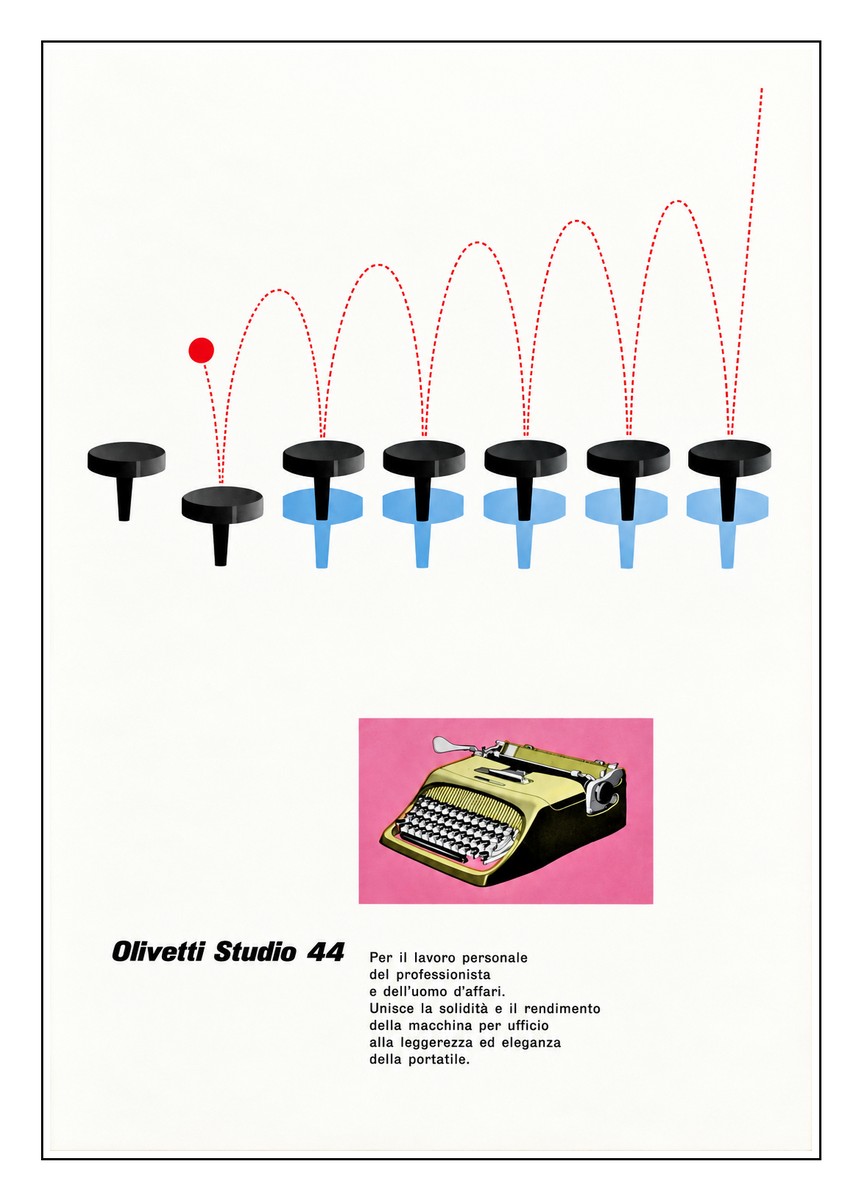
From the Lettera 22 it inherited its compact design, the possibility of being carried in a case, and the basic layout of its key-action mechanism, namely the system of levers that transmits the movement from the key to the typebar. From the Lexikon 80 it inherited the escapement actuation system with a lapped cylindrical surface, the carriage with roller thrust bearings, and numerous sophisticated, high-level adjustments. Overall, it is an extraordinarily successful design, with a very pleasant touch reminiscent of the Lexikon 80 combined with the practicality of a semi-standard typewriter, capable of providing a remarkably satisfying typing experience. It is a genuinely high-quality typewriter, one of those Made in Italy products that made Italy famous throughout the world and that continue to uphold that reputation even today.
Indeed, many typewriter enthusiasts around the world have come to appreciate the remarkable qualities of this model, to the point that some consider it one of the finest mechanical typewriters ever made. Still greatly underestimated by the general public today, the Studio 44 is highly recommended both for those taking their first steps into the world of mechanical typing and for experienced users looking for a dependable companion they will never want to be without.
Before restoration, the machine was certainly far from being in pristine condition, as can be seen from the photographs. The aluminium die-cast body showed extensive corrosion beneath the original paint, causing it to blister and flake away.


A complete restoration of a typewriter begins with the disassembly of the machine, followed by a thorough cleaning of all mechanical components, first using an ultrasonic bath and then rinse using a petroleum-based solvent.
Once cleaned, every component is carefully dried and reassembled, and then the internal mechanism is precisely lubricated to guarantee optimal performance. The mainspring is also dismantled, cleaned, and reassembled with fresh grease, ensuring consistent tension and smooth carriage movement.
The machine then undergoes a comprehensive adjustment process, including fine-tuning of the kinematics, ribbon lift, and upper/lower case alignment. Components subject to natural wear, such as the ink ribbon, rubber grommets, carriage drawcord, and any weakened springs, are replaced with new parts.


To restore an Olivetti Studio 44 typewriter to perfect working condition, it is essential to rebuild the various rubber components, which over time tend to harden and eventually crumble completely. Feet, main platen, and both lower and front paper rollers—all must be renewed. Everything is made possible thanks to experience and specialized equipment. For more information, please visit this page.


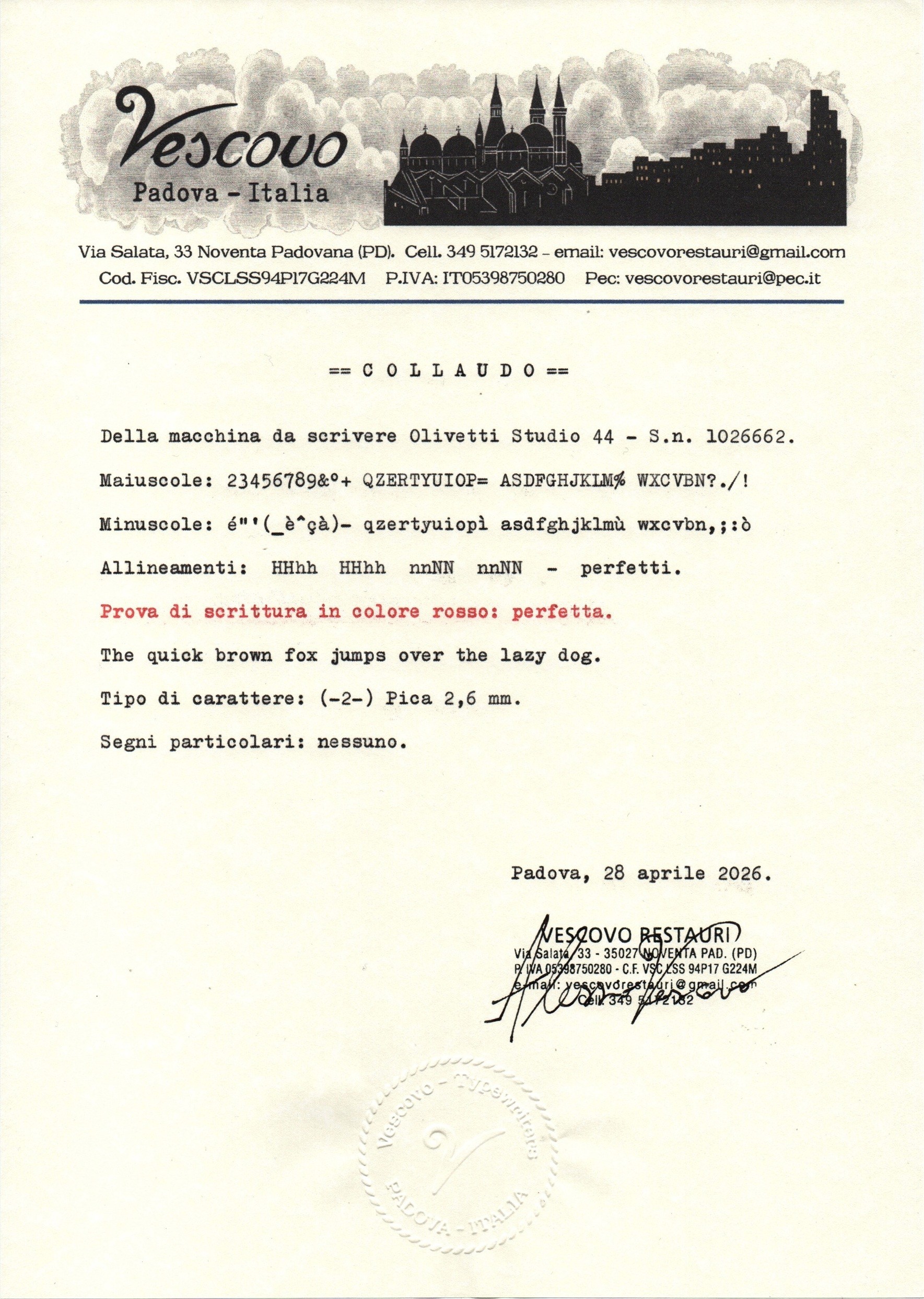
At the end of the restoration, the typewriter undergoes a complete functional test. A final test certificate—typed on the machine itself, signed, and stamped—is issued as proof of successful inspection and completion of the service.