


The typewriter platen is one of the essential components in the machine’s complex mechanism. Made of rubber, it is easily recognizable as the largest of the various rollers located inside the carriage. The typebars strike against it, the paper wraps around it, and thanks to its precise geometry and proper elastic response, it allows for uniform and comfortable typing.
A hardened platen not only causes excessive noise during typing but can also severely damage the typefaces, even causing them to break off from the typebars. The ideal hardness for new rubber platens in manual typewriters is between 88 and 90 Shore A, while for electromechanical models, it should be slightly higher. The compound used is a blend of SBR and NR (styrene-butadiene and natural rubber), which ensures optimal elasticity, low noise, and long service life.
When a platen is delivered to the company, its hardness and diameter are measured and compared with reference table values. If either value is outside the acceptable range, the platen will undergo a complete new rubber coating. Based on past experience, a hardened platen with a maximum hardness of 96 Shore A can still be used by customers who type only occasionally. However, for customers who type intensively, the hardness should not exceed 94 Shore A. If the hardness is within spec but the rubber surface is corrugated, the platen will be only ground. If it has already been ground in the past and the diameter is now too small, remachining is no longer an option, and a new rubber coating will be applied.

The steps involved in recoating a typewriter platen are briefly as follows: the old rubber is cut away from the tube, then the tube is sanded and coated with virgin crude rubber. The rubber is wrapped with cotton bandages and then placed in an autoclave for vulcanization. During this process the rubber acquires the correct hardness and elasticity. The platen is then turned on a lathe to reach the precise final dimensions, and finally it is manually finished with sandpaper on the lathe to obtain the required surface roughness and bevel.
Finishing operations such as edge bevels, radius transitions, and achieving the correct surface roughness are included in the price. These details require careful manual work and are often omitted by most competitors, who do not provide them even upon request. Proper finishing not only restores the platen’s original appearance but also ensures optimal paper grip and consistent typing performance.


€120 for portable typewriter platens;
€140 for standard typewriter platens;
€160 for typewriter platens over 12 inches.
* All prices are VAT included.
Platens with a recessed clutch must be sent complete, as the rubber needs to be precisely shaped to match the clutch profile. The clutch will be disassembled, cleaned with petroleum solvent, lubricated, reassembled, and finally tested to ensure the gear rotates smoothly. A charge of €10 applies for this operation.


Precise hardness measurement using a Shore A durometer from CV Instruments:


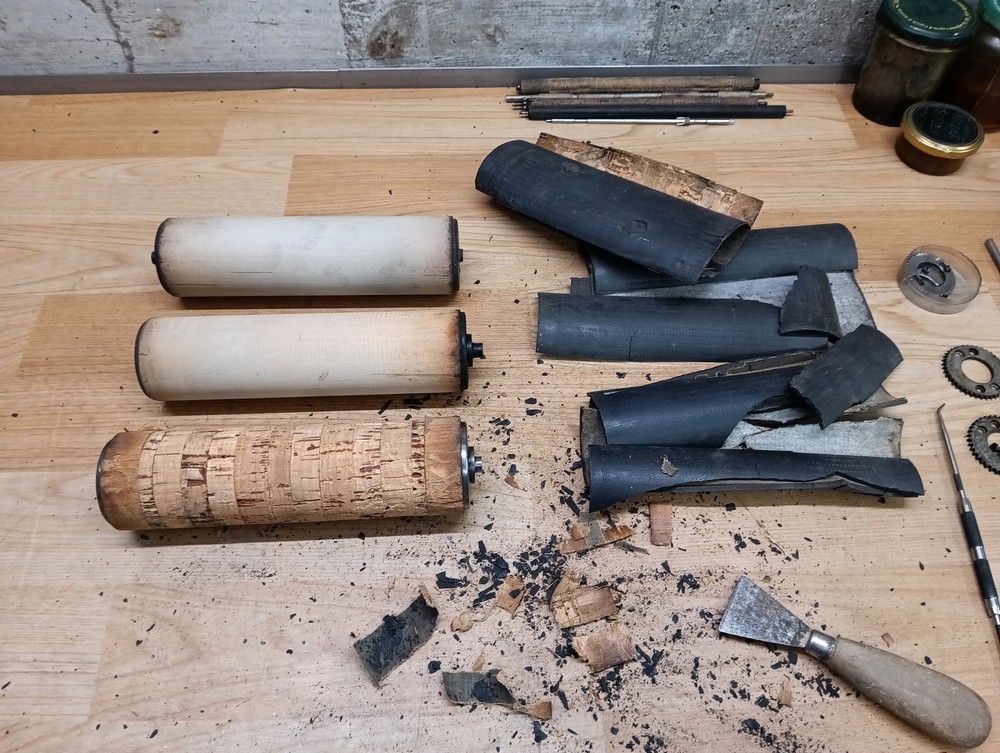
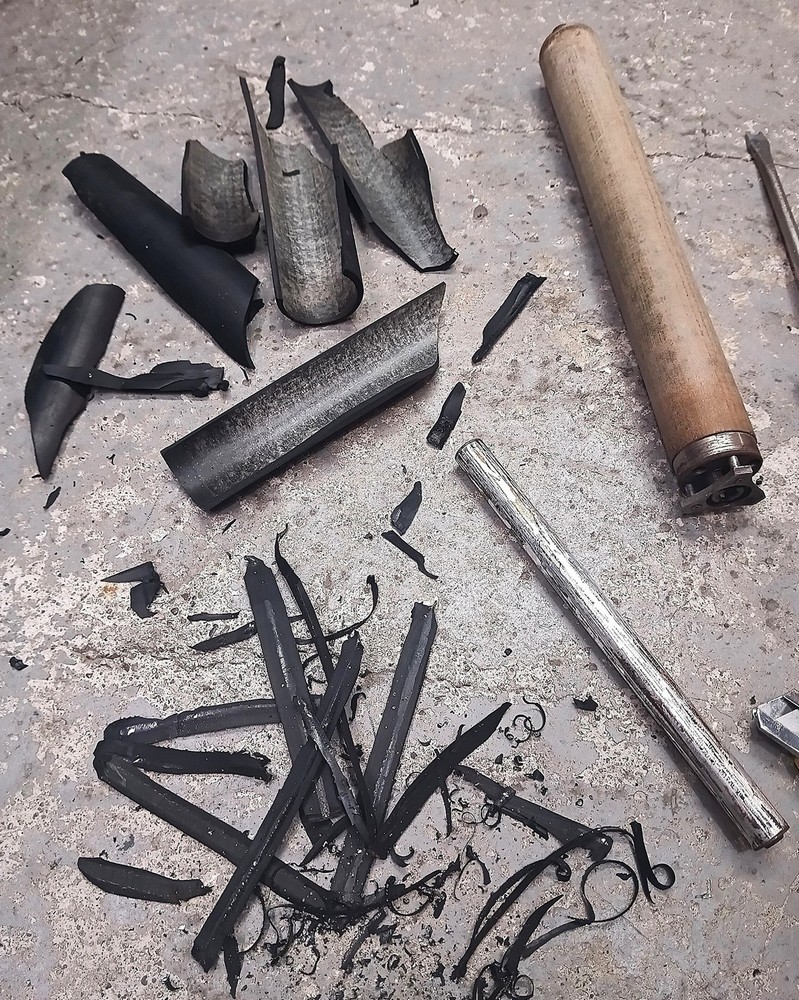
Removing the old, worn, or compromised rubber from the cylinder:
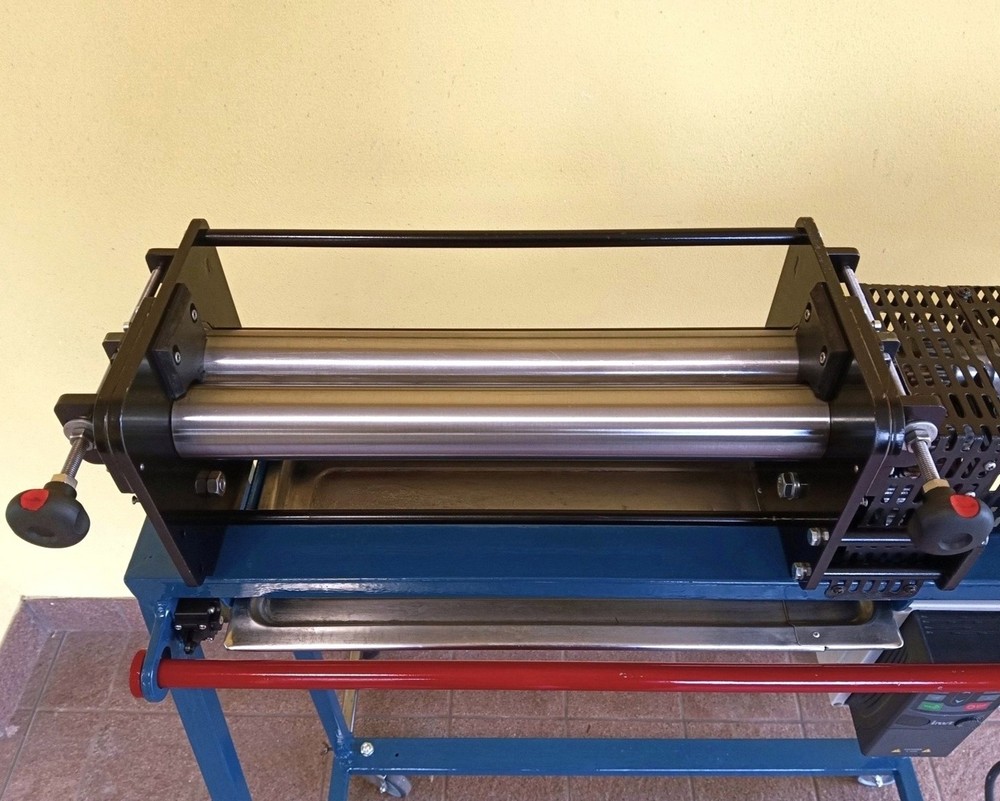
Preparation of the crude rubber compound on a two-roll rubber mill:

Covering the platen with crude rubber and pressing with cotton bandages:


Vulcanization of the platen rubber in the autoclave:

Machining the platen on a lathe to match the required dimensions:

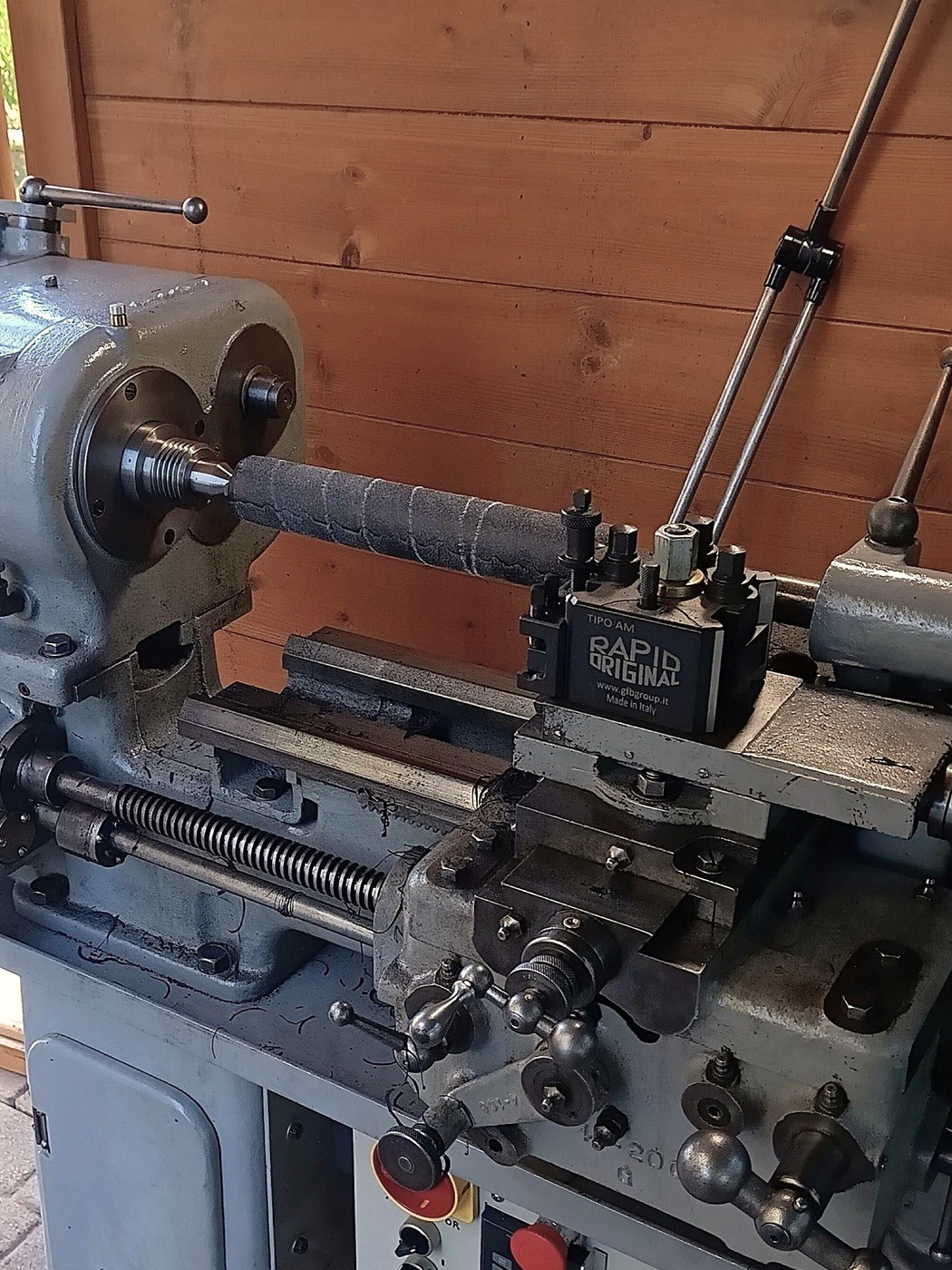
Sanding the new rubber surface to improve paper grip:

The new platens are ready for shipping across Europe!


Shipments available via DHL courier throughout the European Union:
Austria, Belgium, Bulgaria, Croatia, Cyprus, Czechia, Denmark, Estonia, Finland, France, Germany, Greece, Hungary, Ireland, Italy, Latvia, Lithuania, Luxembourg, Malta, Netherlands, Poland, Portugal, Romania, Slovakia, Slovenia, Spain, Sweden.
Shipping costs vary by destination. For full details, see our Shipping Policy.
Platens are processed in batches, with delivery in March, June and October. Parts are accepted until the last day of the previous month.
Request a Free Quotation
The perfection of the paper feed rollers is essential to ensure correct paper feeding, accurate line spacing, and perpendicular advancement of the paper. For this reason, customers typically ship both the platen and feed rollers to Vescovo Restauri. If the roller’s roundness is satisfactory, its hardness is checked. If the hardness is also acceptable, the roller is refreshed on the lathe with sandpaper at a cost of only €15. If the roller requires recoating with new rubber, the price varies depending on the type of feed roller. Typically, the cost is €60 for portable typewriters and €80 for standard models. Typewriters with a double platen have double the rollers, so in these cases the price can be equal to that of a platen.
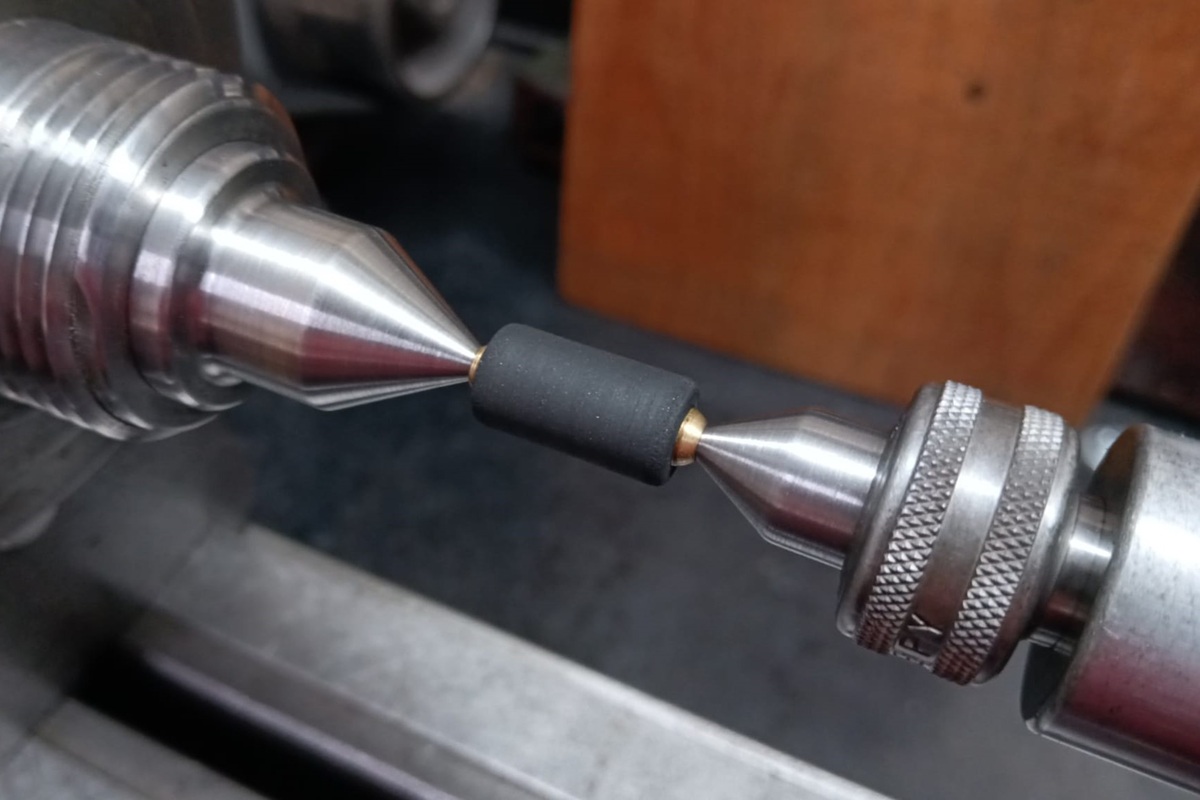

You can request an exact free quotation by sending photos of your rollers.
Request a Free Quotation