


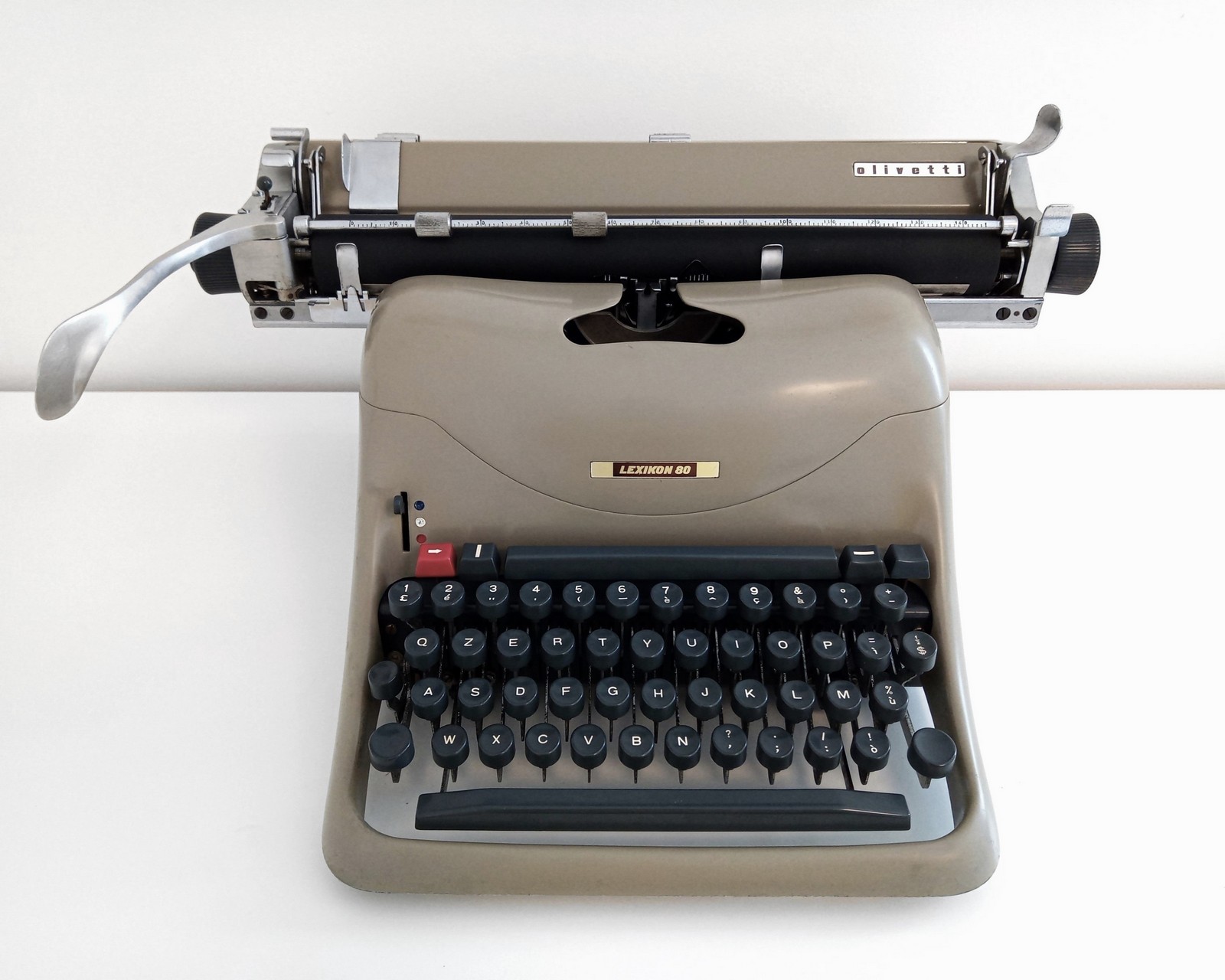
The Lexikon 80 is a standard model introduced by Olivetti in 1948 as an alternative to the renowned M40. The mechanical design was developed by Giuseppe Beccio, while the styling was created by Marcello Nizzoli—a formidable partnership that would go on, just a few years later, to shape the famous Olivetti Lettera 22. It was initially designated M80 and only later received the commercial name “Lexikon”; these early examples are distinguished by a refined glass-covered keyboard, similar to that found on the final versions of the Olivetti M40.
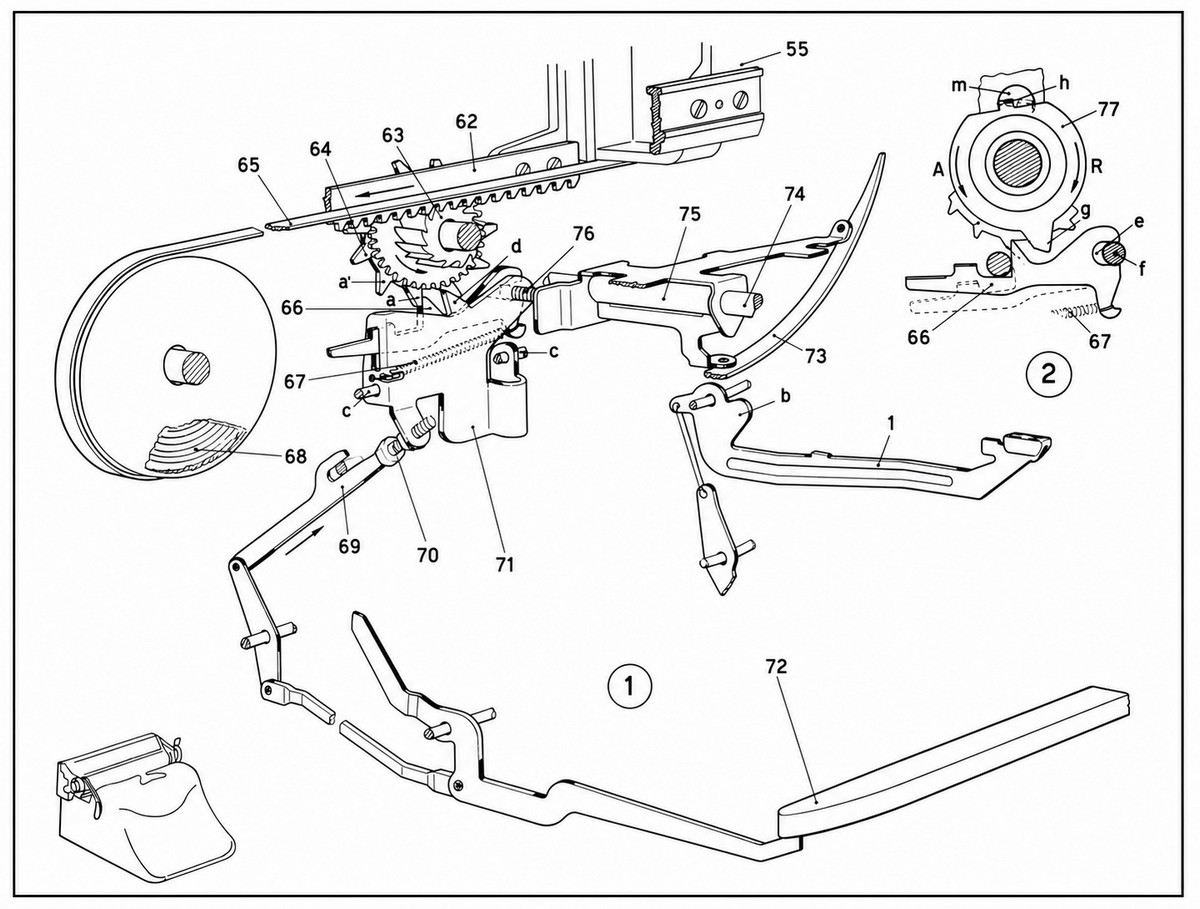 Designed for intensive office use, the machine introduced several interesting engineering solutions, but above all a number of production simplifications. One of the most notable is the abandonment of the carriage’s double dovetail guide in favor of a precision-ground round bar supported by rotating mounts. It also adopts an innovative and remarkably fast shift mechanism, consisting of a rotating eccentric mounted on a ball bearing. Thanks to a carefully engineered kinematic system, the typing touch is very light and smooth, yet not overly snappy—a characteristic typical of Olivetti mechanisms, setting them apart from their German competitors such as the Olympia SG1. Like the M40, it retains the excellent quick-release carriage system, which facilitates both cleaning and routine maintenance.
As already mentioned, the Lexikon 80 typewriters were designed to operate eight hours a day, seven days a week—and that is exactly what they did tirelessly for decades. For this reason, they are typically very dirty (correction fluid, eraser debris, small pieces of paper) and worn, both on the side panels and on all those areas frequently touched during use. In my workshop, these machines are therefore completely disassembled, cleaned in an ultrasonic bath, and then rinsed in a petroleum-based solvent. The platen and feed rollers are resurfaced on a lathe to remove built-up correction fluid, or rebuilt with new rubber if the original components are in poor condition. The parts are then oiled and reassembled, and the typing action is finely adjusted using a dedicated set of specialized typeface adjustment pliers, restoring the machine to perfect working order.
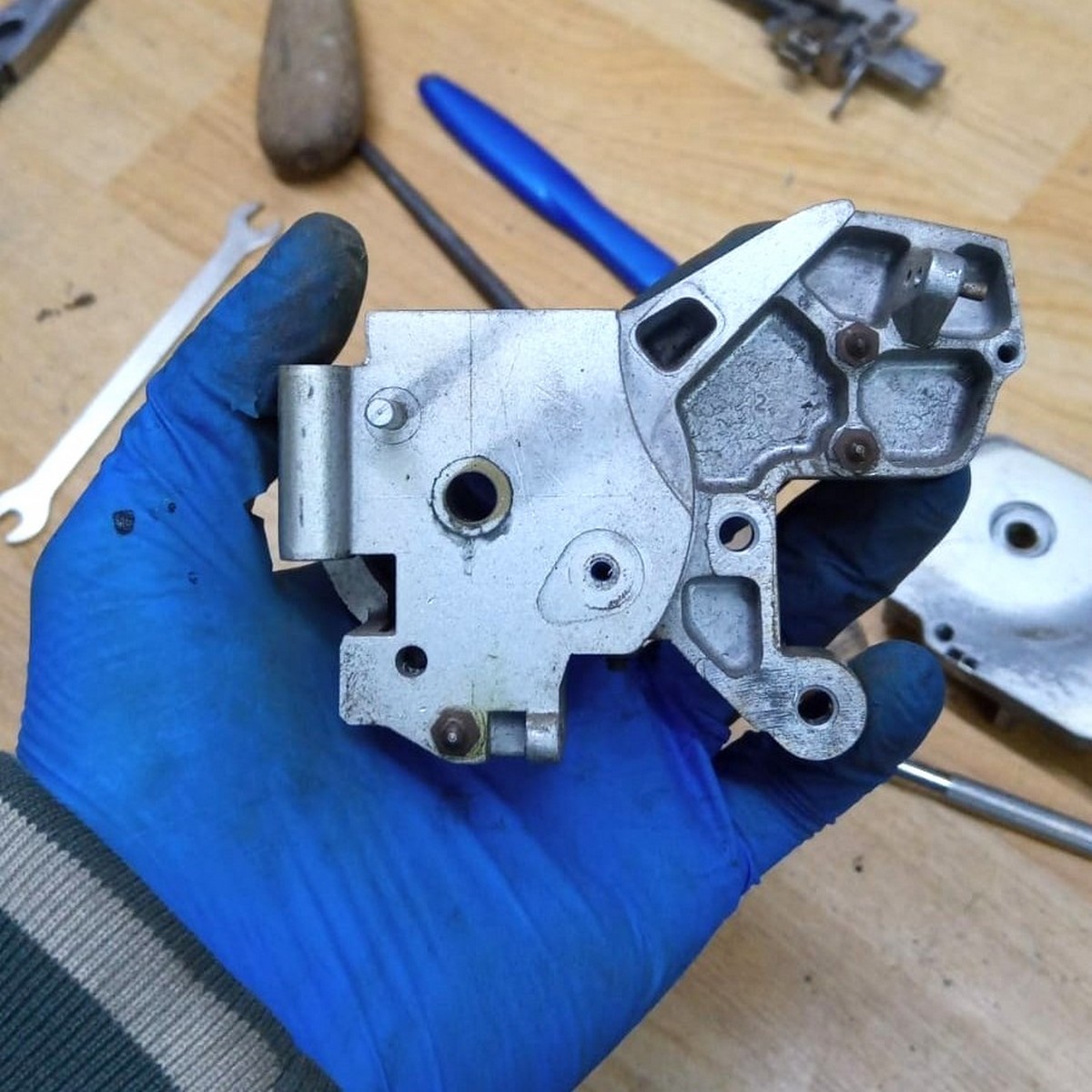
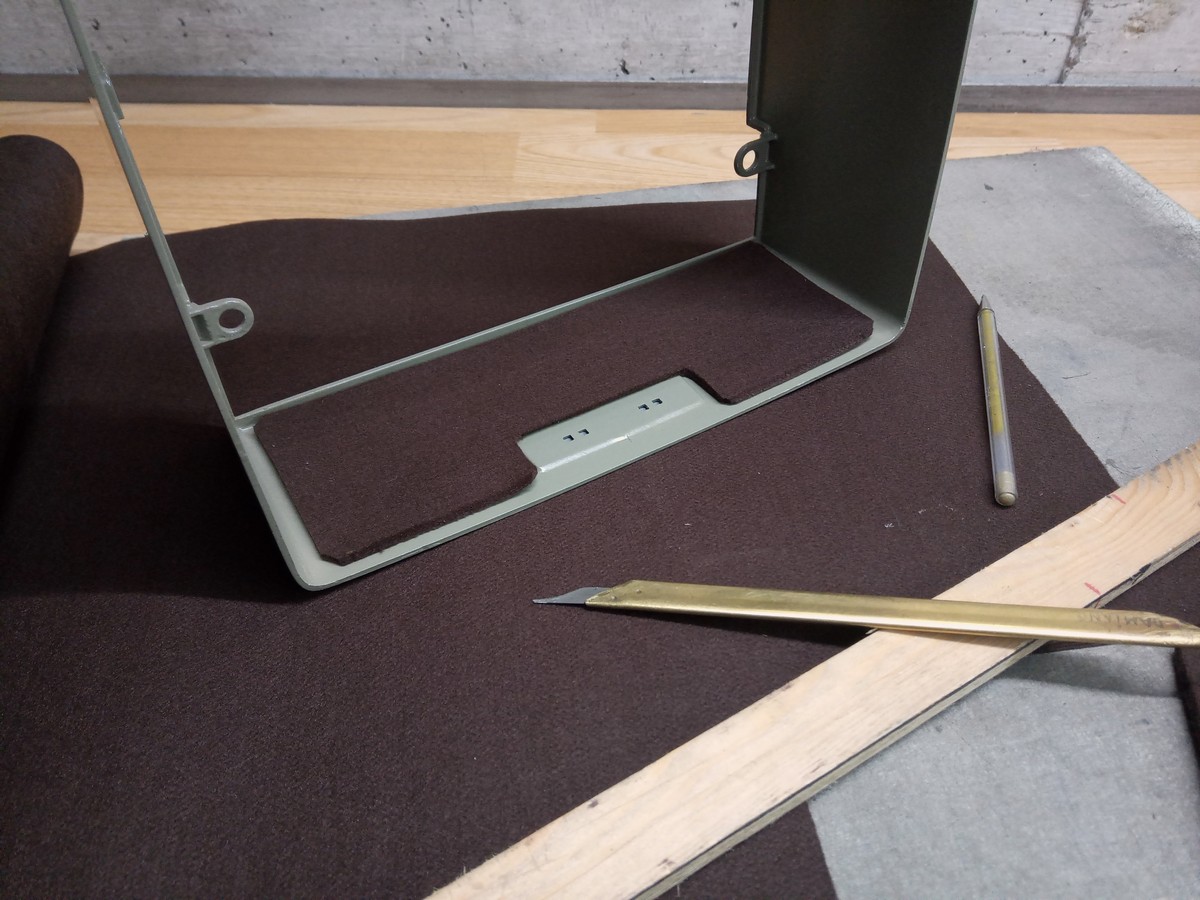
 The bodywork can be sandblasted and repainted to a like-new condition, or—if the original paint is still in good shape—simply cleaned and protected while preserving its minor imperfections. Those who choose a conservative restoration typically want a typewriter that is fully functional and aesthetically pleasing overall, while retaining an authentic vintage character precisely thanks to those small cosmetic flaws. However, the initial condition must be carefully assessed, as not all machines are suitable for this type of preservation work. A full refinishing restoration on an Olivetti Lexikon 80 typewriter requires the removal of all primary linkages and their associated mechanisms, as shown in the photos. This is necessary in order to remove and repaint the front segment. The carriage must also be completely dismantled, since its two side panels—whose paint is usually heavily worn—are structural components that hold the entire carriage mechanism together. The old felt linings on the body panels are removed and then recreated by hand-cutting new material. After such a careful and meticulous restoration at Vescovo Restauri, your Lexikon 80 typewriter can truly shine like new once again!


A complete restoration of a typewriter begins with the full disassembly of the machine, followed by a thorough cleaning of all mechanical components, first in an ultrasonic bath and then rinsed with a petroleum-based solvent. In this case, the external fairings were treated as part of a full refinishing process: they were sandblasted, ultrasonically stripped, and then sent to an automotive body shop for professional repainting, ensuring a durable, factory-like finish. The original matte beige color proved particularly challenging to reproduce, as it does not correspond to any standard RAL code; however, after extensive testing, it was matched with excellent accuracy.
Once cleaned, every component is carefully dried and reassembled, and then the internal mechanism is precisely lubricated to guarantee optimal performance. The mainspring is also dismantled, cleaned, and reassembled with fresh grease, ensuring consistent tension and smooth carriage movement.
The machine then undergoes a comprehensive adjustment process, including fine-tuning of the kinematics, ribbon lift, and upper/lower case alignment. Components subject to natural wear, such as the ink ribbon, rubber grommets, carriage drawcord, and any weakened springs, are replaced with new parts. Damaged components are replaced with New Old Stock parts or repaired.




At the end of the restoration, the typewriter undergoes a complete functional test. A final test certificate—typed on the machine itself, signed, and stamped—is issued as proof of successful inspection and completion of the service.
