


“Where does your passion come from?” I’m often asked.
My passion for typewriters began at the age of 14, on a warm midsummer Saturday afternoon.—and, somewhat unexpectedly, I owe it to scouting! My troop leader at the time, in order to make a short comedic skit more realistic, brought a few old items for the scene, including an old black Olivetti M40.
That mechanical device, completely new and unfamiliar to me back then, immediately sparked my curiosity. After an initial, almost reverent and slightly timid approach to those glass-and-metal keys, I gradually began pressing them one after another in quick succession, becoming both enchanted and fascinated at the same time. Even today, I vividly remember the excitement of that afternoon.

Once I got home, I couldn’t get the shape of that solid, imposing machine out of my mind, nor the charm of its fully exposed mechanics. I had been completely captivated by it, without even realizing it at the time. I almost immediately convinced my father to buy me one, but the budget back then was quite limited. So I had to set aside the idea of the M40 for the time being and “settle” for an Olivetti Lettera 32: it was my very first typewriter. I had just begun my studies at the G. Marconi Technical Industrial Institute in Padua, where I was specializing in mechanics.
The five years I spent at the technical institute were truly wonderful. I learned the entire process from design to finished mechanical product, including structural calculations for shafts, gears, bearings, and more, while also studying mathematics and algebra. What made it special was that all this theory was combined with many hands-on, specialized workshops: welding, lathe operation, mechanical testing like tensile tests, hardness measurements, etc. In this way, we also learned to build and test the designs we had created. This is how one became a “Perito Meccanico”, a uniquely Italian technical qualification with no direct English equivalent.
This kind of Italian training has produced generations of skilled workers and successful entrepreneurs, including Piero Ferrari and Federico Faggin, to name two of the most famous. Like them, after graduating I went straight into work.
After graduating as a Perito Meccanico, I pursued a specialization in precision micromechanical production at the international watchmaking school WOSTEP in Neuchâtel, Switzerland. Later, I earned a Bachelor's Degree in Mechanical Engineering from the University of Padua. I have gained several professional experiences, most notably the seven years I spent at the National Institute for Nuclear Physics (INFN) in Padua, where I worked on the mechanical design and construction of experimental equipment, including micro particle detectors.
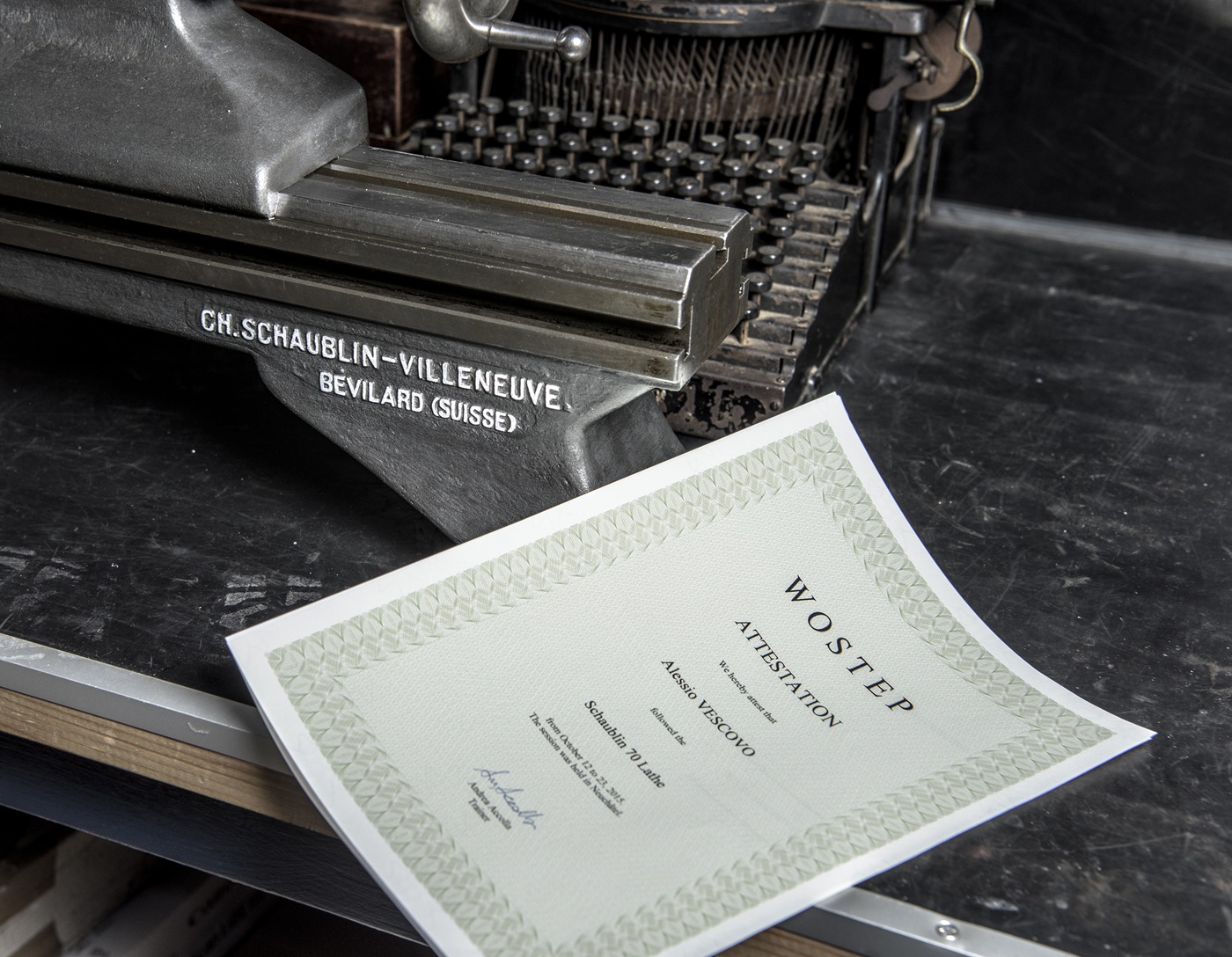
But as they say, true loves never fade—and my passion for typewriters is one of them. Over time, it has only grown, eventually leading me to become a full-time professional restorer. For several years now, I have been working in my workshop, bringing these remarkable machines back to their original beauty and perfect working condition. In addition, as a Forensic Expert in typewriters, I carry out forensic analyses of typed documents, as well as valuations and appraisals of both vintage and more recent machines. Modern technologies make it increasingly easy to produce convincing forged historical documents, which is why the role of an expert is both essential and valuable: someone who can assess the authenticity of a document—whether it be, for example, a posthumous will or newly discovered material emerging during legal proceedings.
Contrary to what one might expect, nowadays typewriters are far more than mere antiques or collector’s items—quite the opposite. This is precisely the reason behind my work and the success I have achieved.
The world of cinema, too, has developed a growing demand for professionally restored typewriters. Over the years, I have had the opportunity to collaborate with numerous production companies and directors, both established and emerging. My work often begins with historical consulting, helping productions select the most appropriate typewriters for the period, setting, and narrative tone of a film. I then source and carefully restore each machine to meet both aesthetic and functional requirements on set.
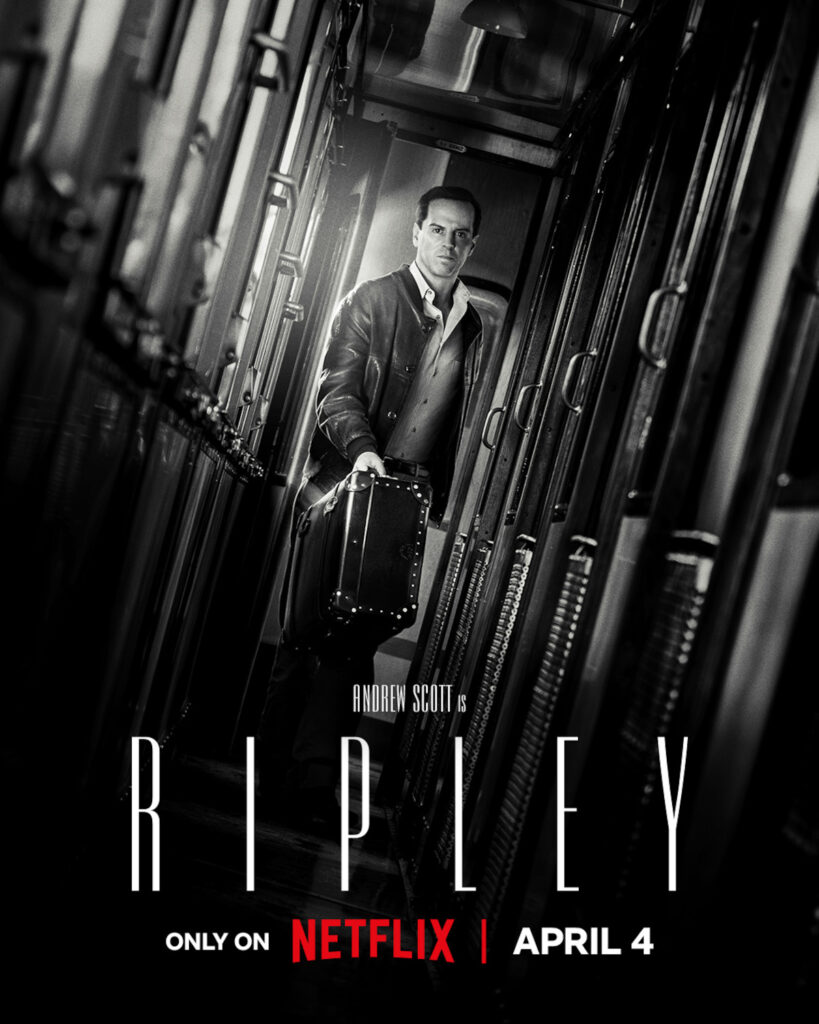
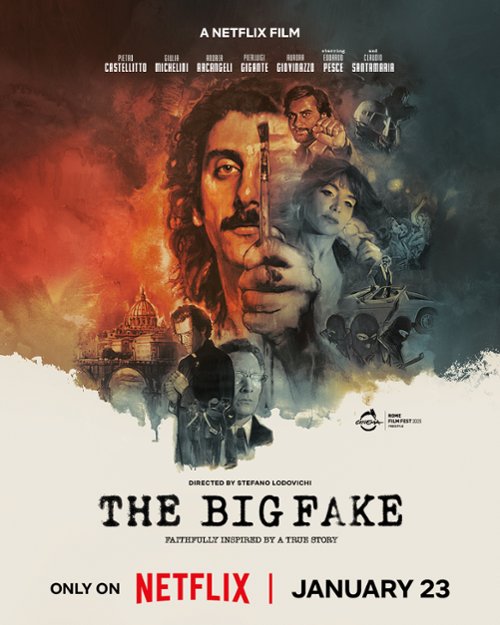
Most recently, I contributed to two productions that achieved significant international success on Netflix: the TV series Ripley, directed by Academy Award winner Steven Zaillian, and the film The Big Fake by Stefano Lodovichi. These collaborations reflect my commitment to authenticity and craftsmanship, bringing historically accurate writing machines back to life for modern storytelling.
Yet, beyond film sets and international productions, the essence of my work remains deeply personal. It all begins with a story—my own.
And here in my workshop stands an Olivetti M40, identical to the one a young scout first touched on a Saturday afternoon many years ago—faithful and authoritative, a companion from another era that still lives on today through the rhythmic typing of countless enthusiasts around the world.