


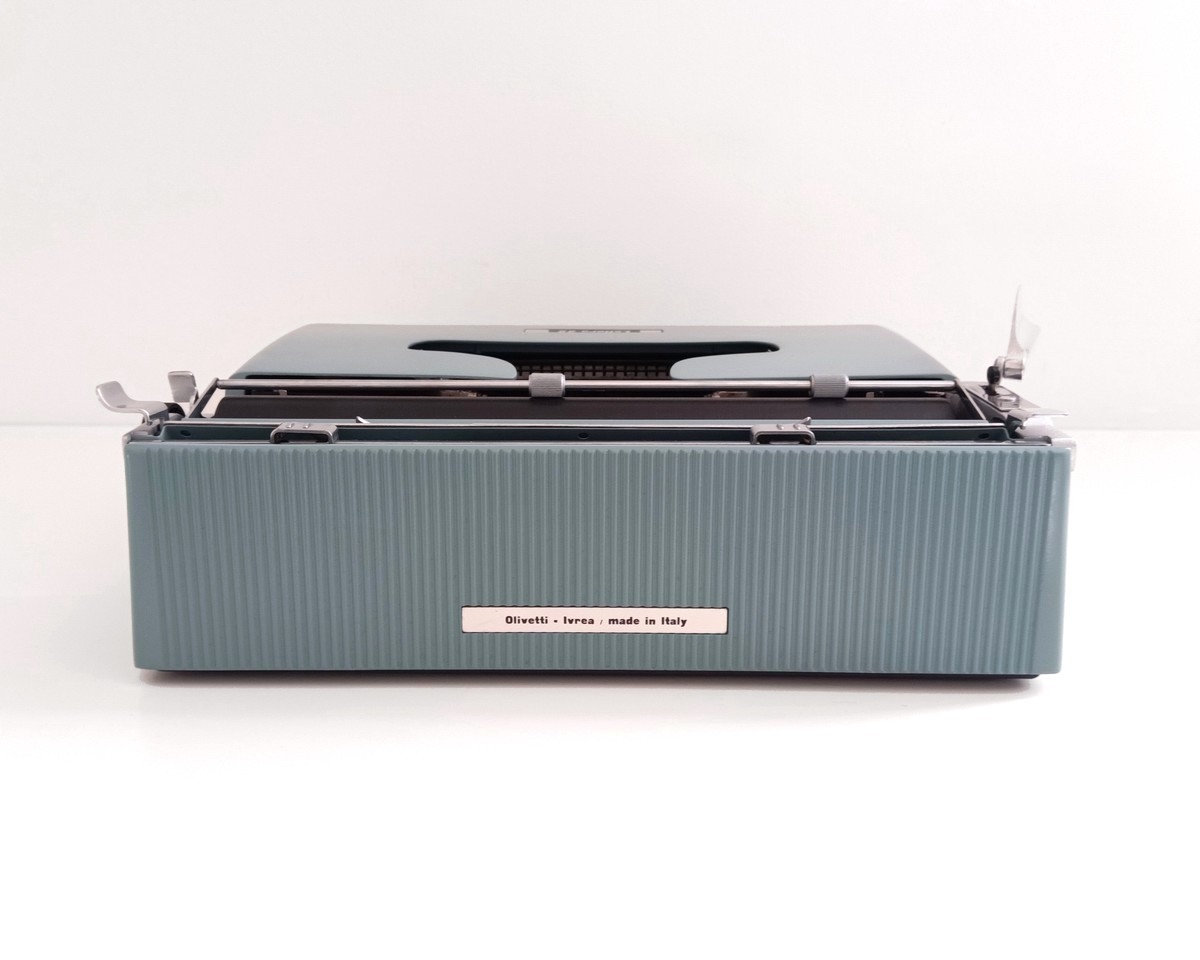





Olivetti Lettera 22 is undoubtedly the most famous of all Olivetti typewriters. It was produced from 1950 to 1965, and with its distinctive design and colors, it became part of our collective imagination as a symbol of an Italy starting anew. Much has already been written about the numerous awards it received, but in this article I would like to take a step back and examine the secret behind its success.
To fully understand it, we must keep in mind that when it was introduced in 1950, it was simply: "The right product, sold at the right time."
 Who were its main competitors in Europe in 1950? The Swiss Hermes Baby and the German Erika 9. Both featured an aesthetic design that was decades old, with rather gloomy colors: hammered gray for the former and glossy black for the latter. The Hermes Baby was an outdated design, dating back to 1935, essentially an assembly of stamped metal sheets which, in terms of overall quality, could not even be compared with an Olivetti Lettera 22—and yet, its selling price was similar. The Erika 9, on the other hand, was one of the highest-quality portable typewriters ever produced: superior, soft, fluid, and precise mechanics. The natural consequence was its price, which was higher than average. In this context, with an average price, an extremely modern design, good quality, and relentless advertising... Olivetti swept aside the competition. Over 15 years of production, approximately 2 million Olivetti Lettera 22 typewriters were manufactured—a staggering number. If we imagine stacking them one on top of another, they would form a tower as high as 20 times Mount Everest.

A complete restoration of a typewriter begins with the disassembly of the machine, followed by a thorough cleaning of all mechanical components, first using an ultrasonic bath and then rinse using a petroleum-based solvent.
Once cleaned, every component is carefully dried and reassembled, and then the internal mechanism is precisely lubricated to guarantee optimal performance. The mainspring is also dismantled, cleaned, and reassembled with fresh grease, ensuring consistent tension and smooth carriage movement.
The machine then undergoes a comprehensive adjustment process, including fine-tuning of the kinematics, ribbon lift, and upper/lower case alignment. Components subject to natural wear, such as the ink ribbon, rubber grommets, carriage drawcord, and any weakened springs, are replaced with new parts.


Against stubborn dirt dried after fifty or more years of neglect, the classic combination of kerosene and a brush would achieve very little. I am referring specifically to dried correction fluid, eraser residue —sometimes melted by the heat of an attic—, hardened grease, deposits of sebum mixed with dead skin, and so on. The ultrasonic cleaning tank I use in my restorations was built by a specialized company and is specifically designed and custom-made for cleaning typewriters.
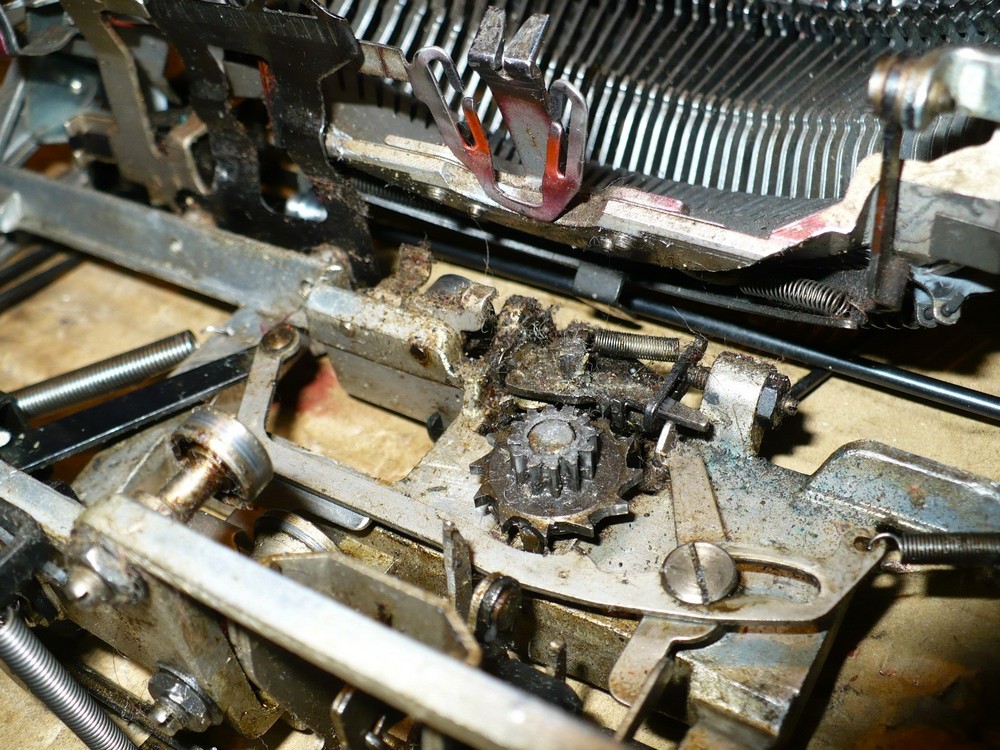
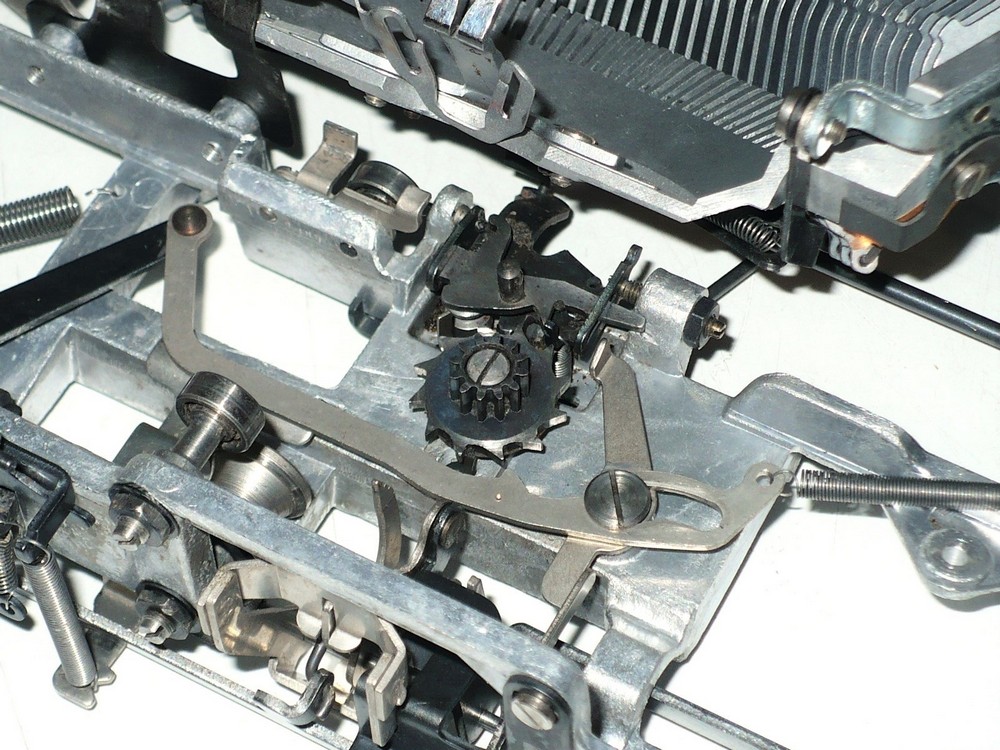
How does it work? The phenomenon involved is cavitation. The powerful waves generated by the sonotrodes are transmitted into the water, creating microbubbles at extremely high pressure that implode upon contact with the object. Using a simple solution of water and soap, a combined action is achieved: a physical high-frequency “micro-brushing” effect together with the degreasing action of the detergent dissolved in the bath. The result is excellent, with a low environmental impact when biodegradable soaps are used.

Removing the machine from the ultrasonic cleaning bath – a custom-made tank specially designed for typewriter restoration.

Olivetti Lettera 22 body after disassembly and ultrasonic cleaning – note the beautiful die-cast aluminum components.
Unfortunately, the original Lettera 22 paint is not particularly durable, and it is quite common for this model to require repainting. In such cases, the cost of sandblasting and professional repainting by our partner body shop must be added, along with the considerable time required to completely disassemble and reassemble the carriage, piece by piece, so that the two side panels can also be repainted.
The process is not inexpensive, also because, on closer inspection, every Lettera 22 features three different colors: the body shells (which vary depending on the version), the two side panels (metallic aluminum), and the bottom plate (matte black). The sound-dampening felt pads will also be completely replaced with new ones.


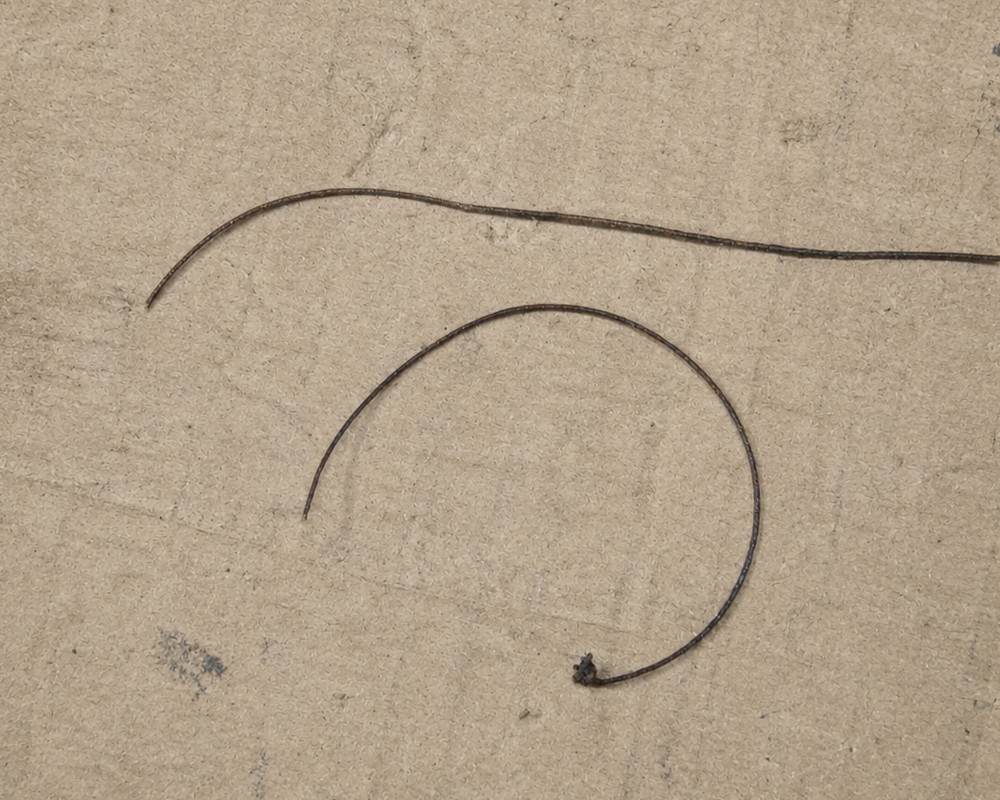

To restore an Olivetti Lettera 22 typewriter to perfect working condition, it is essential to rebuild the various rubber components, which over time tend to harden and eventually crumble completely. Feet, main platen, and both lower and front paper rollers—all must be renewed. Everything is made possible thanks to experience and specialized equipment. For more information, please visit this page.


Precision alignment of the type slugs is carried out using specialized type alignment pliers. I am fortunate to own a complete set of these special tools, which are essential for accurately adjusting the position of each type slug and achieving consistent, high-quality printing. This precise operation is crucial for ensuring that the machine successfully passes the final, rigorous quality inspection.

At the end of the restoration, the typewriter undergoes a complete functional test. A final test certificate—typed on the machine itself, signed, and stamped—is issued as proof of successful inspection and completion of the service.


Second-series Olivetti Lettera 22, in yellow-green color. Recognizable by its distinctive square-shaped keys, while the first series is more iconic and suitable for display purposes, the second series is far more desirable for typing enthusiasts, thanks to the undeniable comfort of the square keys compared to the round ones.


Olivetti Lettera 22 Tricolore. In 2020, to celebrate 70 years since the beginning of its production, Olivetti x Tutti and Rinascente created a distinctive Italian tricolor version. These machines are known for their poor-quality spray-painted finish, internal dirt, and lack of a new platen. The machine shown here was produced by our workshop at the request of a client, inspired by that version, but with the level of quality and attention to detail typical of a Vescovo restoration.