





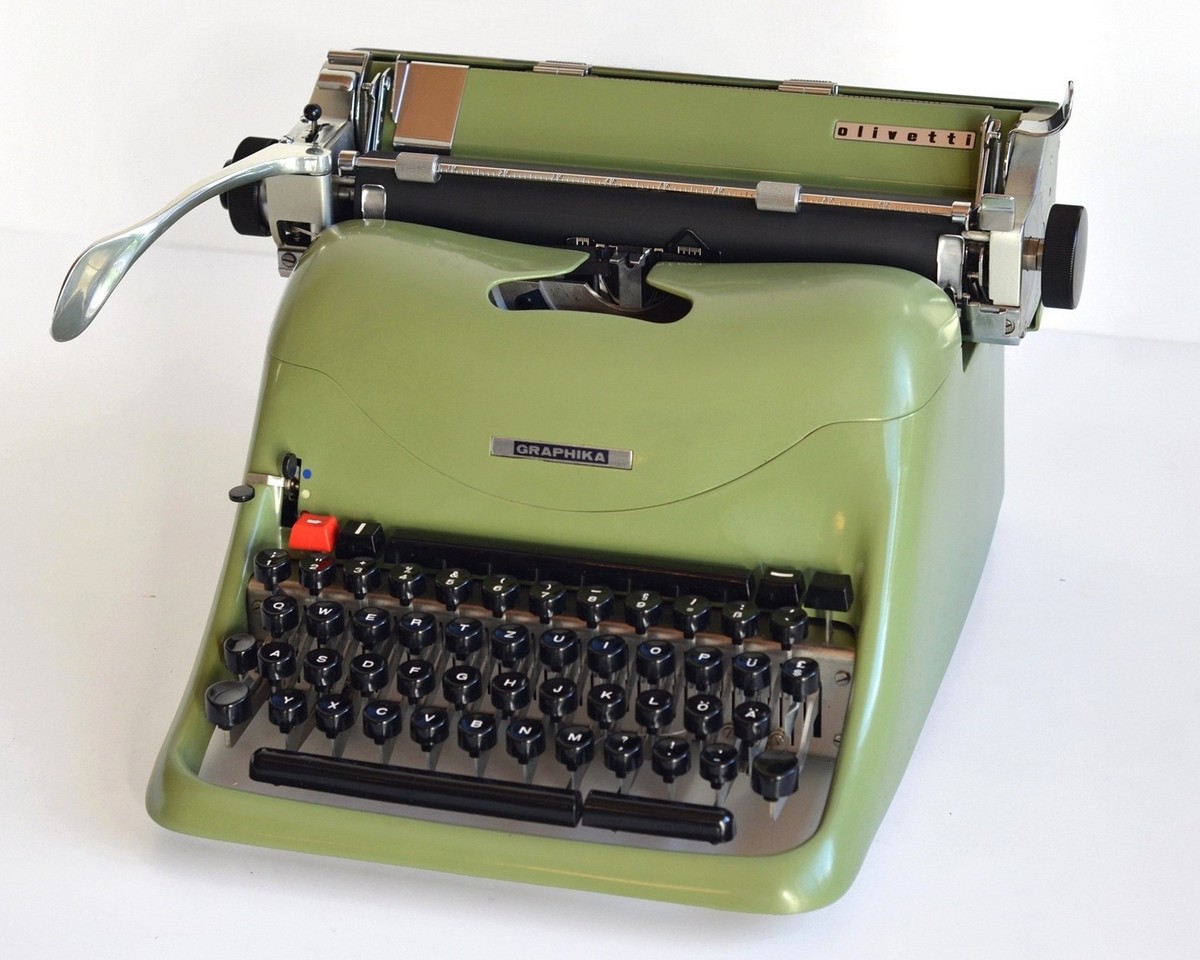
The Olivetti Graphika is a manual typewriter with proportional spacing that represents one of the most distinctive, yet at the same time least commercially successful, products from Olivetti. Unique of its kind, this article will examine in detail both its distinctive features and its shortcomings, also providing an in-depth look at the technical solutions that shaped its design. Finally, the step-by-step stages of a meticulous restoration will be presented, which made it possible to return the machine to perfect working condition and deliver it back to the client accompanied by a written testing certificate, along with a 2-year warranty on proper operation, as a testament to the accuracy and reliability of the work carried out.
The Graphika is mechanically derived from the Lexikon 80, with which it shares many components, to the point that—aside from the color and a few minor details—the two models may appear identical to an untrained eye. In reality, the main difference is more subtle and lies in the writing system: proportional spacing with typefaces designed by two of the great typographers of the 20th century.
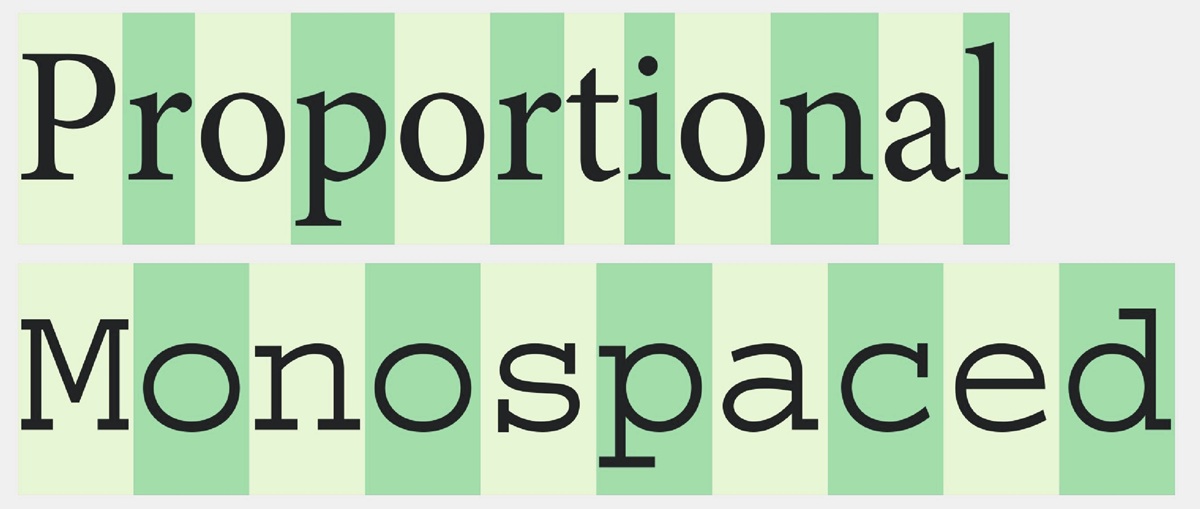 But what is the difference between a proportional typeface and a monospaced one? A proportional typeface is, for example, the kind you are reading on this website: different letters have different widths. By contrast, when each letter—whether an “m” or an “i”—occupies the same amount of space, the typeface is said to be monospaced. It is well known that mechanical typewriters are far from simple devices—indeed, they are often quite complex. However, the use of monospaced typefaces made it possible to avoid introducing additional mechanical complexity. The drawback of this family of typefaces lies in the inevitable visual imbalance: “dense” areas where wider letters such as “m” appear, and excessive spacing around narrower letters such as “i”. For this reason, specific graphic solutions were developed, including very pronounced serifs on narrow letters (i, l, j), in an attempt to visually compensate for these discrepancies and achieve a more uniform reading experience. The most famous and successful of monospaced typefaces is “Pica”, of which numerous variations exist.
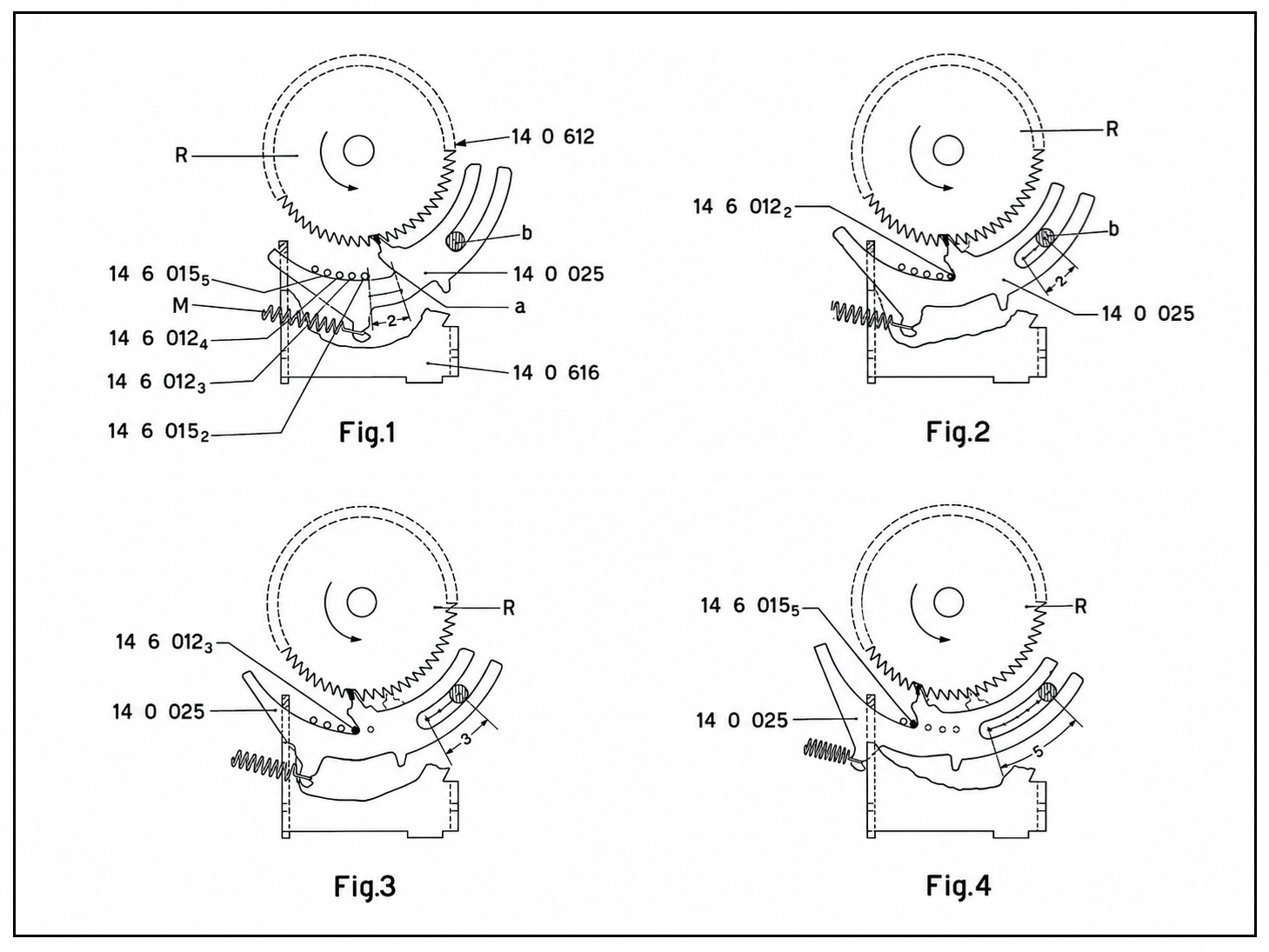 The Olivetti Graphika addresses these issues by assigning each character a space proportional to its shape. Letters and symbols are therefore divided into four groups, with values of 2, 3, 4, and 5 units, where each unit corresponds to 0.785 mm. For example, the letter “i” occupies 2 units, “a” occupies 3, and “A” occupies 4. In addition, an “expanded” function is provided, which adds one unit of space to the right of each character, while keeping the space bar at its base value. For this reason, the space bar is split: the left side produces 2 units, while the right side produces 3. This proportional system makes it possible to achieve a visually more balanced and “typographic” typed page, bringing the output of the typewriter closer to that of traditional printing. Another distinctive feature is the availability of two typefaces designed by two great 20th-century graphic designers:
Imre Reiner and A.M. Cassandre
(pseudonym of Adolphe Jean-Marie Mouron). The two typefaces differ not only in style but also in their proportional coefficients. For example, the letter “r” occupies 2 units in Cassandre and 3 in Reiner. It is worth noting that they are not interchangeable.
The Olivetti Graphika addresses these issues by assigning each character a space proportional to its shape. Letters and symbols are therefore divided into four groups, with values of 2, 3, 4, and 5 units, where each unit corresponds to 0.785 mm. For example, the letter “i” occupies 2 units, “a” occupies 3, and “A” occupies 4. In addition, an “expanded” function is provided, which adds one unit of space to the right of each character, while keeping the space bar at its base value. For this reason, the space bar is split: the left side produces 2 units, while the right side produces 3. This proportional system makes it possible to achieve a visually more balanced and “typographic” typed page, bringing the output of the typewriter closer to that of traditional printing. Another distinctive feature is the availability of two typefaces designed by two great 20th-century graphic designers:
Imre Reiner and A.M. Cassandre
(pseudonym of Adolphe Jean-Marie Mouron). The two typefaces differ not only in style but also in their proportional coefficients. For example, the letter “r” occupies 2 units in Cassandre and 3 in Reiner. It is worth noting that they are not interchangeable.
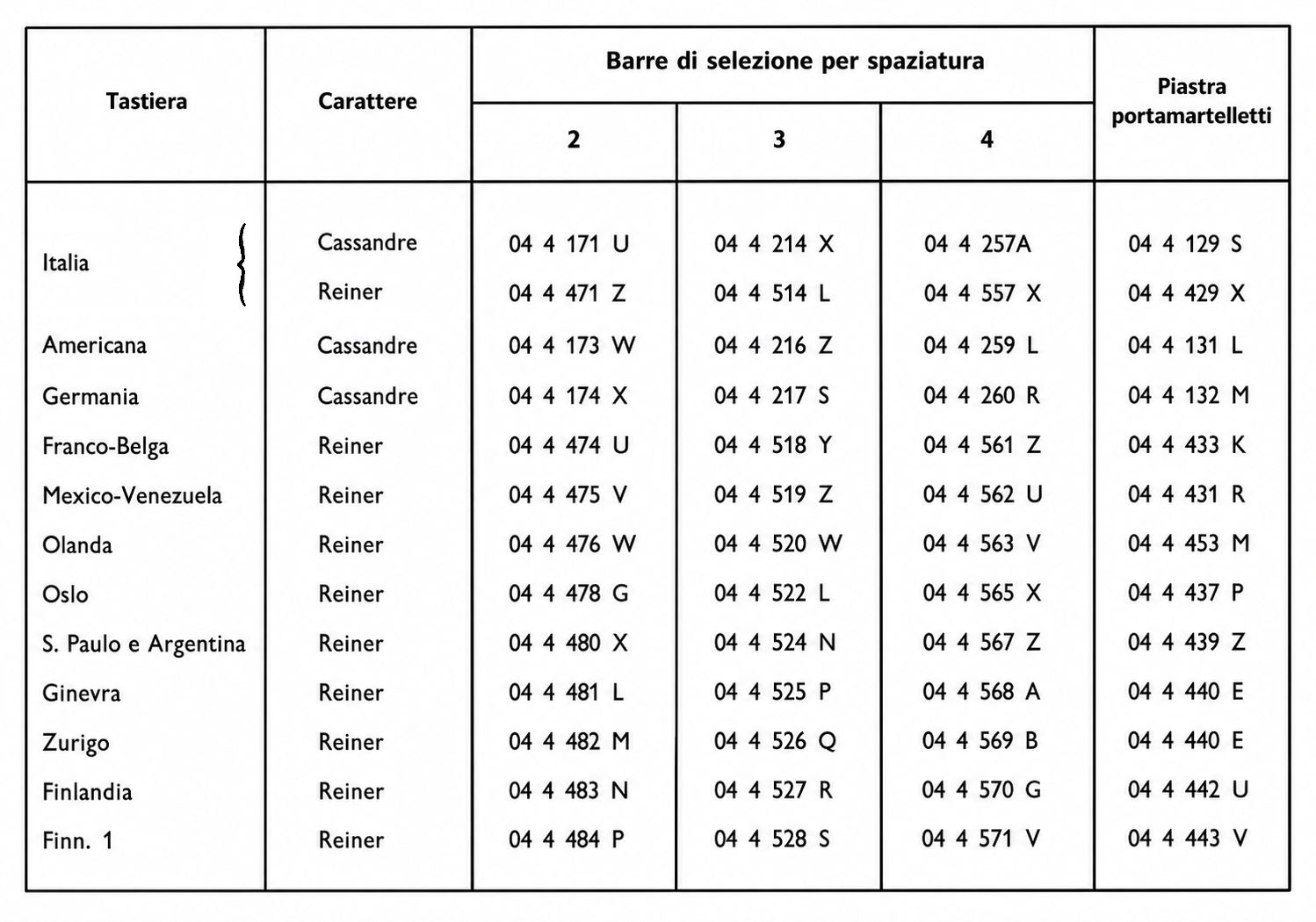 Twelve different national keyboard layouts were produced, tailored to the main markets targeted by Olivetti. However, it is important to note that Italy was the only market where both Reiner and Cassandre typefaces were available. For example, Graphika machines with a French AZERTY keyboard are found only with the Reiner typeface, as are Swiss QWERTZ models, while German QWERTZ machines feature only Cassandre, as do American QWERTY versions. For a detailed overview, all available keyboard layouts and their corresponding typefaces can be found in the table provided. A question I am often asked is: “Which of the two typefaces is rarer in absolute terms?” It is difficult to answer with certainty, as the production numbers for each country are not known. However, based on comparisons with other Olivetti collectors, Cassandre appears to be less common than Reiner, with an estimated distribution of roughly one-third Cassandre and two-thirds Reiner.
The Graphika achieved limited commercial success, and the reasons were mainly practical. The mechanical complexity of the system made it much more difficult to use than a Lexikon, both in terms of keystroke feel and carriage return; it was also more expensive, and the Lexikon itself was already a decidedly costly typewriter. In the event of a typing error or a partially struck character, returning to the exact position was not straightforward: one had to check the spacing table to determine how many units the character occupied and then press the backspace key the corresponding number of times. This was a common issue among all mechanical proportional-spacing typewriters, with the exception of the IBM Selectric Composer. Finally—and arguably this was the most significant drawback—the lack of a system capable of calculating spacing for proper text justification, combined with the use of a fabric ribbon rather than a carbon ribbon, prevented the machine from gaining traction in small print shops, where it could otherwise have established itself as a tool for producing masters for spirit duplicators.
This is the story of the Graphika, the rare Olivetti manual typewriter produced in fewer than 8,000 units at the Olivetti factories in Glasgow and Ivrea between 1957 and 1959. Once considered a “failed” machine, it is now highly sought after by collectors, captivating mechanical writing enthusiasts around the world who are eager to produce typescripts with its uniquely distinctive character.
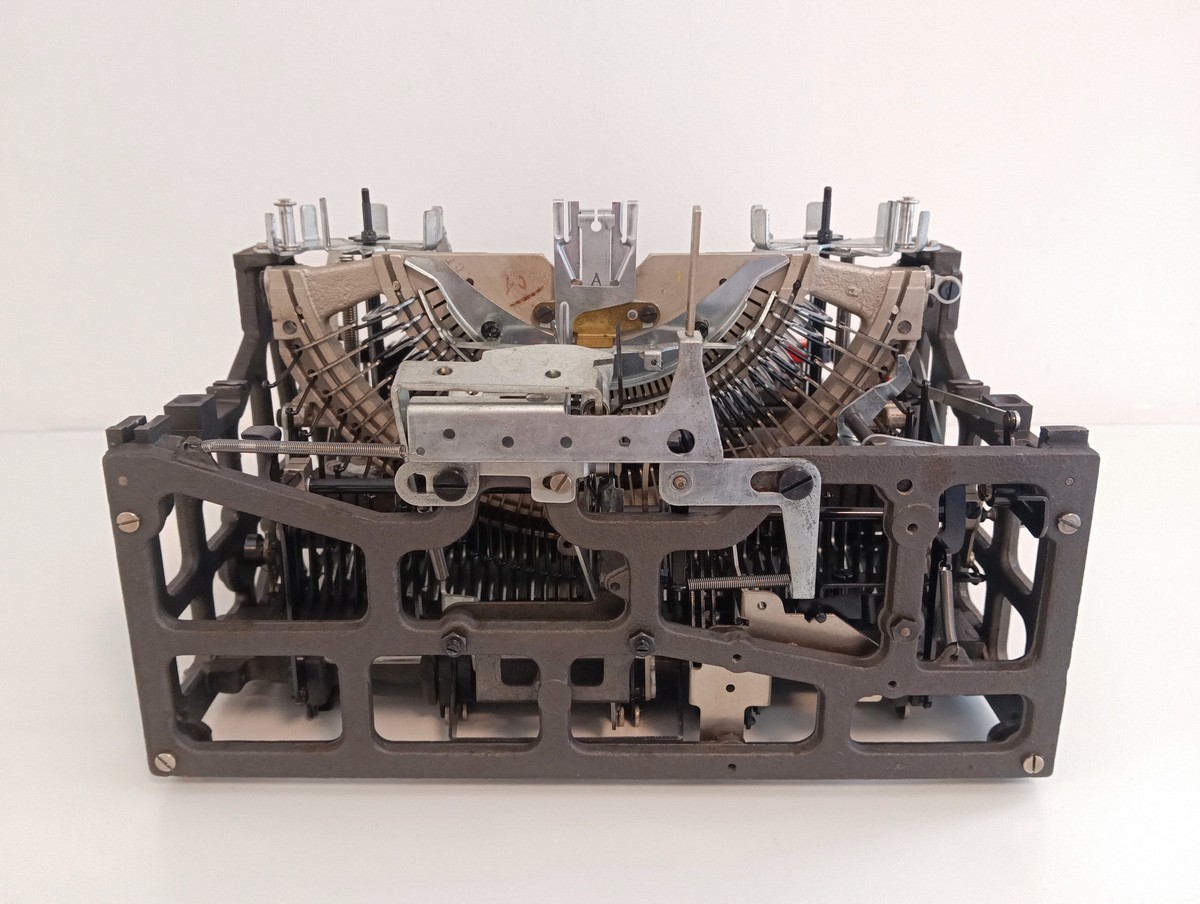
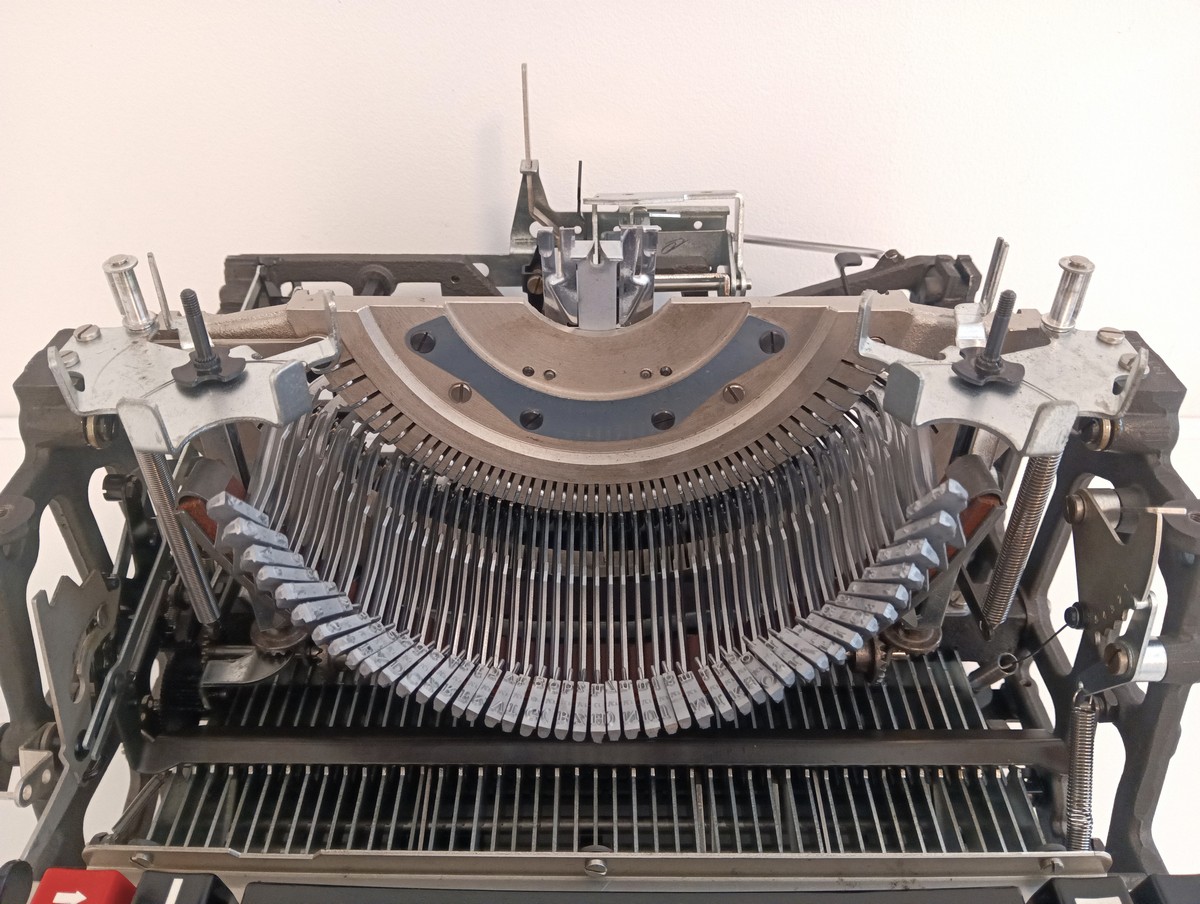
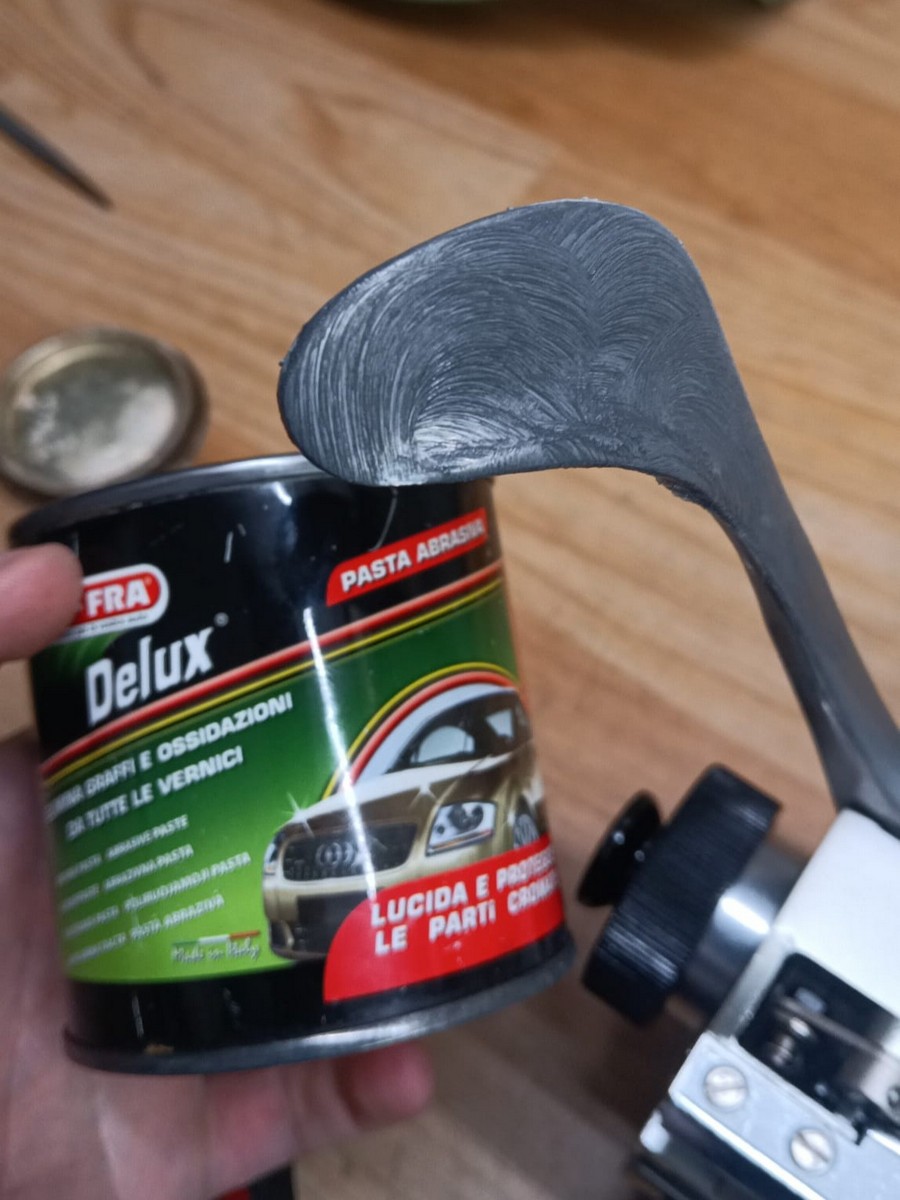
A complete restoration of a typewriter begins with the disassembly of the machine, followed by a thorough cleaning of all mechanical components, first using an ultrasonic bath and then rinse using a petroleum-based solvent. External panels are treated separately with water-based products to preserve their original color.
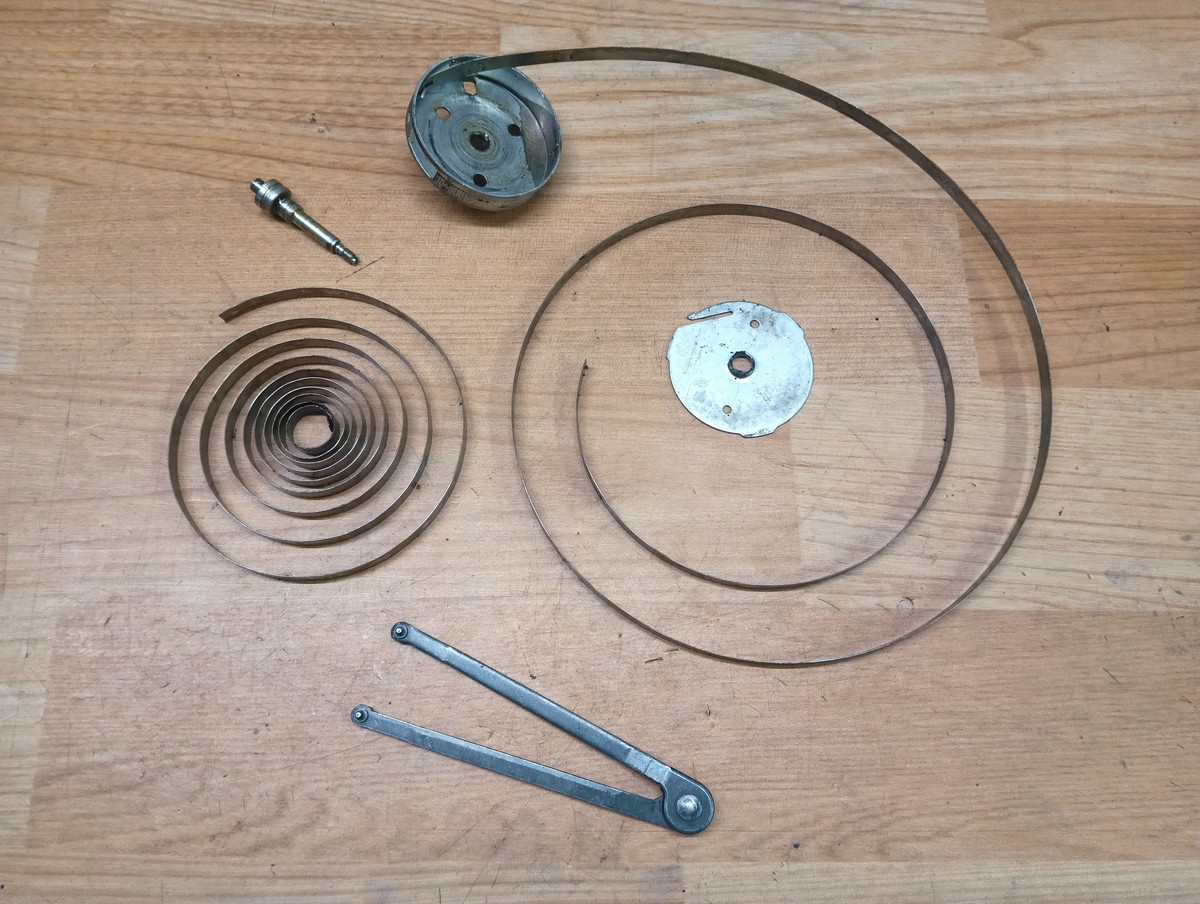
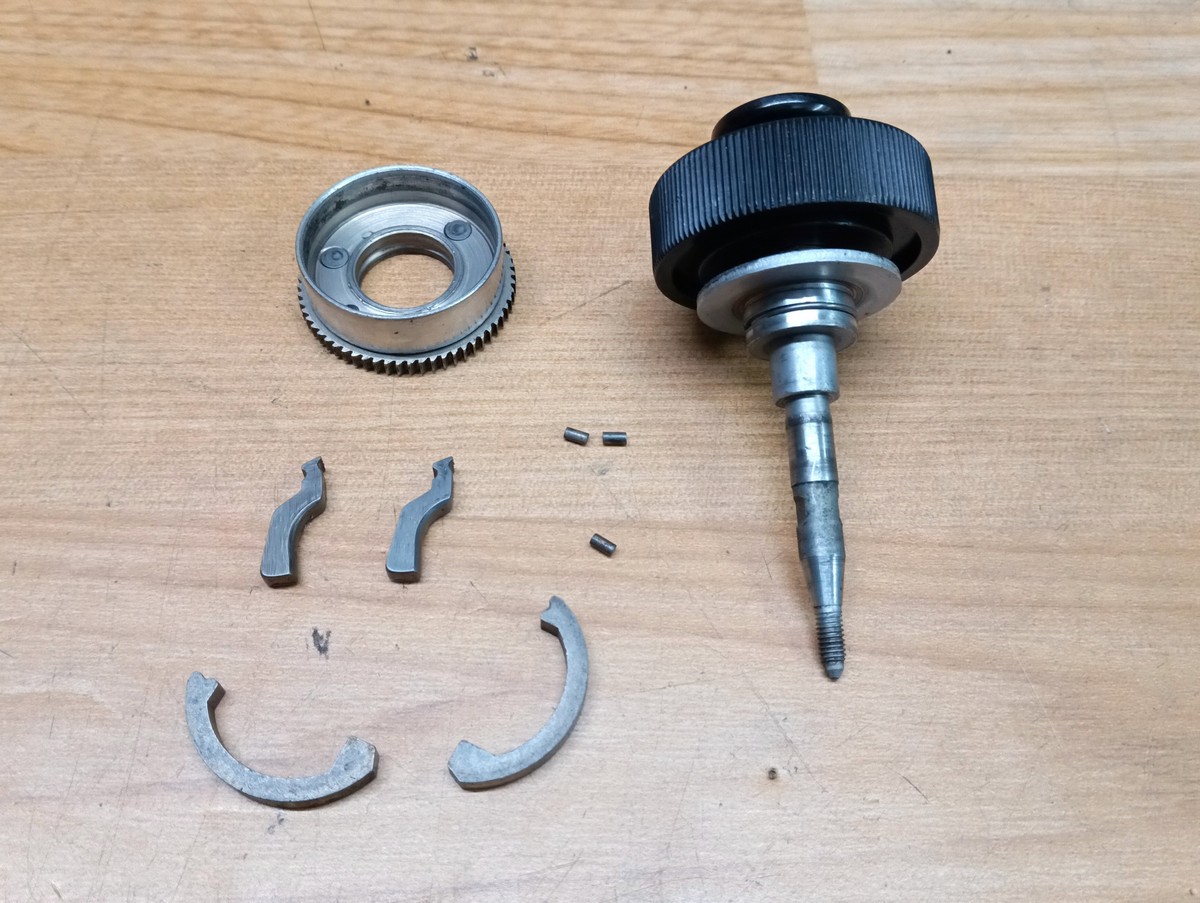
Once cleaned, every component is carefully dried and reassembled, and then the internal mechanism is precisely lubricated to guarantee optimal performance. The mainspring is also dismantled, cleaned, and reassembled with fresh grease, ensuring consistent tension and smooth carriage movement.
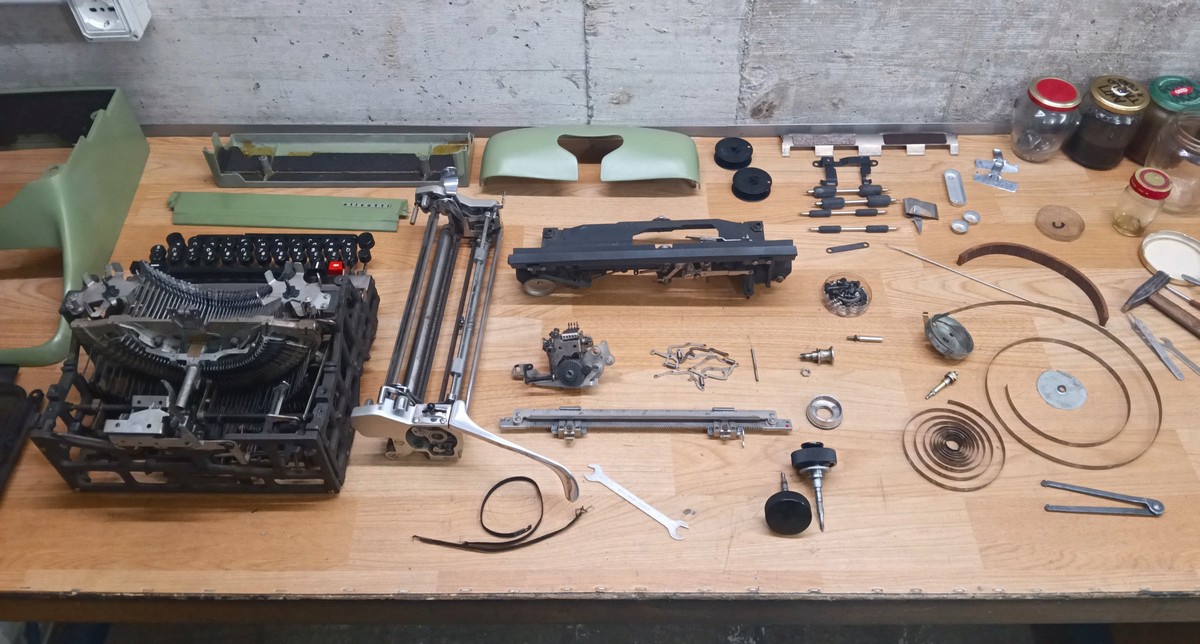
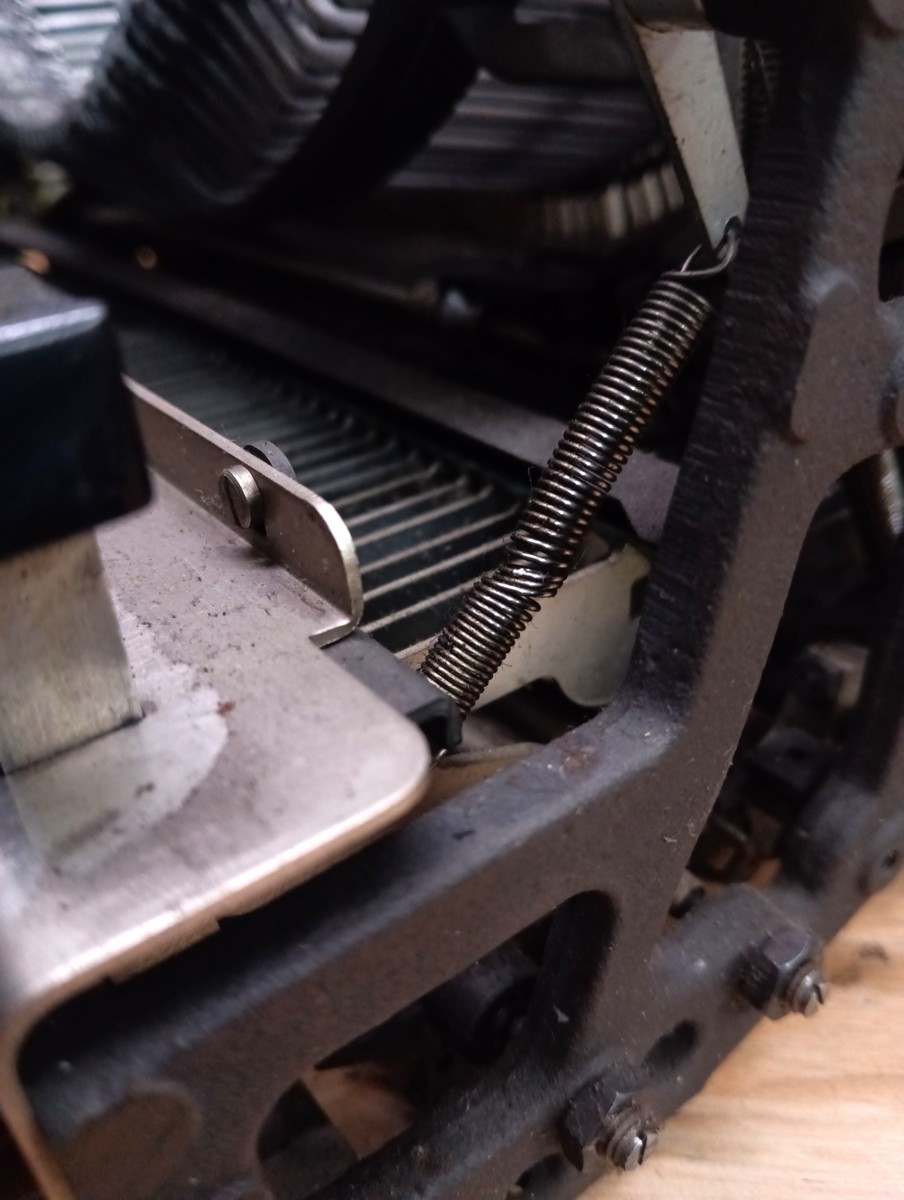
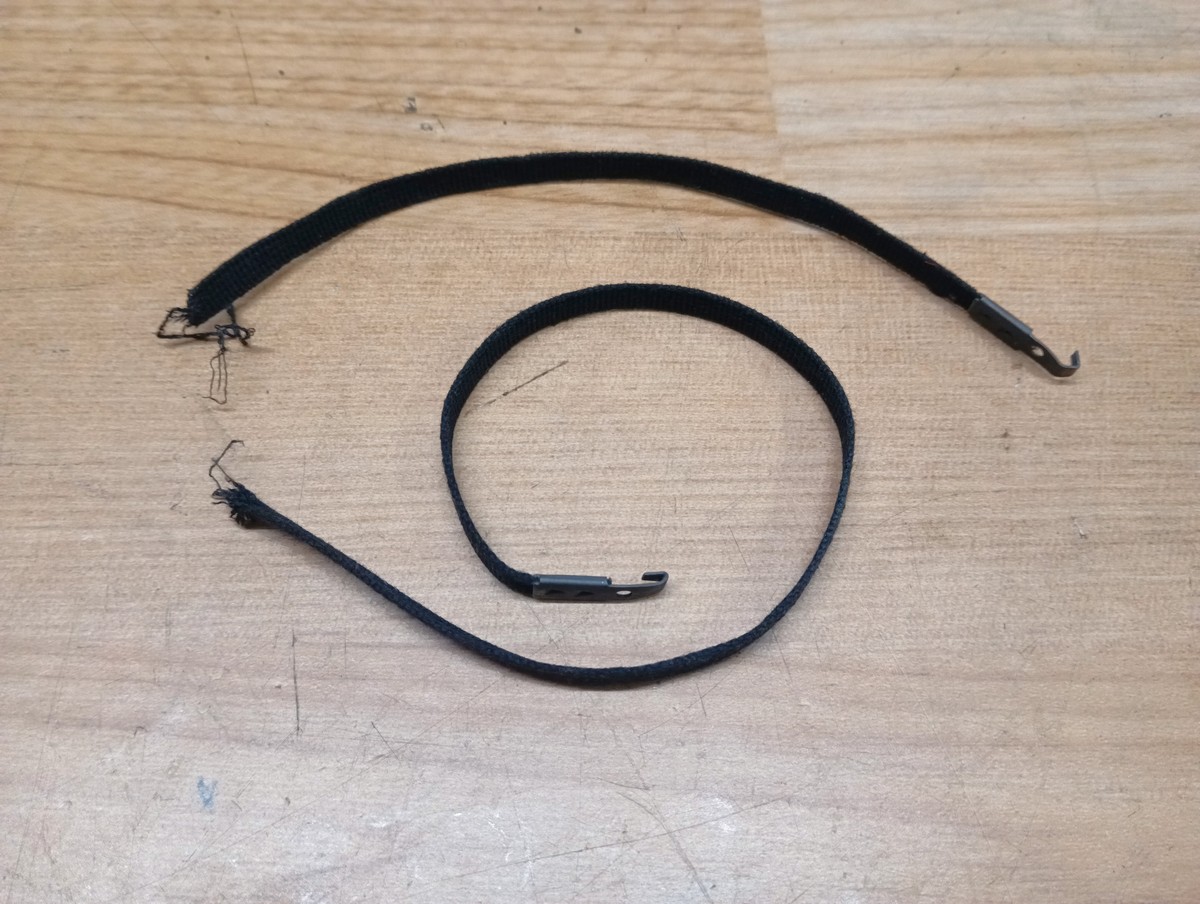
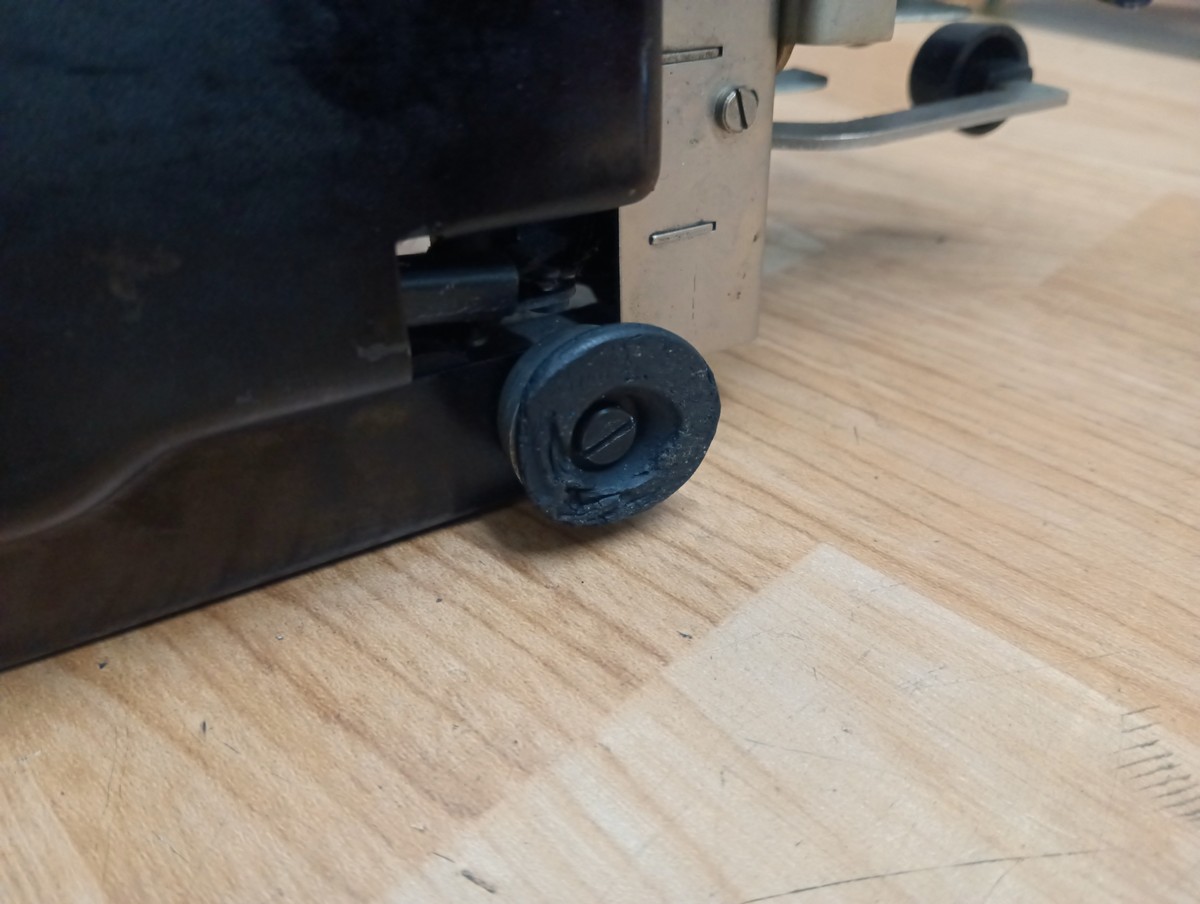
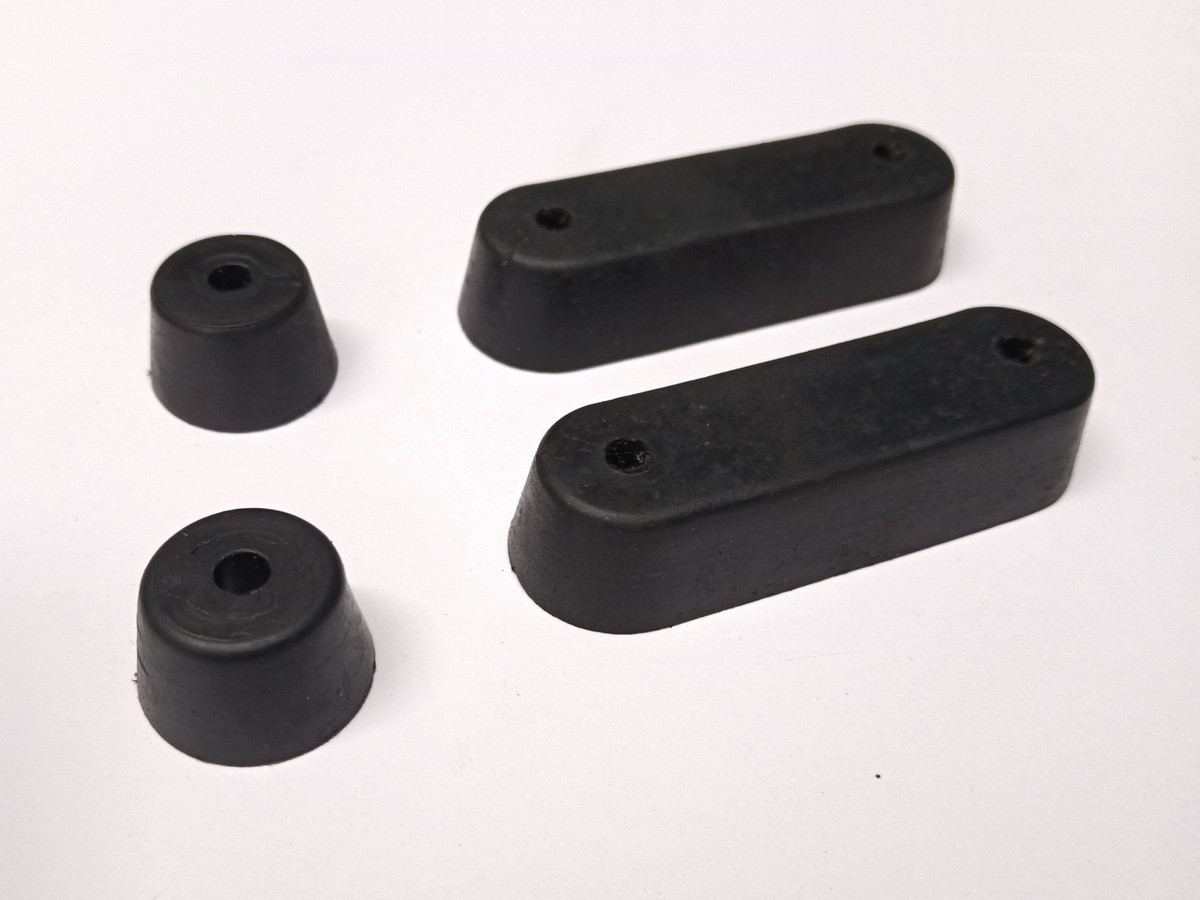
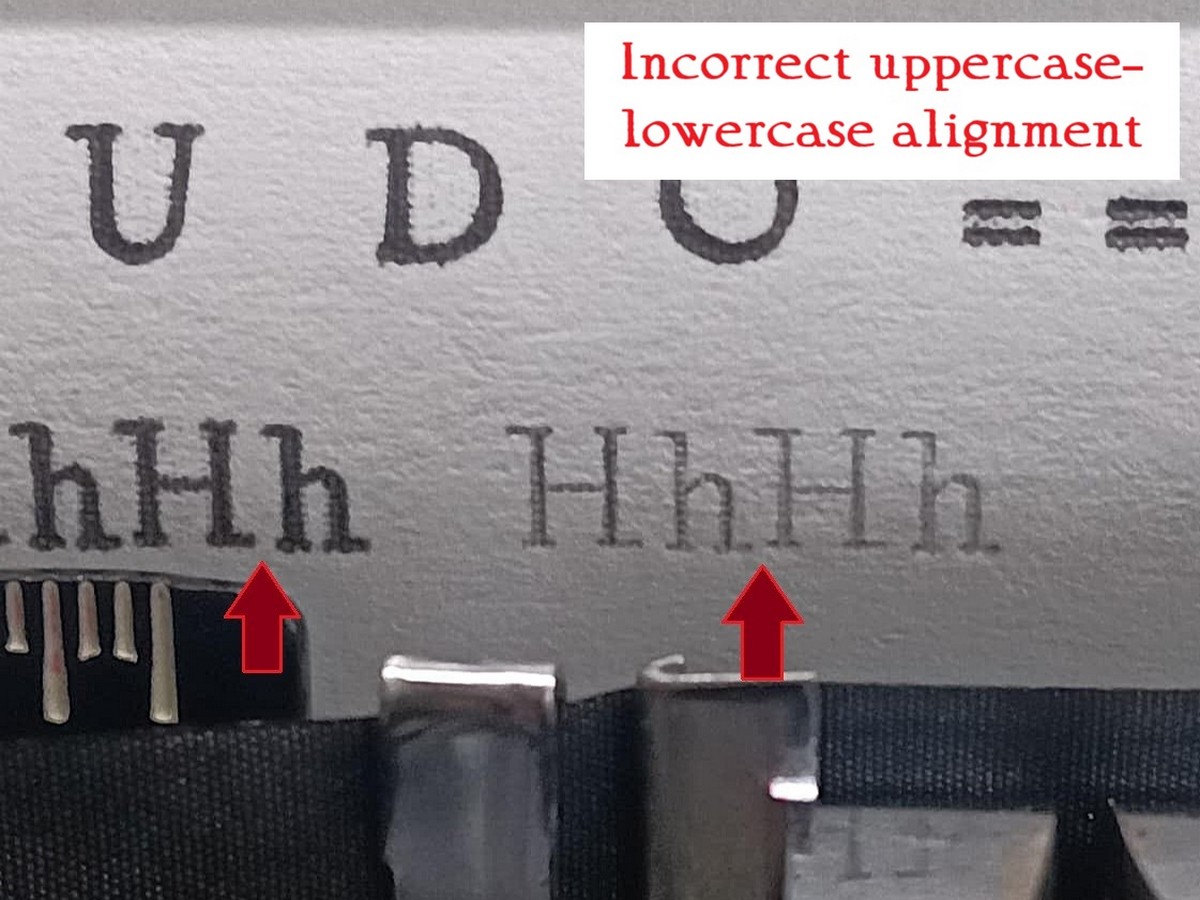
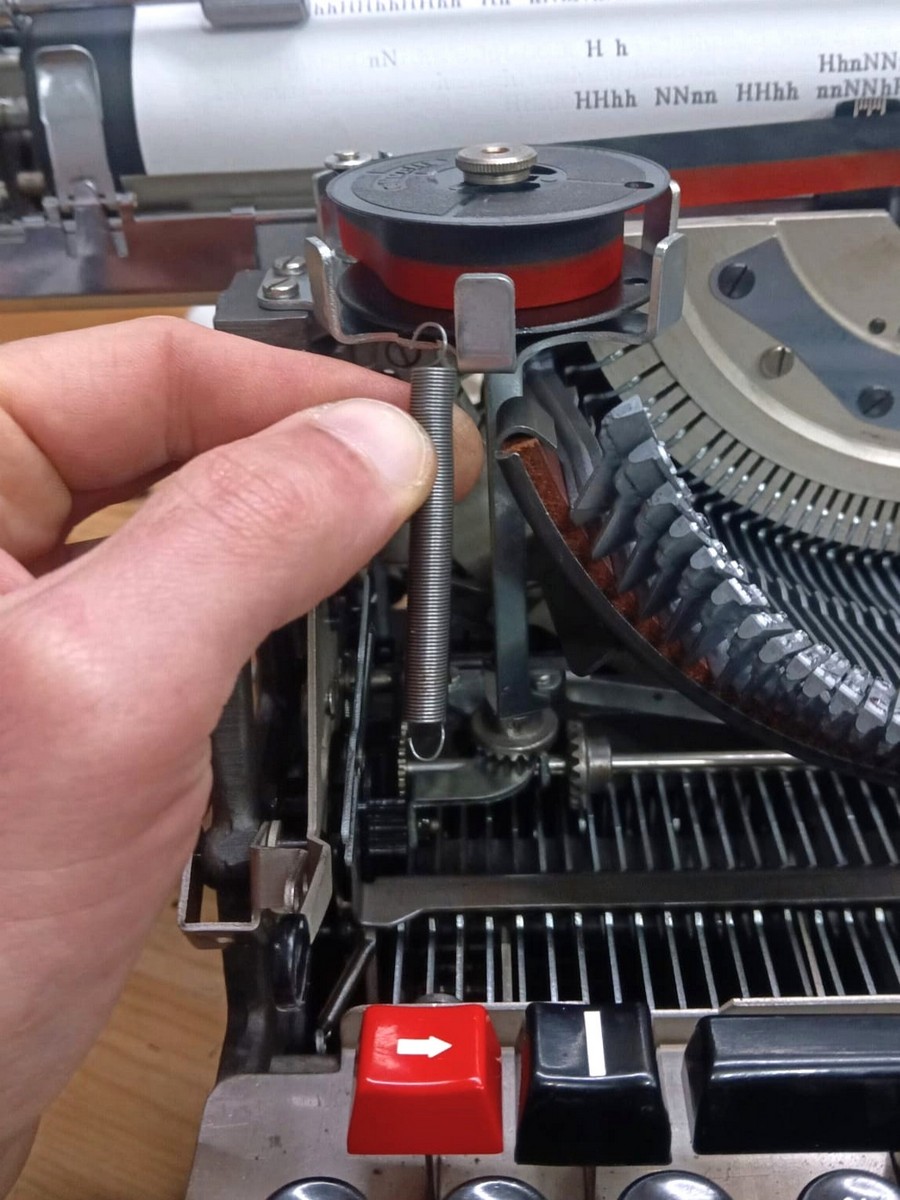
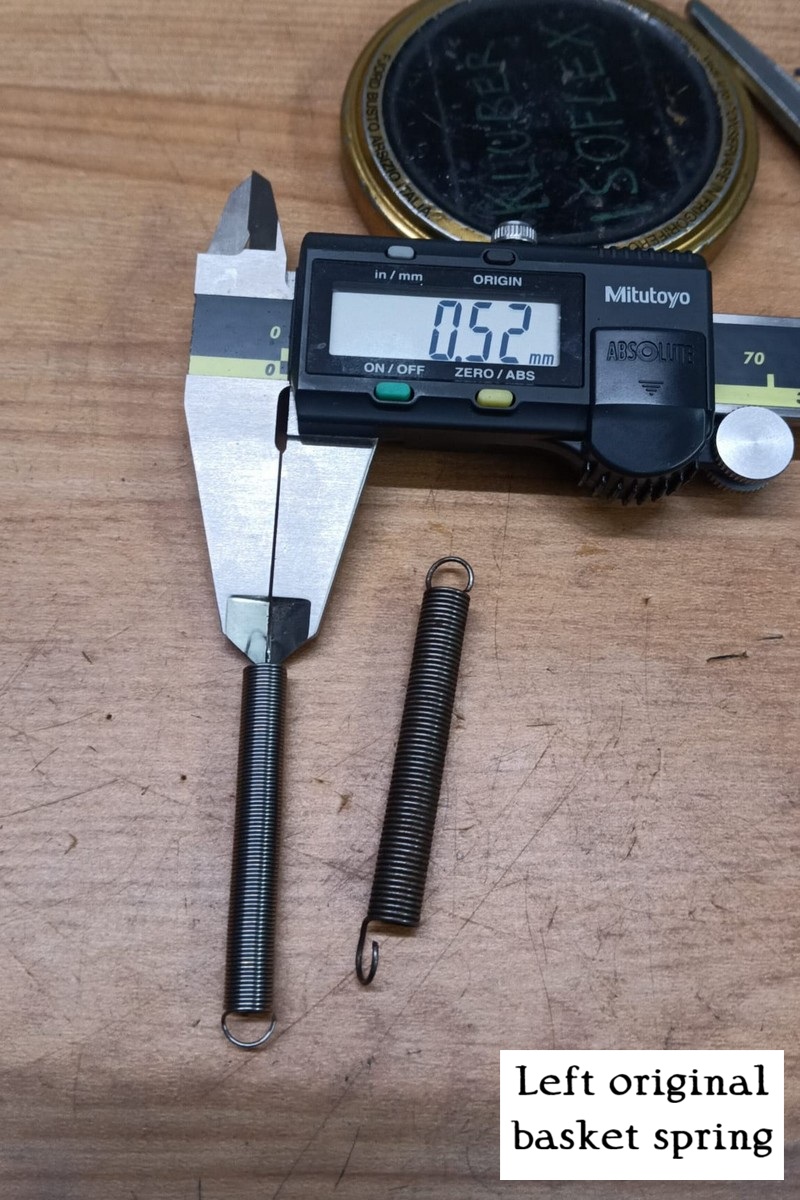
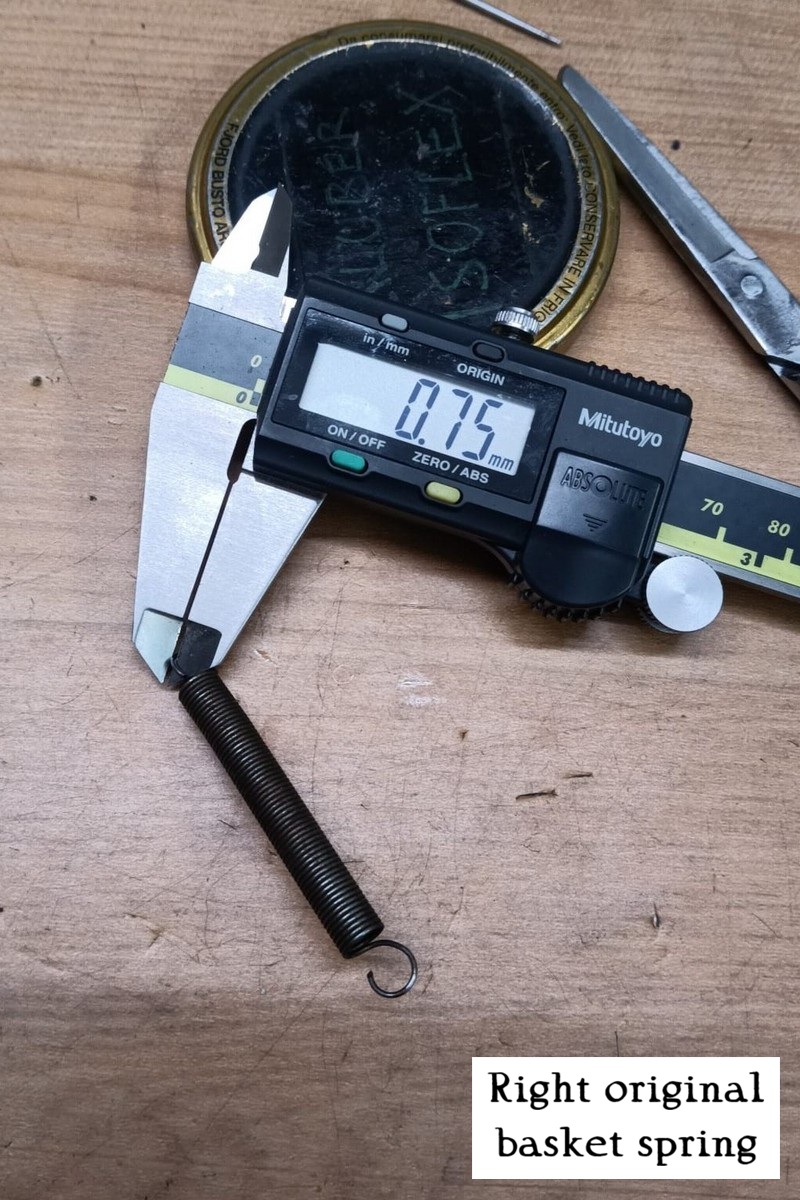
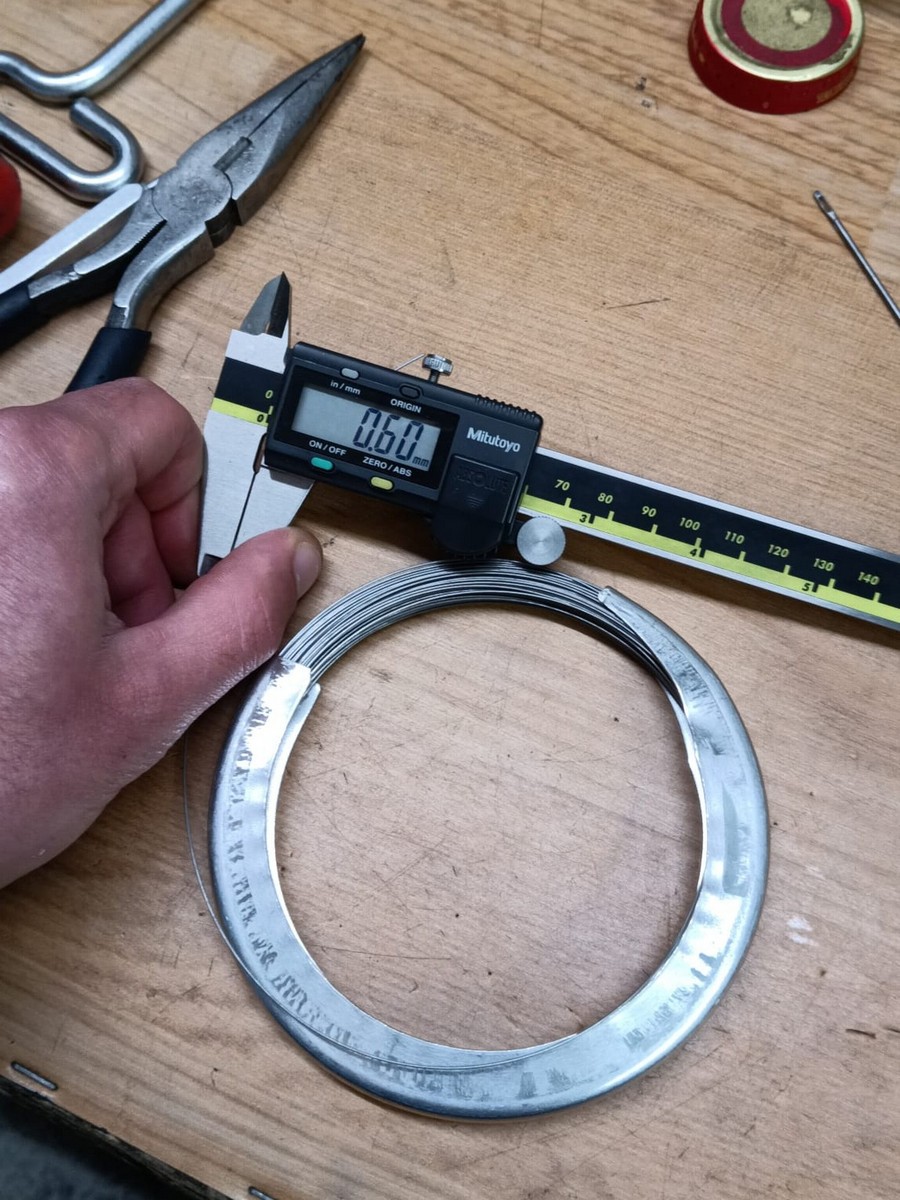
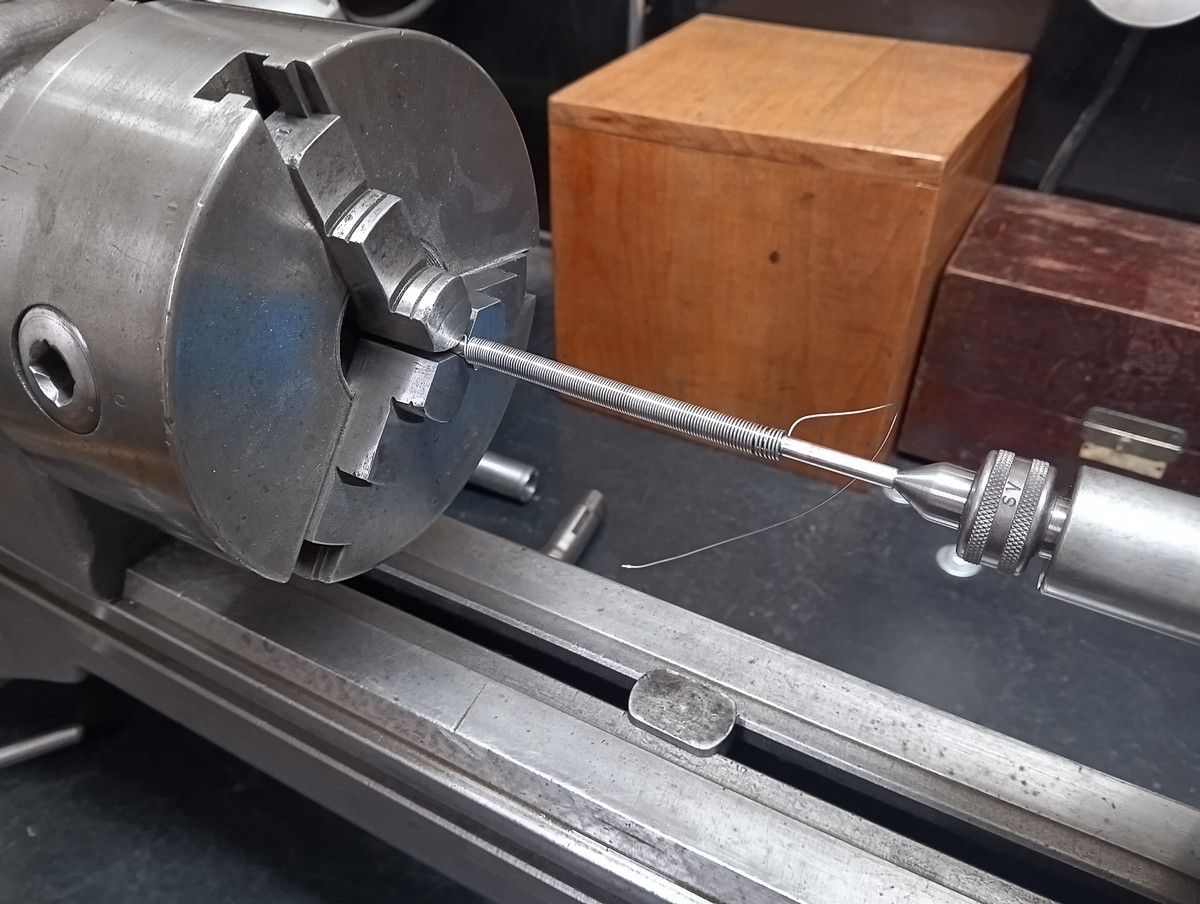
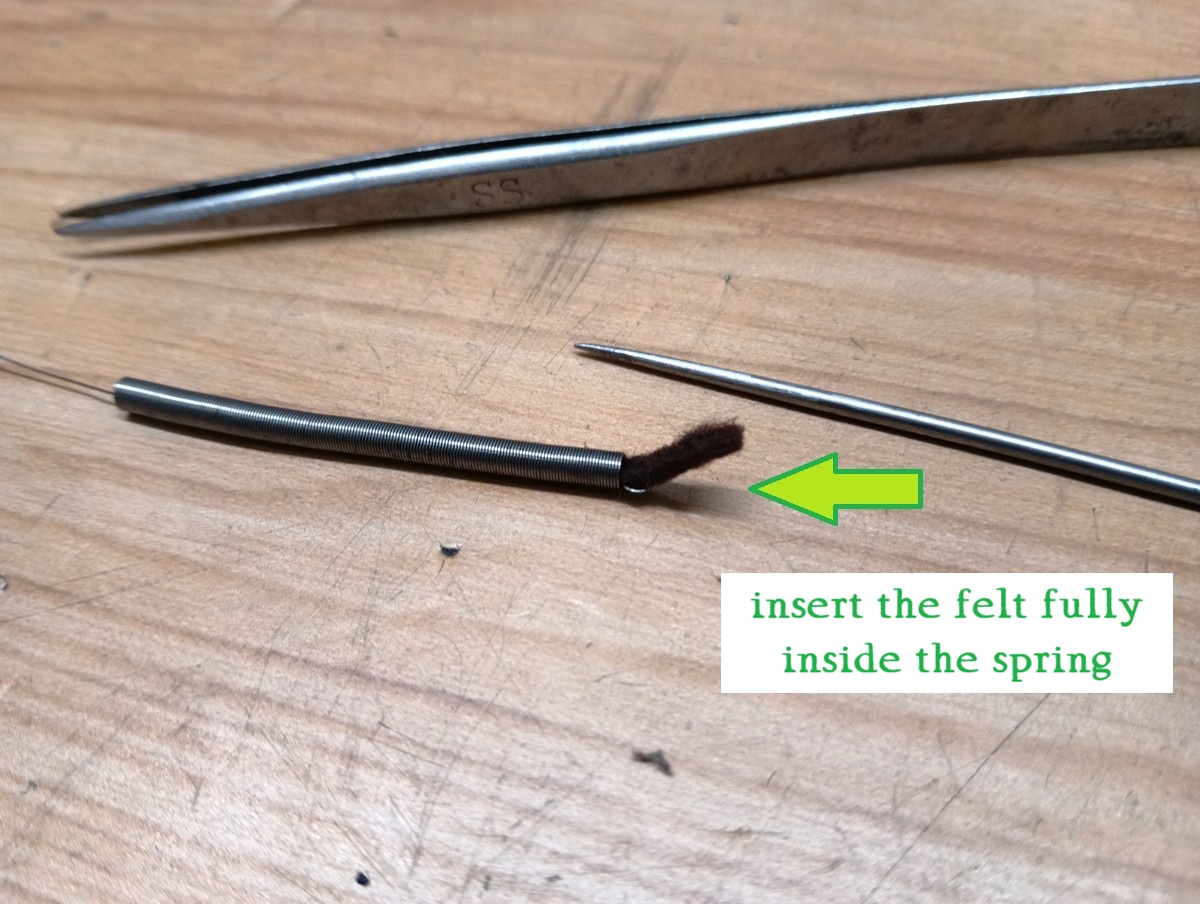
The machine then undergoes a comprehensive adjustment process, including fine-tuning of the kinematics, ribbon lift, and upper/lower case alignment. Components subject to natural wear, such as the ink ribbon, rubber grommets, carriage drawcord, and any weakened springs, are replaced with new parts. Damaged components are replaced with New Old Stock parts or repaired.
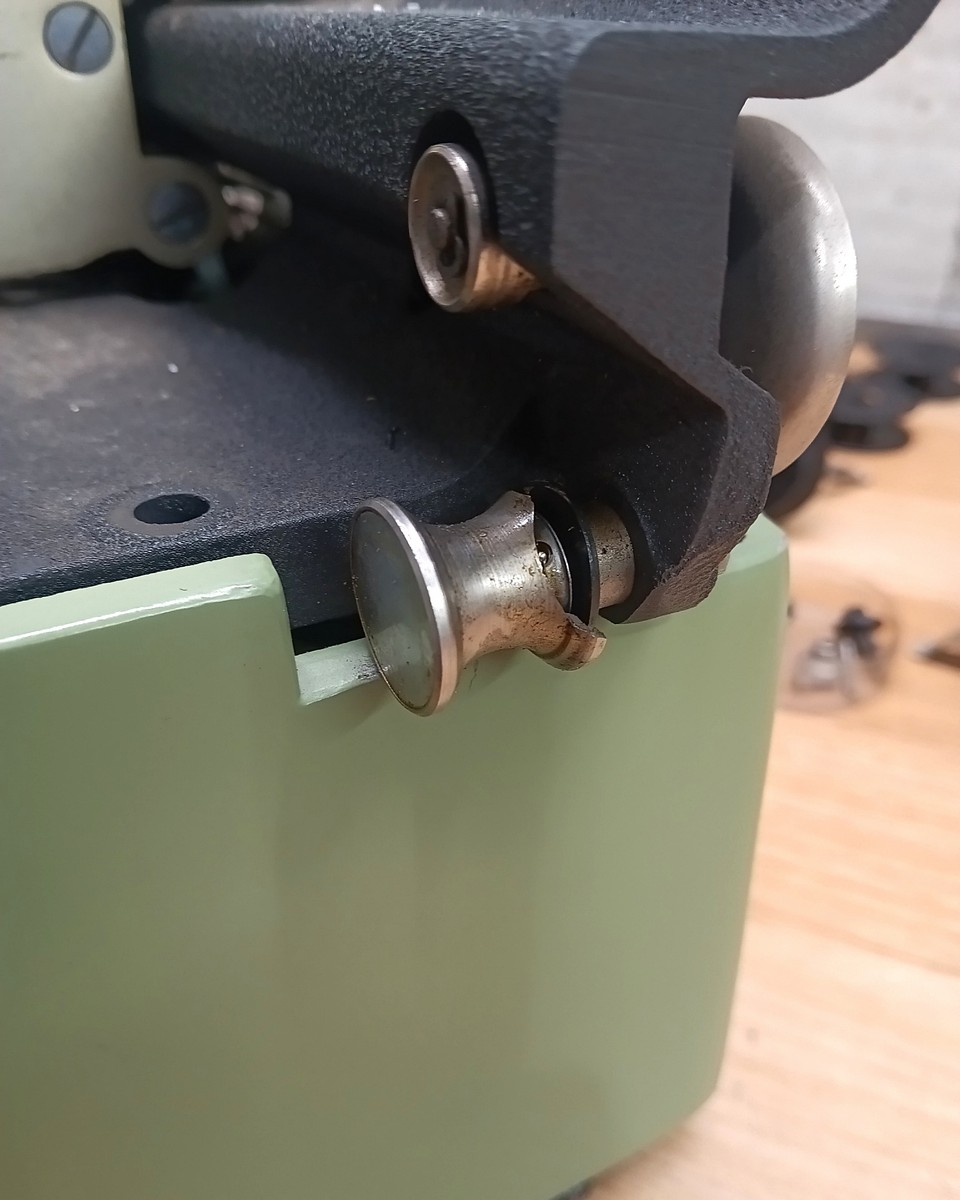
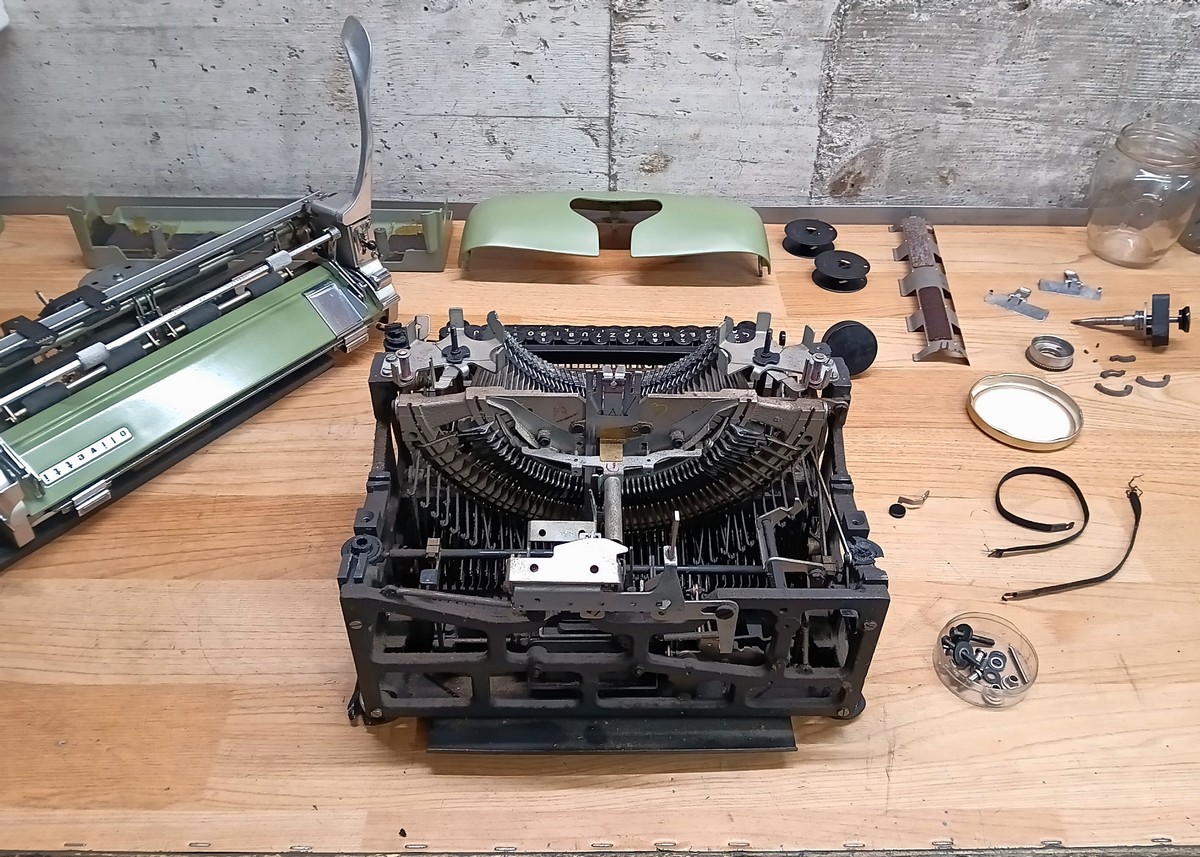
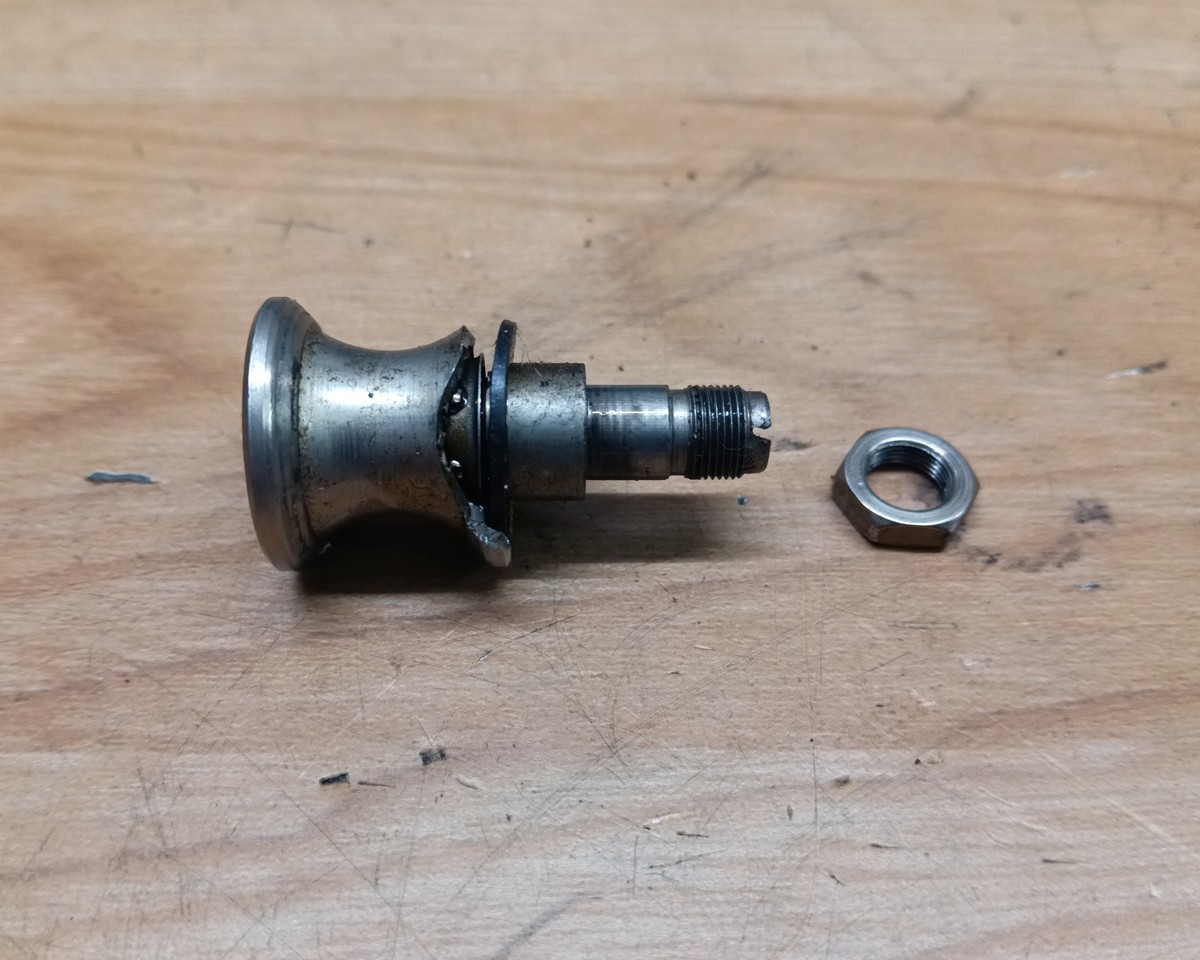
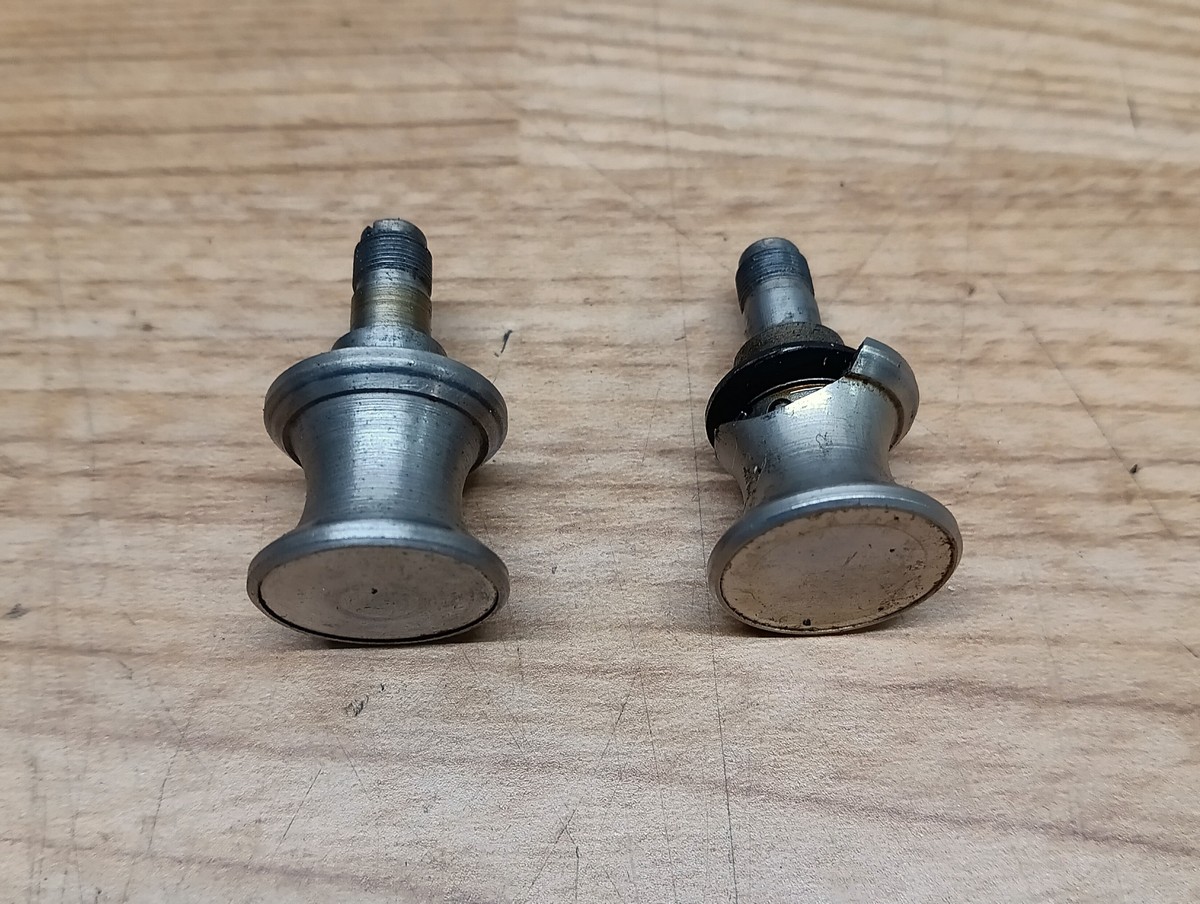
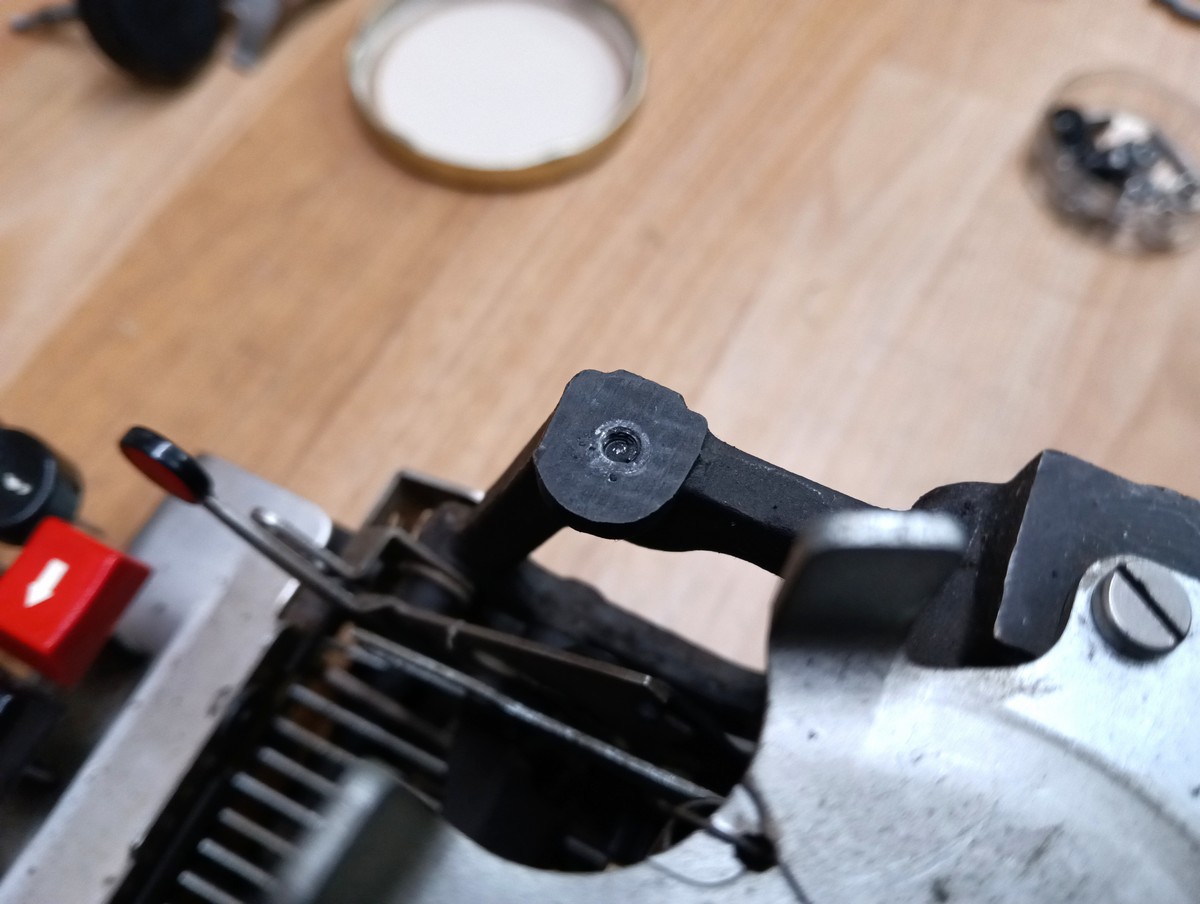
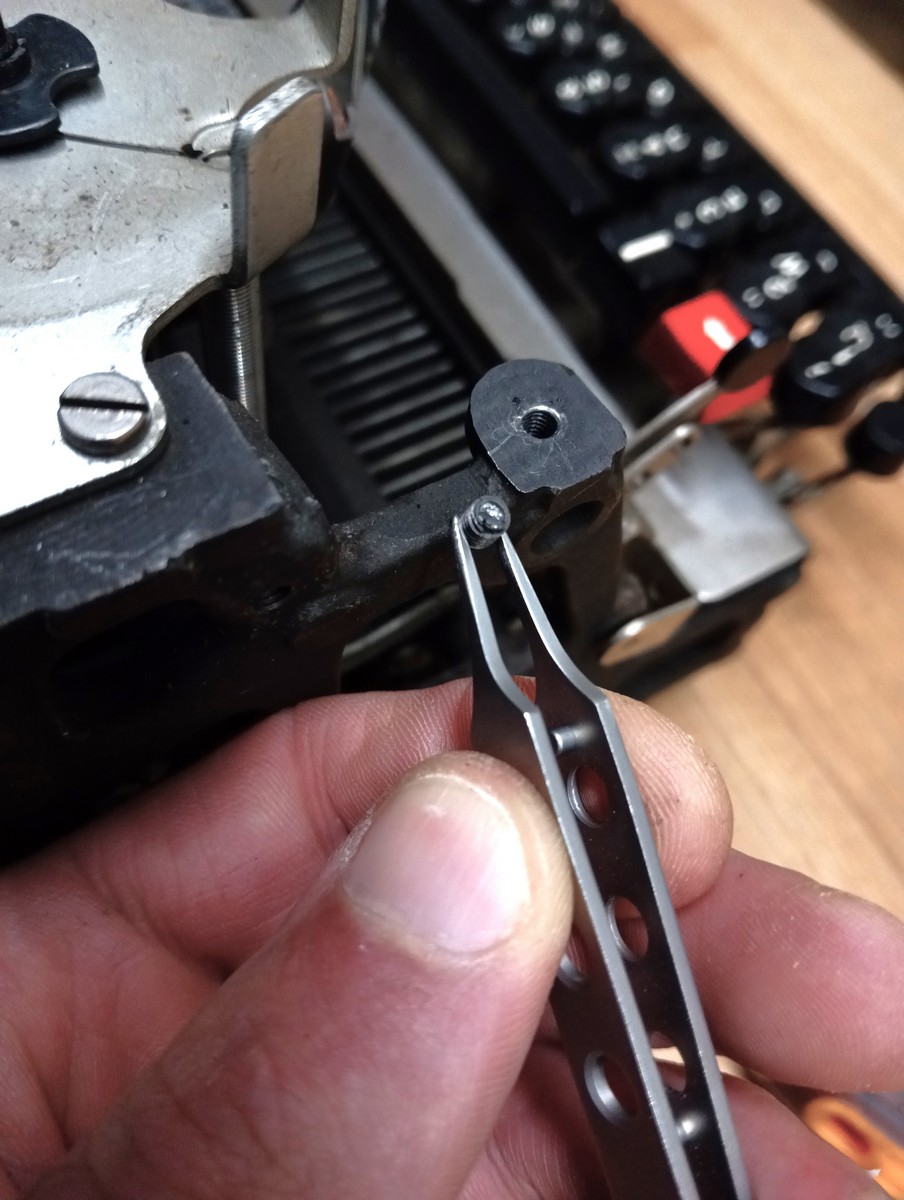

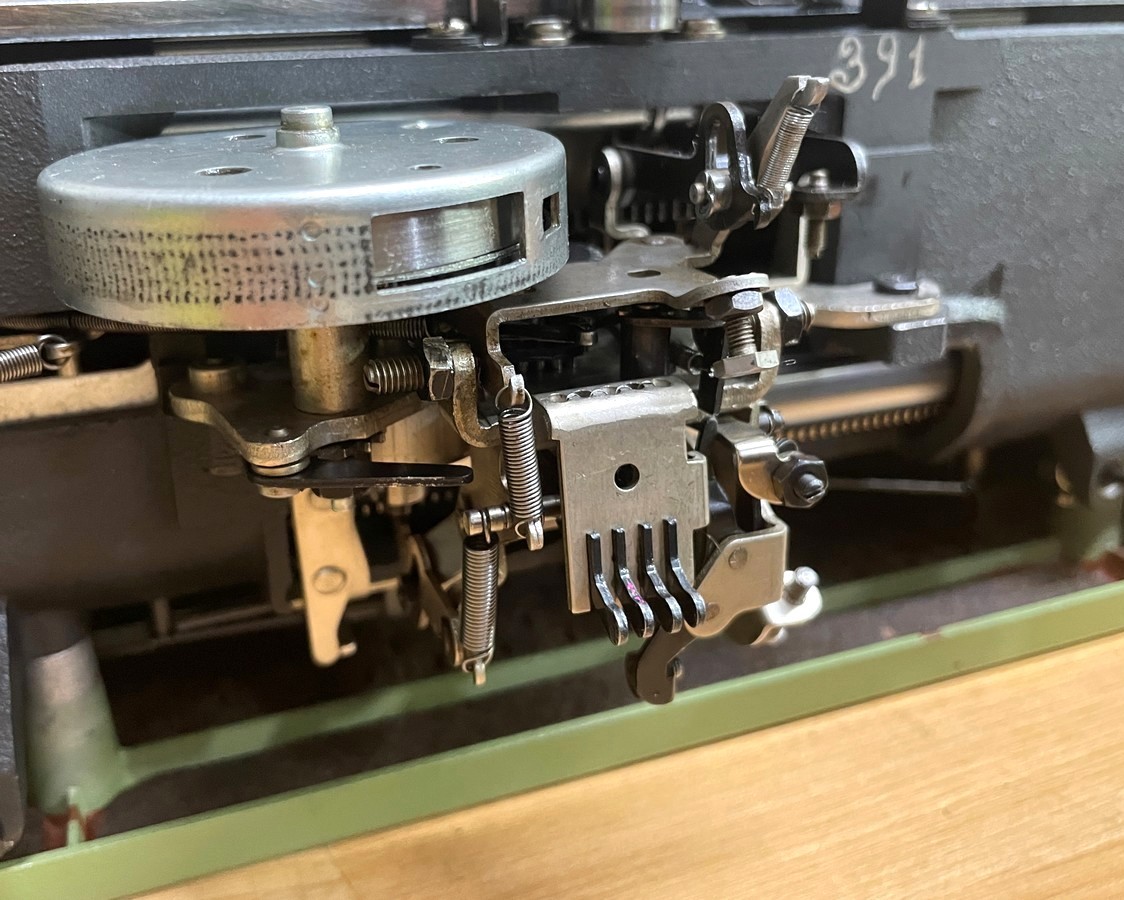
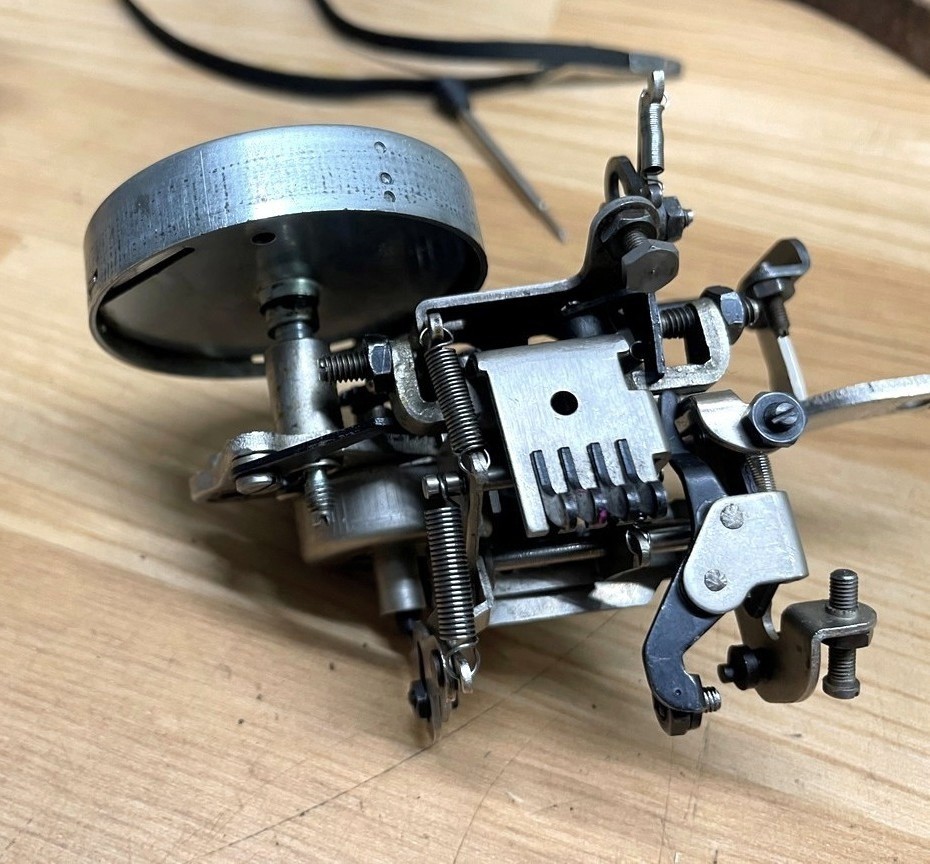



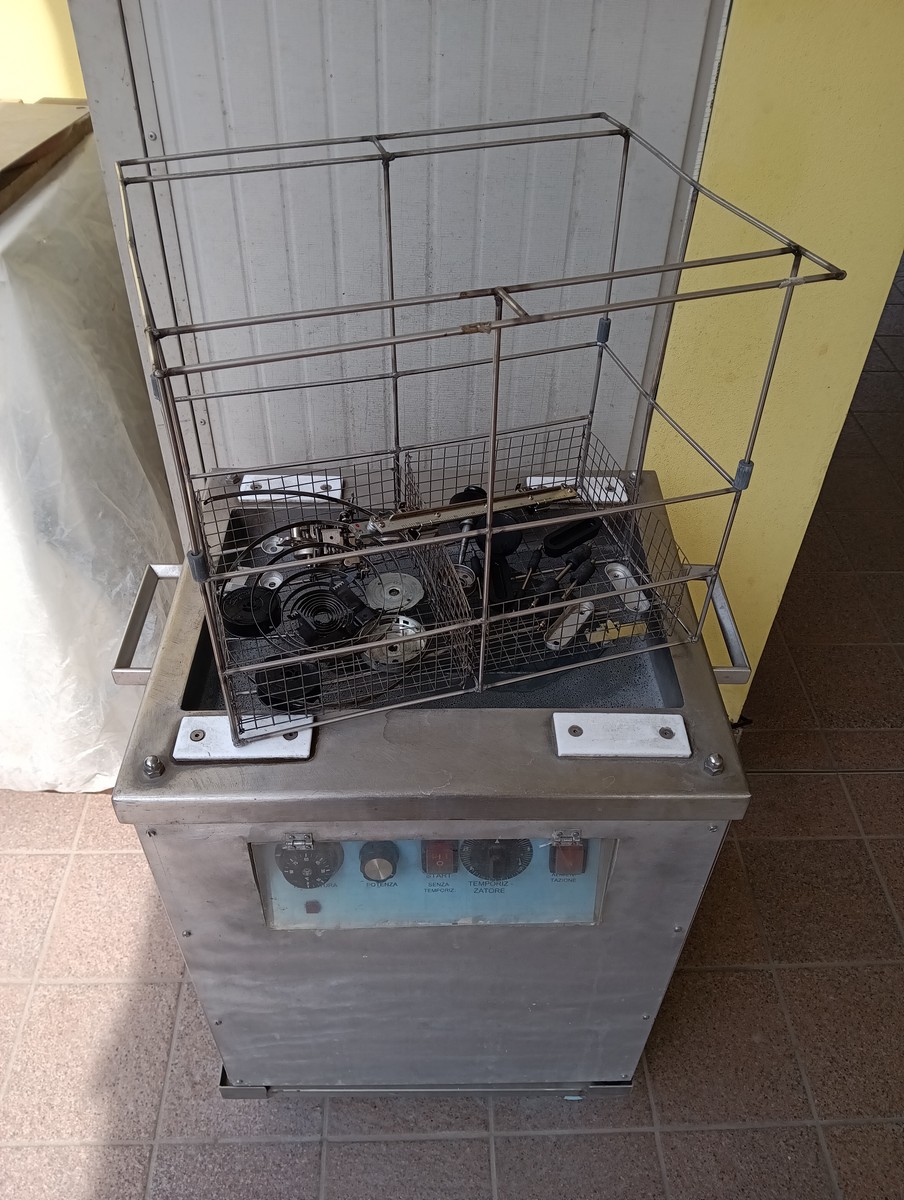
Against stubborn dirt dried after fifty or more years of neglect, the classic combination of kerosene and a brush would achieve very little. I am referring specifically to dried correction fluid, eraser residue—sometimes melted by the heat of an attic—hardened grease, deposits of sebum mixed with dead skin, and so on. The ultrasonic cleaning tank I use in my restorations was built by a specialized company and is specifically designed and custom-made for cleaning typewriters.
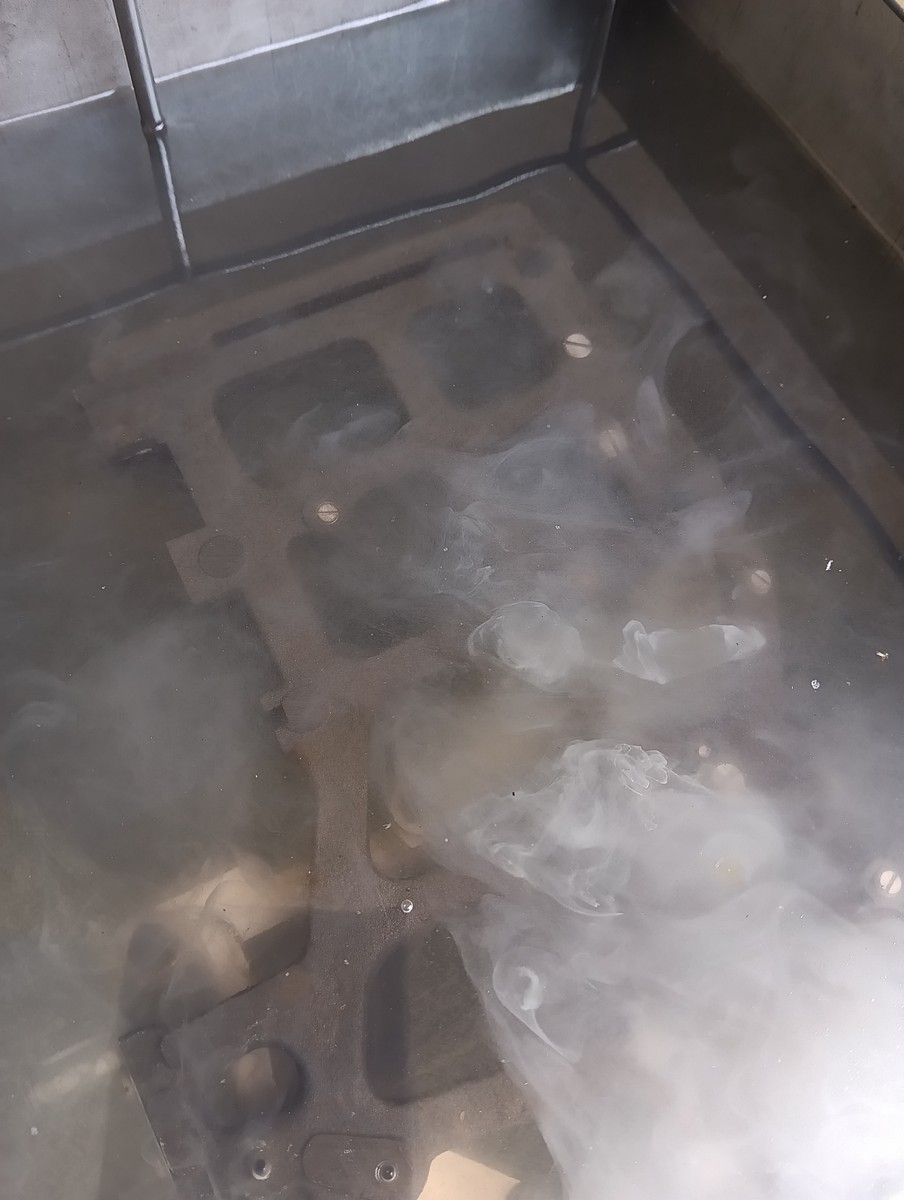
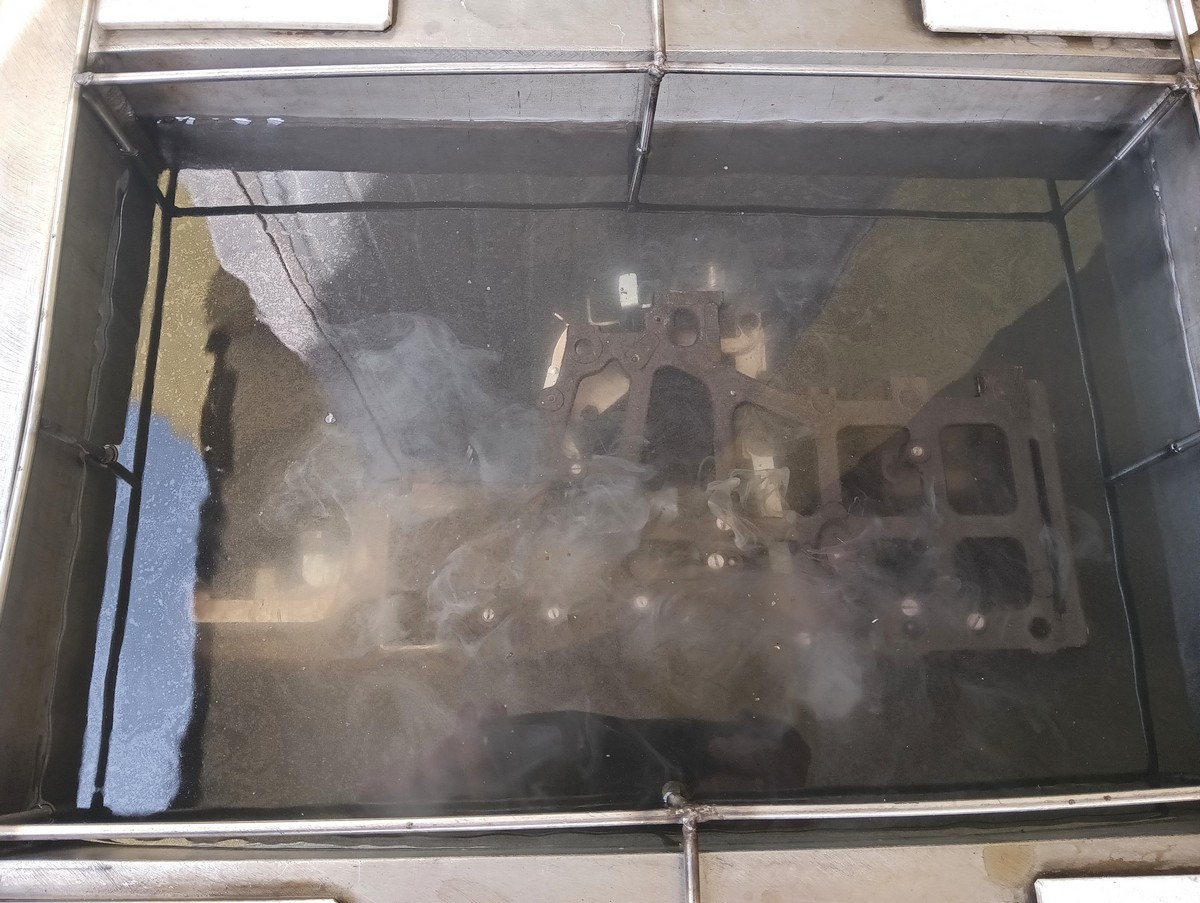
How does it work? The phenomenon involved is cavitation. The powerful waves generated by the sonotrodes are transmitted into the water, creating microbubbles at extremely high pressure that implode upon contact with the object. Using a simple solution of water and soap, a combined action is achieved: a physical high-frequency “micro-brushing” effect together with the degreasing action of the detergent dissolved in the bath. The result is excellent, with a low environmental impact when biodegradable soaps are used.
After the washing process, it is essential to rinse the components in white petrol to remove any residual moisture and prevent oxidation. This step ensures that even the smallest traces of water are eliminated before drying and lubrication.

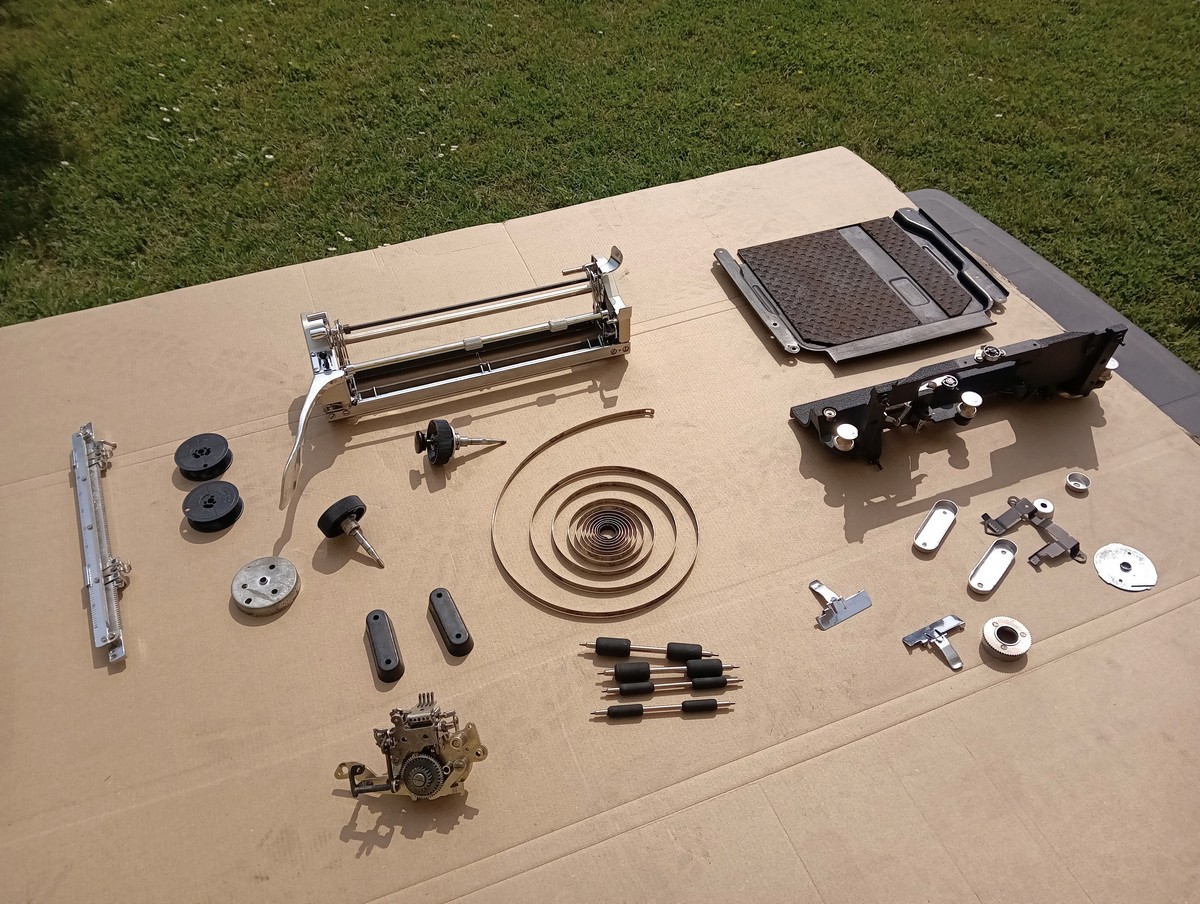
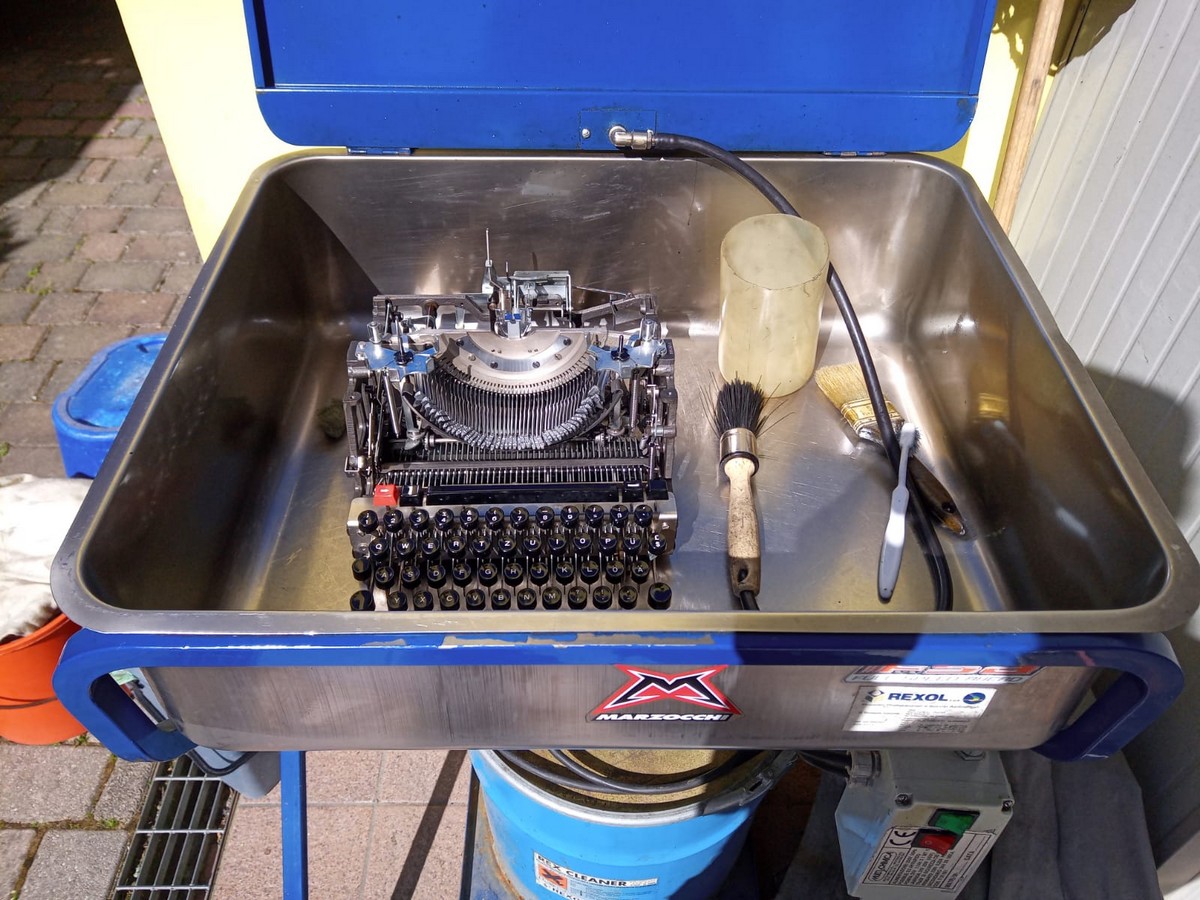
To restore a Olivetti Graphika to perfect working condition, it is essential to rebuild the various rubber components, which over time tend to harden and eventually crumble completely. Feet, main platen, and both lower and front paper rollers—all must be renewed. Everything is made possible thanks to experience and specialized equipment. For more information, please visit this page.








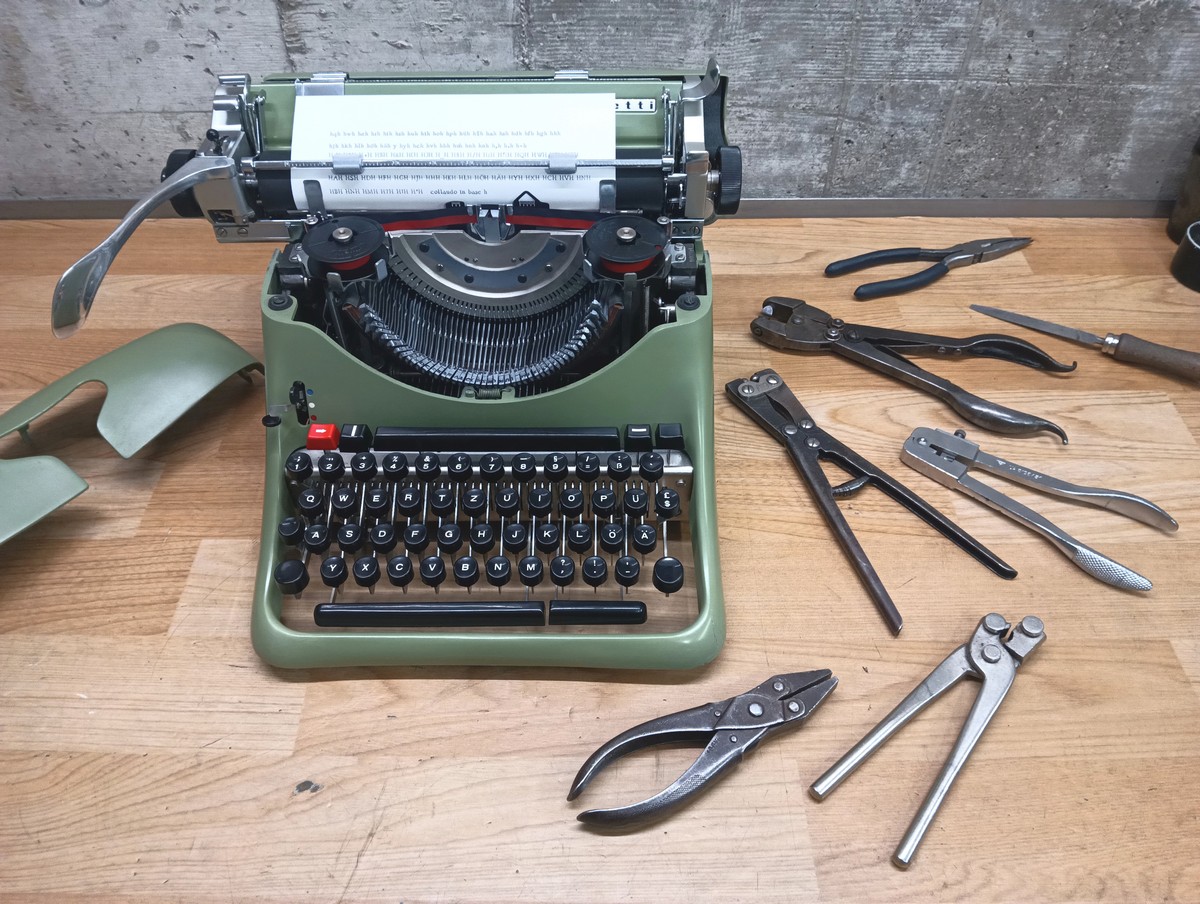


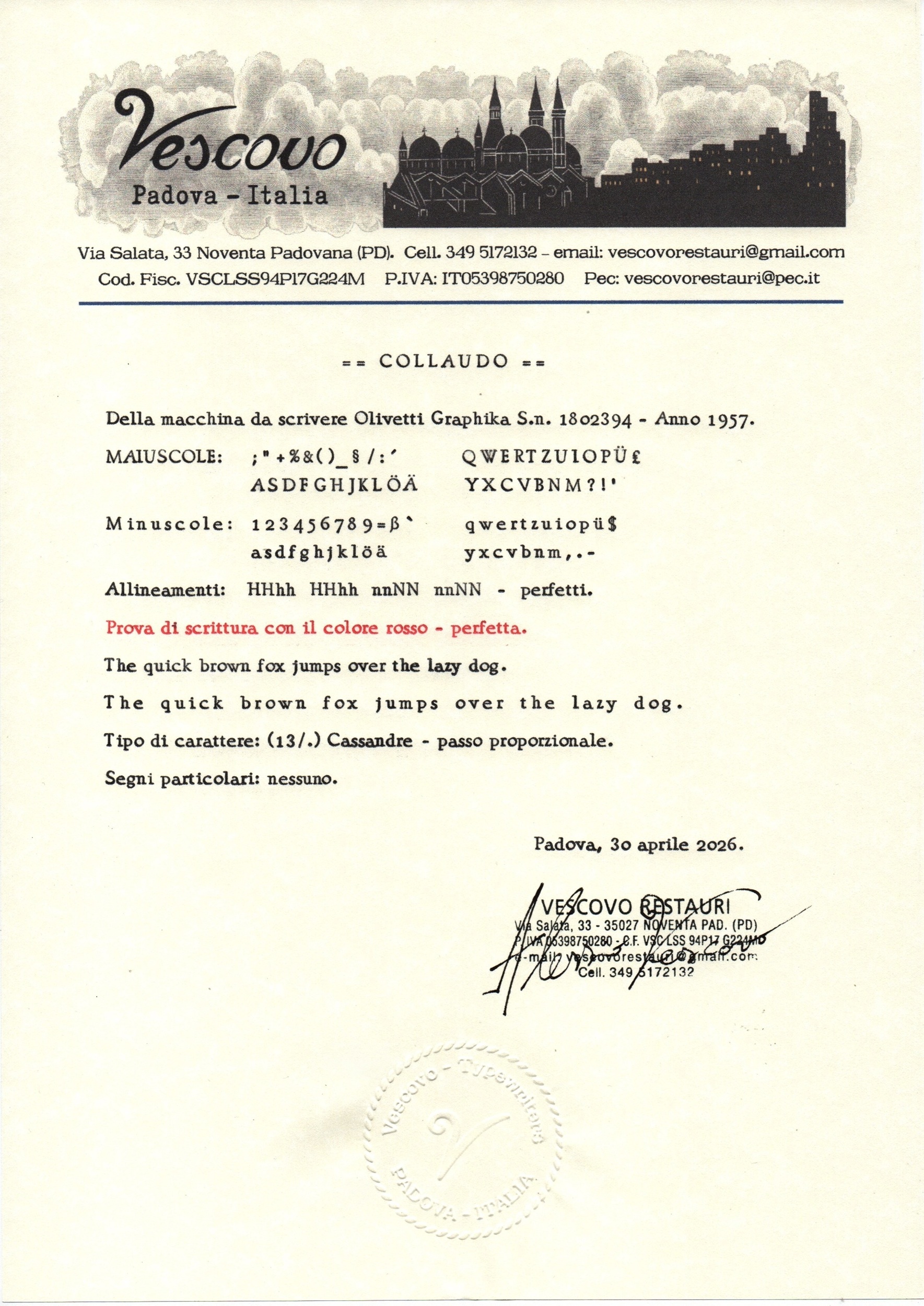
At the end of the restoration, the typewriter undergoes a complete functional test. A final test certificate—typed on the machine itself, signed, and stamped—is issued as proof of successful inspection and completion of the service.