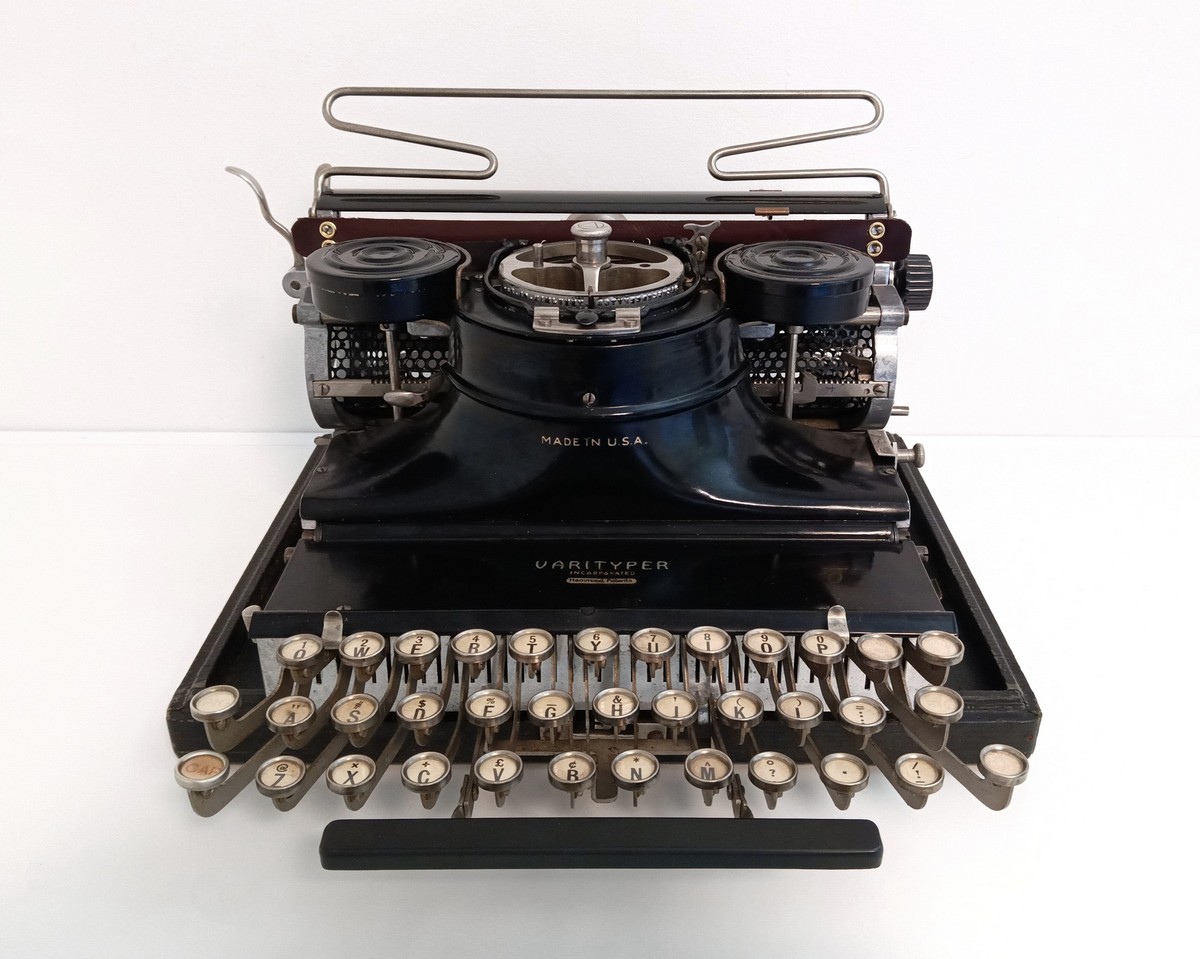
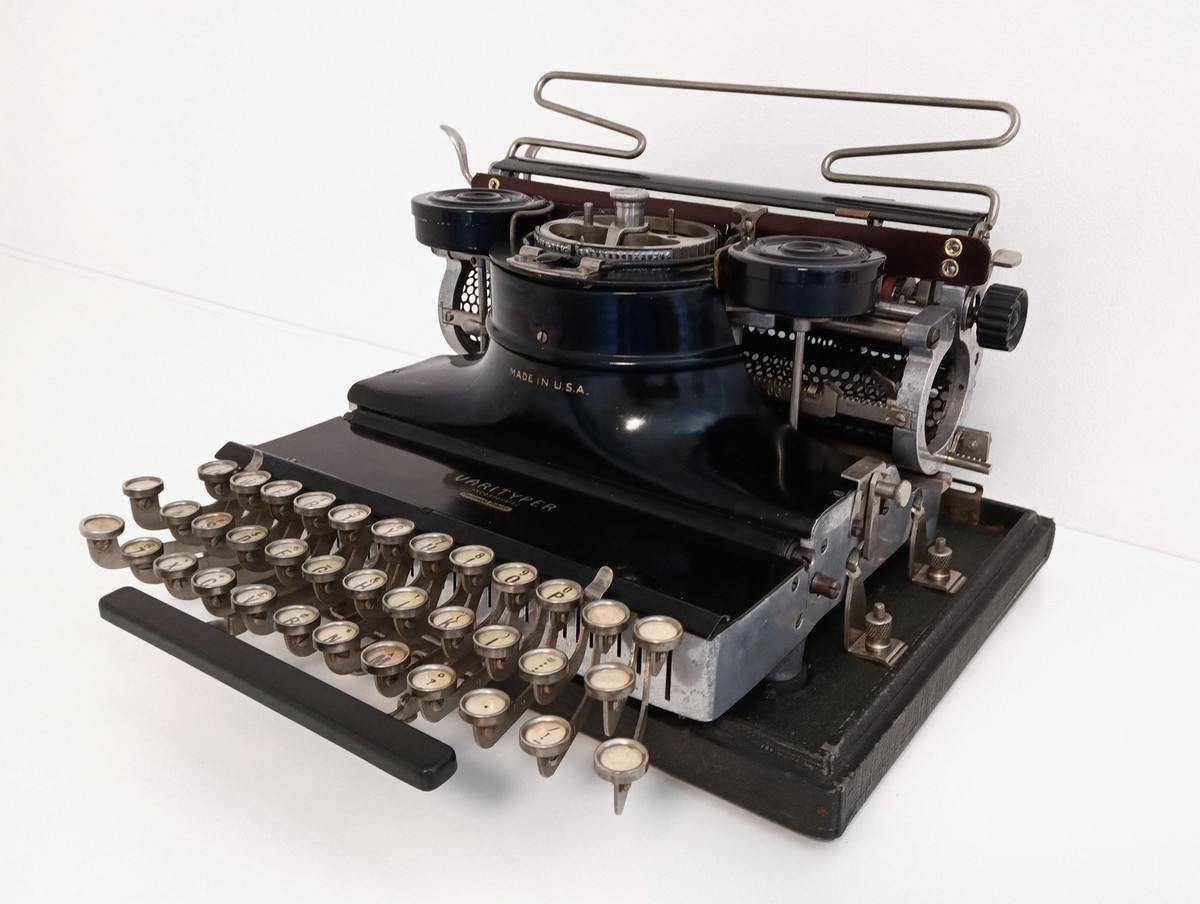
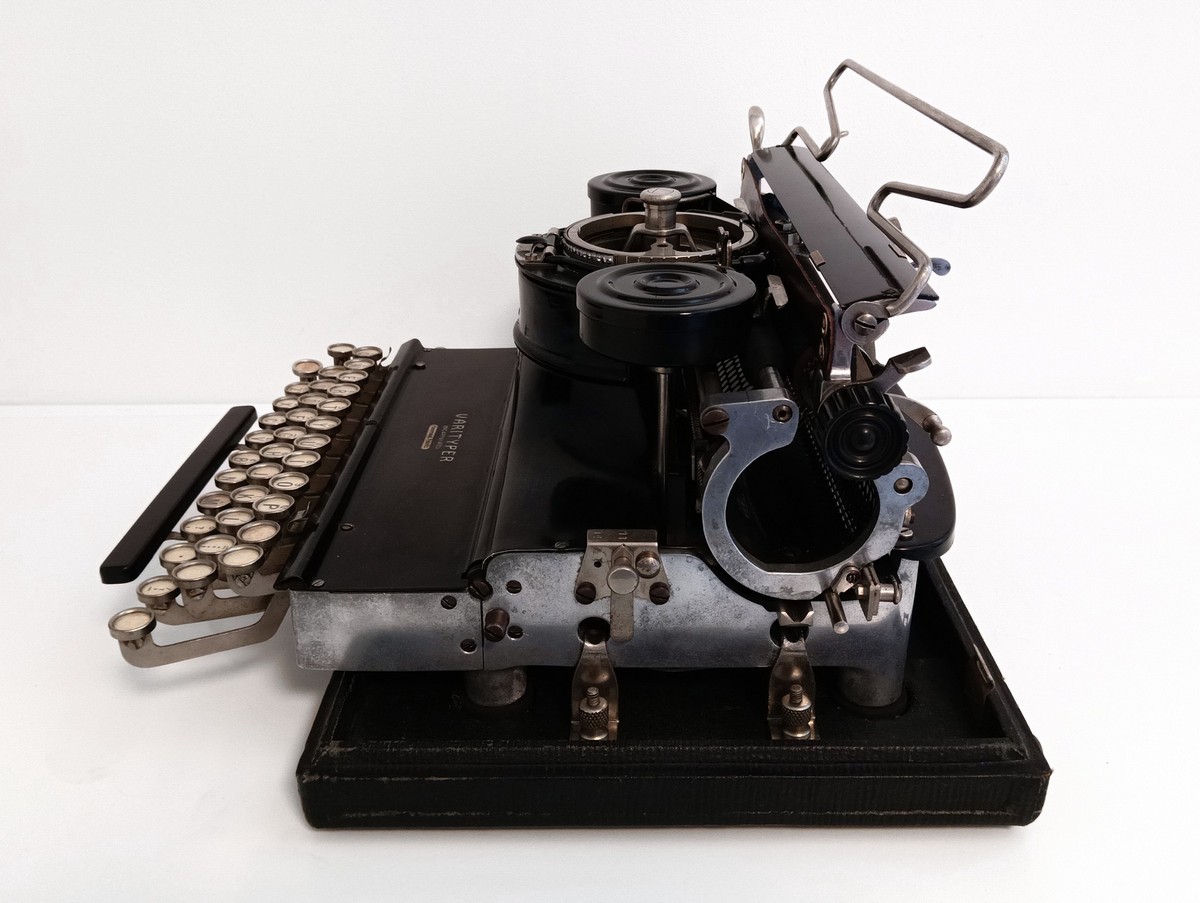
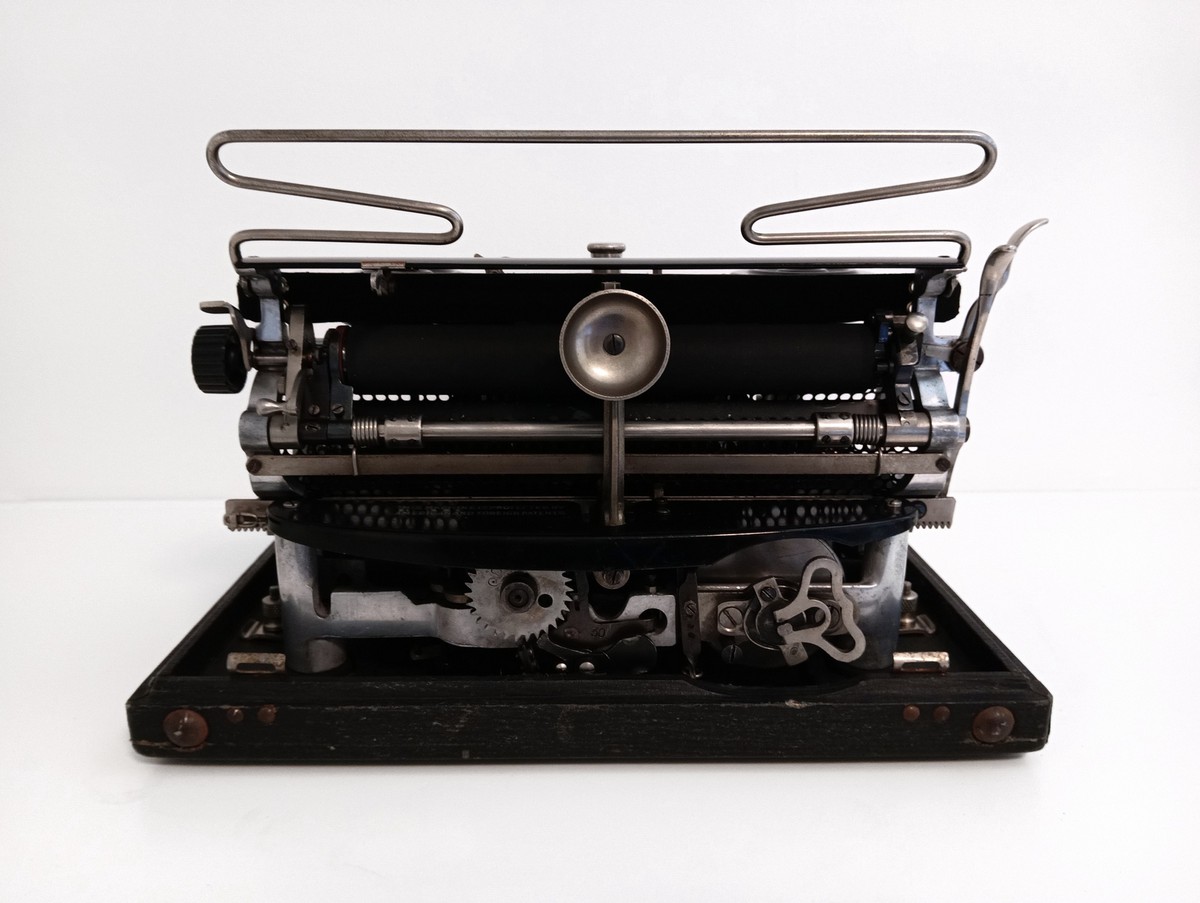
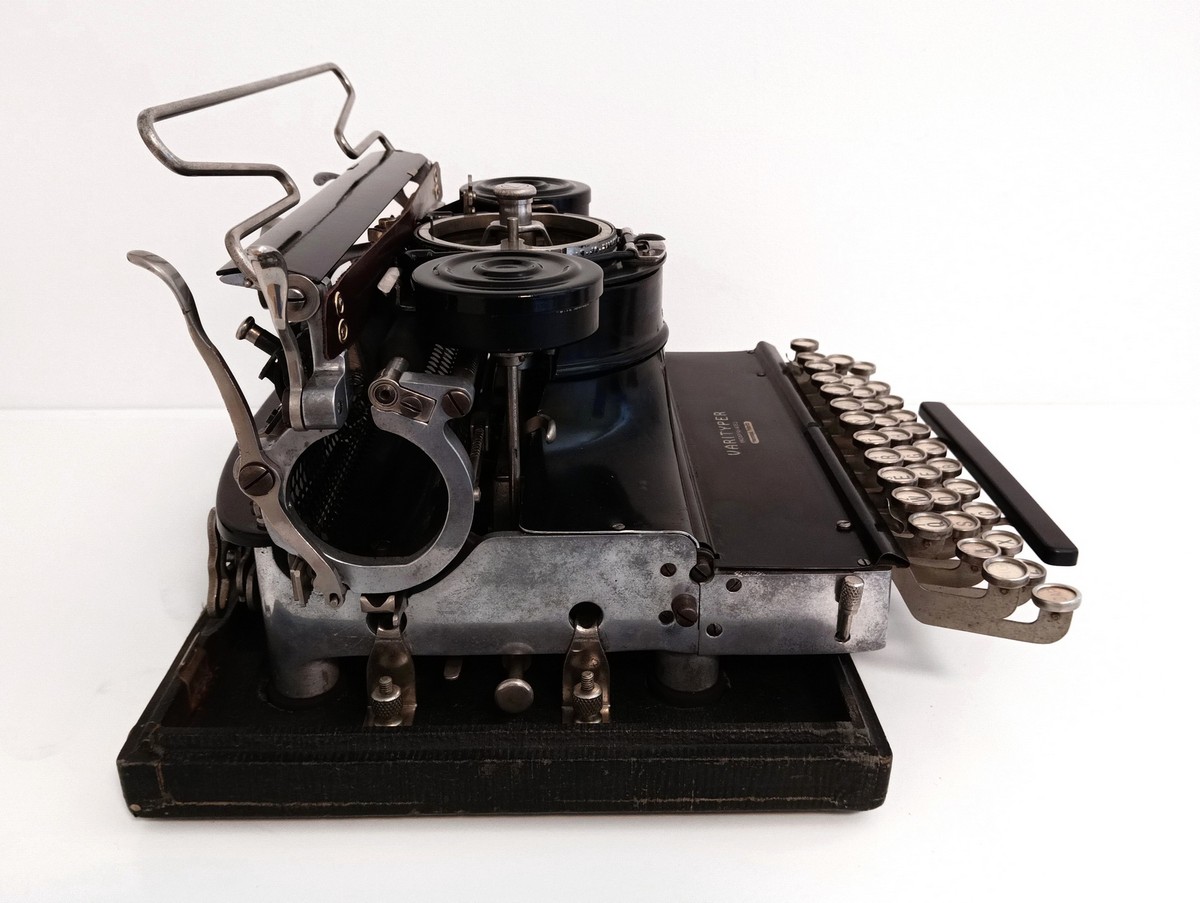
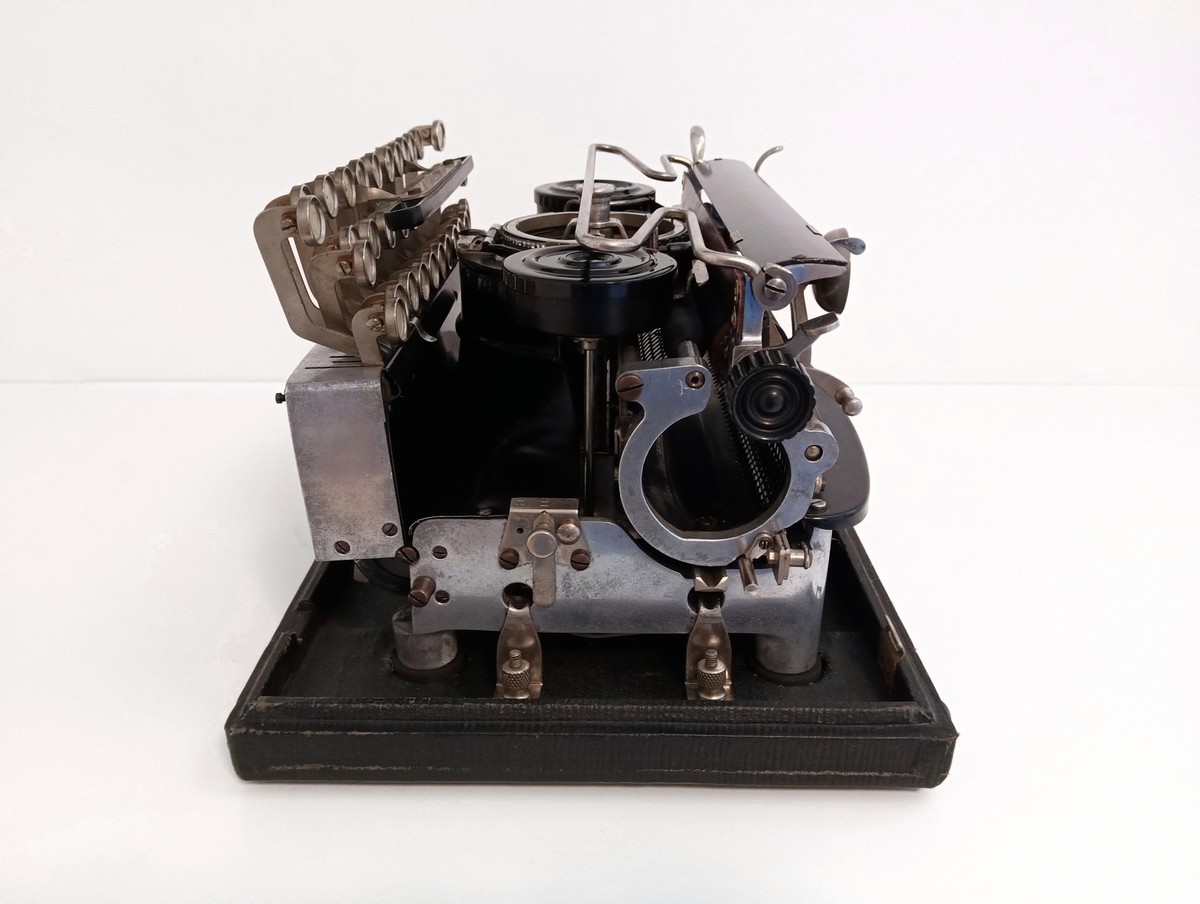
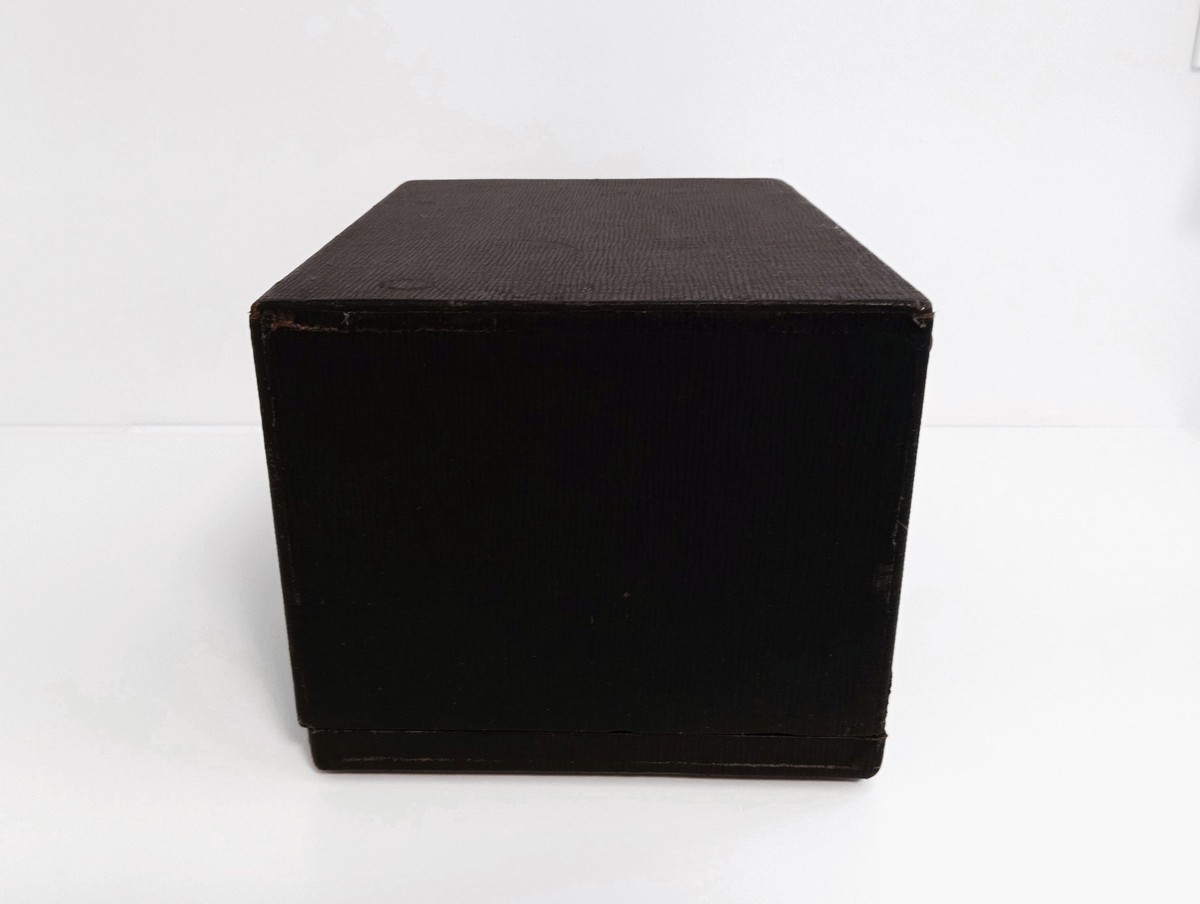
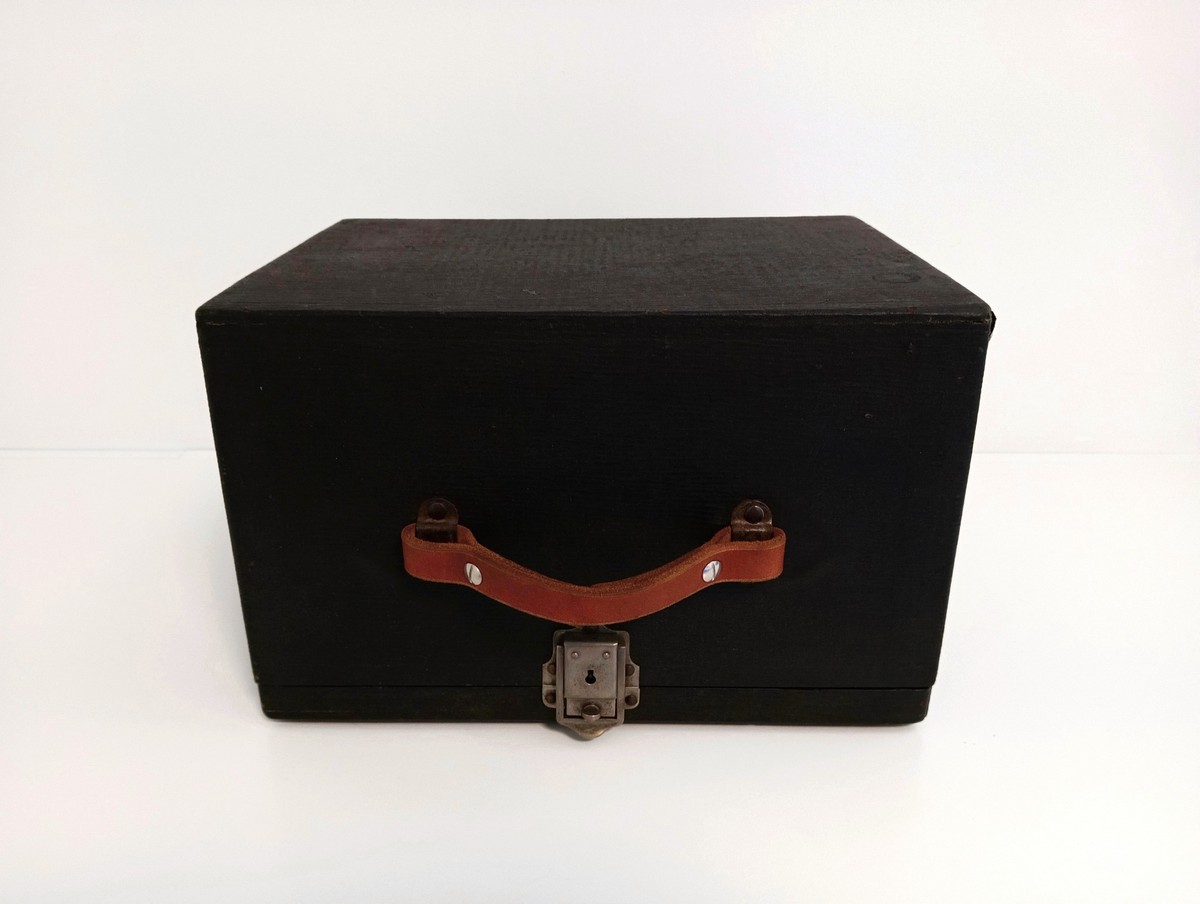



Among the most fascinating antique portable typewriters, the Varityper Folding certainly deserves special mention. With its refined design and advanced mechanics for the period, it represents an evolution of the celebrated Hammond system, based on interchangeable type shuttles and an adjustable hammer positioned behind the sheet of paper. As with all Hammond Folding machines, the front section of the typewriter and the space bar can be folded away, allowing the entire machine to fit inside a compact carrying case measuring just 23 × 31 × 20 cm. Compact, yes, but not especially light: the typewriter and case together weigh 6.0 kg.
The defining feature of the Varityper model, however, is the ability to switch the typing pitch between 11 and 14 CPI (characters per inch). The desired pitch is selected by means of a knob located to the right of the keyboard: an actuator connected to it moves a pair of gears, allowing either one to engage with its corresponding rack. In effect, it is a very simple reduction gear mechanism.
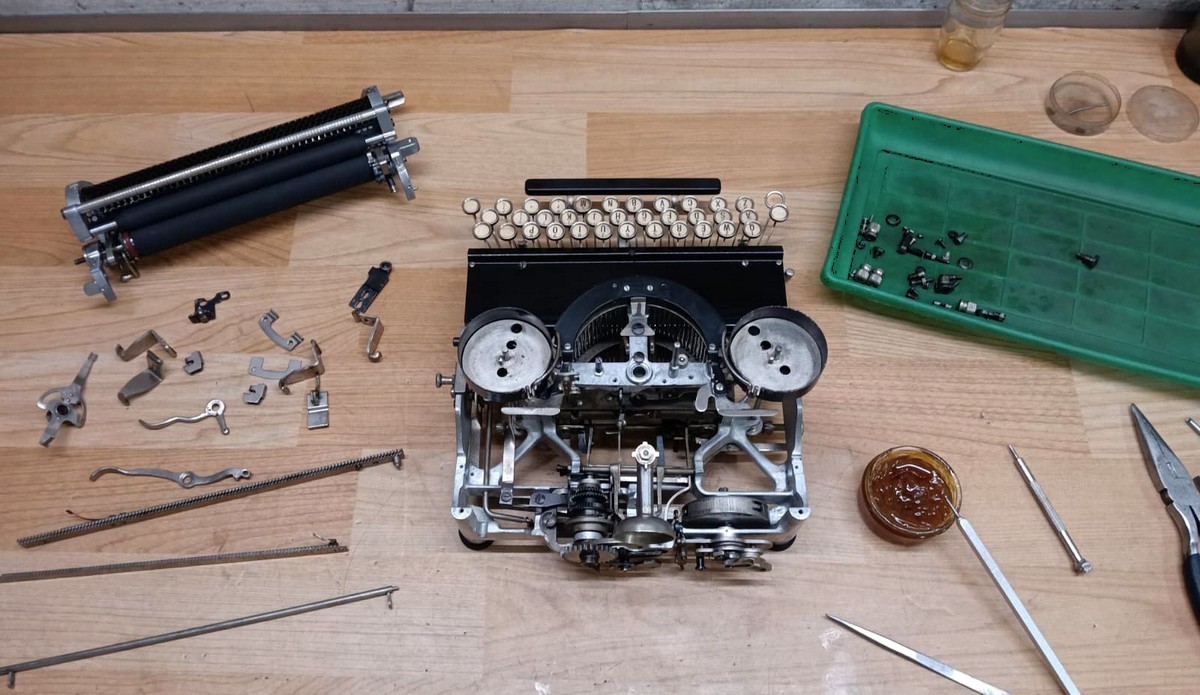
The restoration followed the usual process, beginning with disassembly of the machine, followed by deep cleaning of the mechanism to remove dried grease and dirt using ultrasonic technology, a subsequent wash in kerosene, and precise lubrication of the writing mechanism, with particular attention paid to the adjustment of the complex escapement system. Worn and consumable components were also replaced, including the ink ribbon, several springs and all rubber parts.
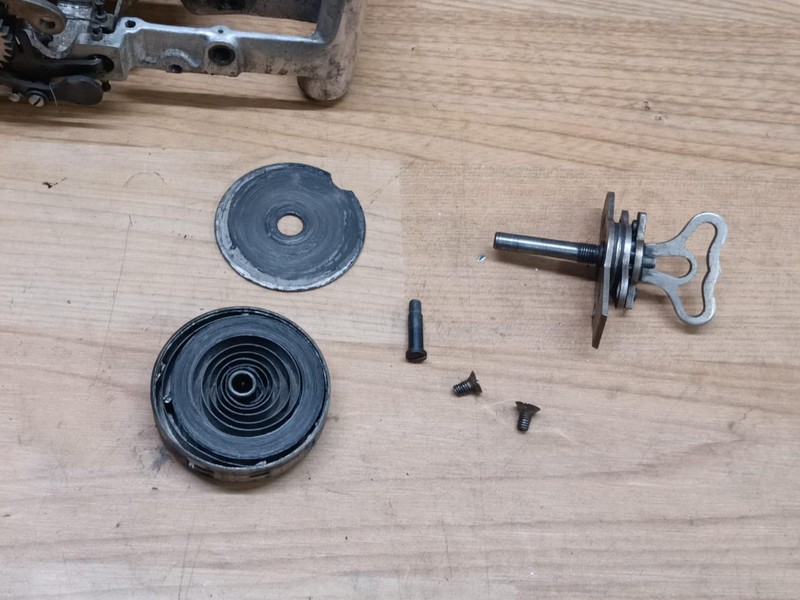
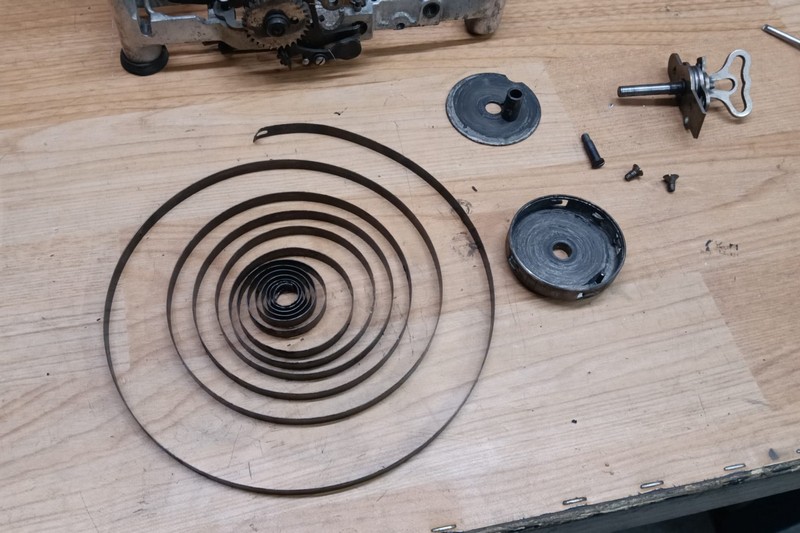
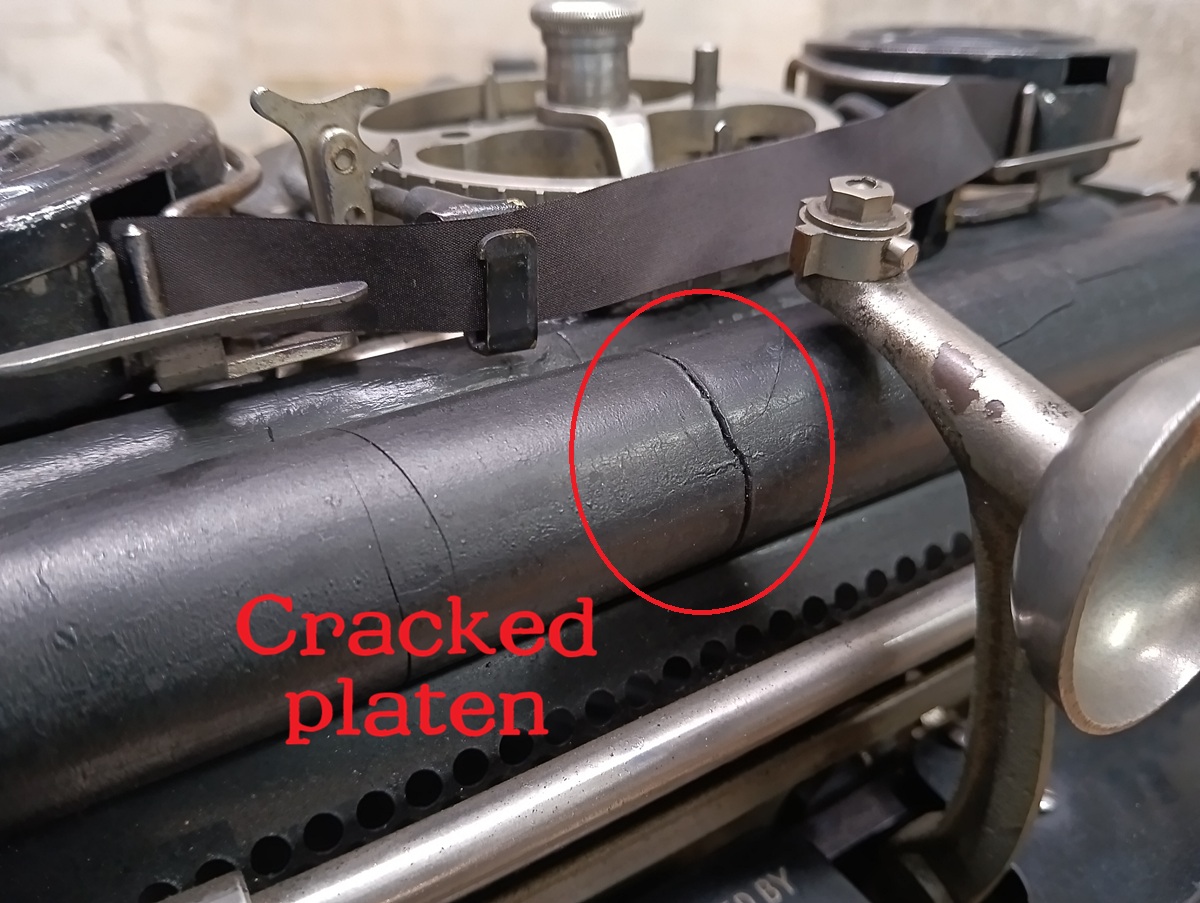
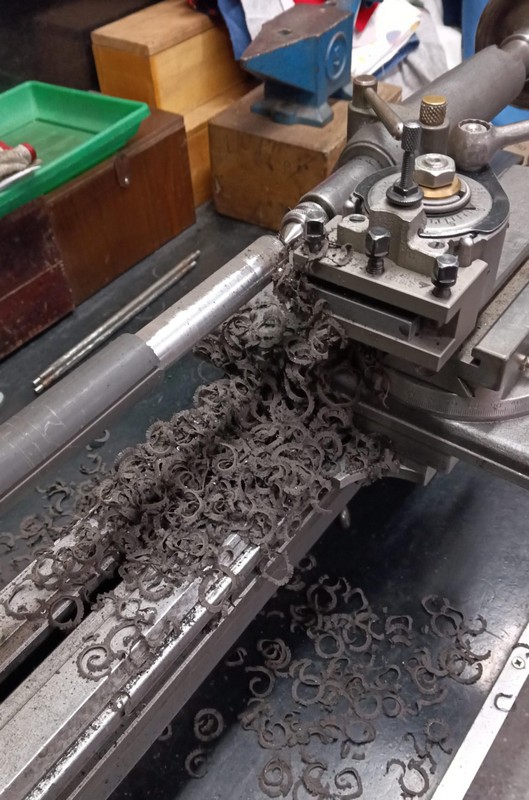
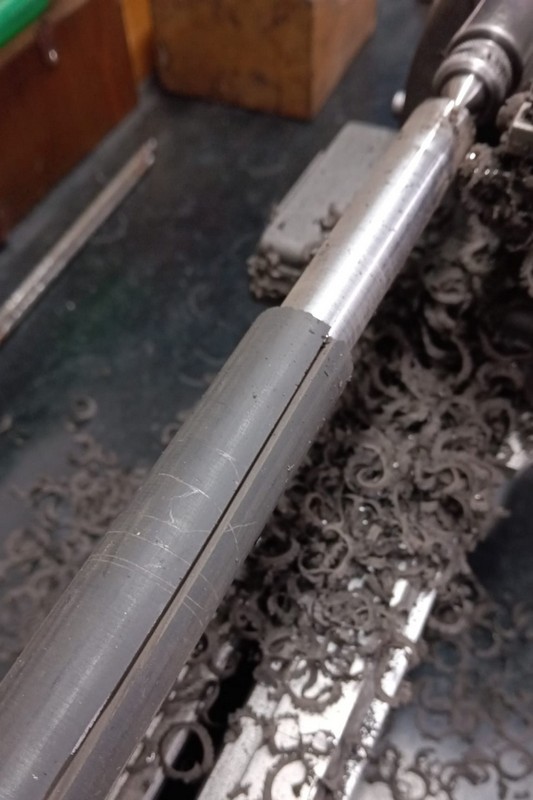
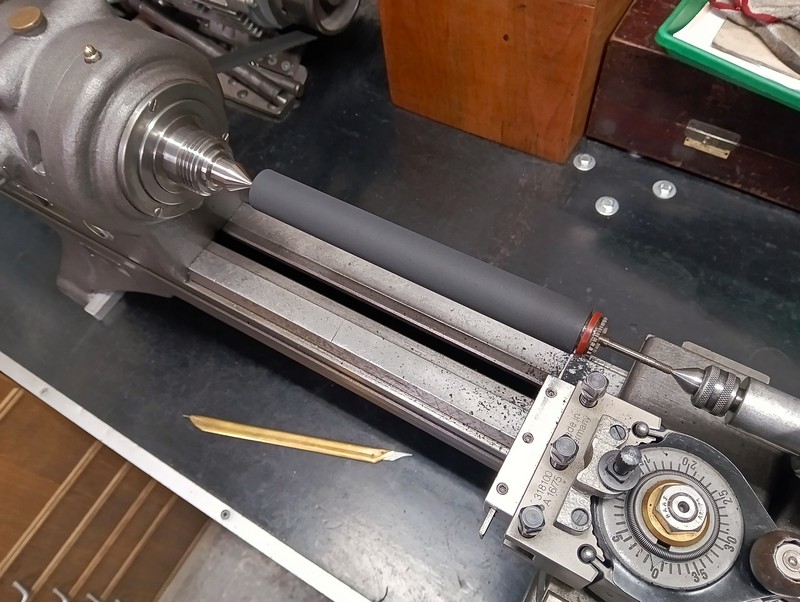
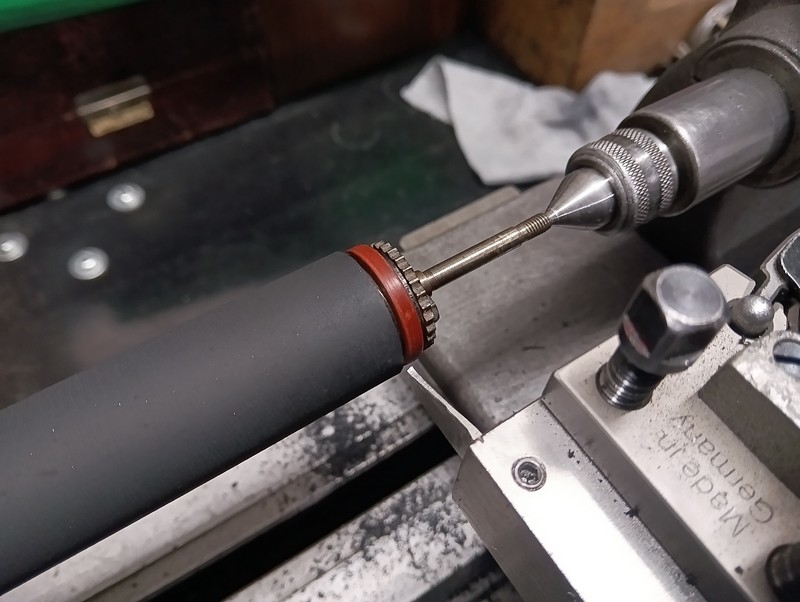
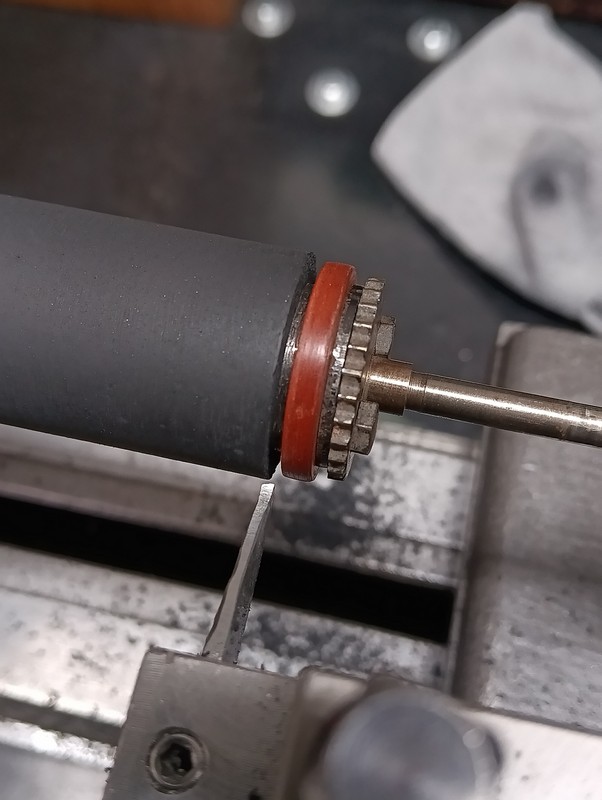
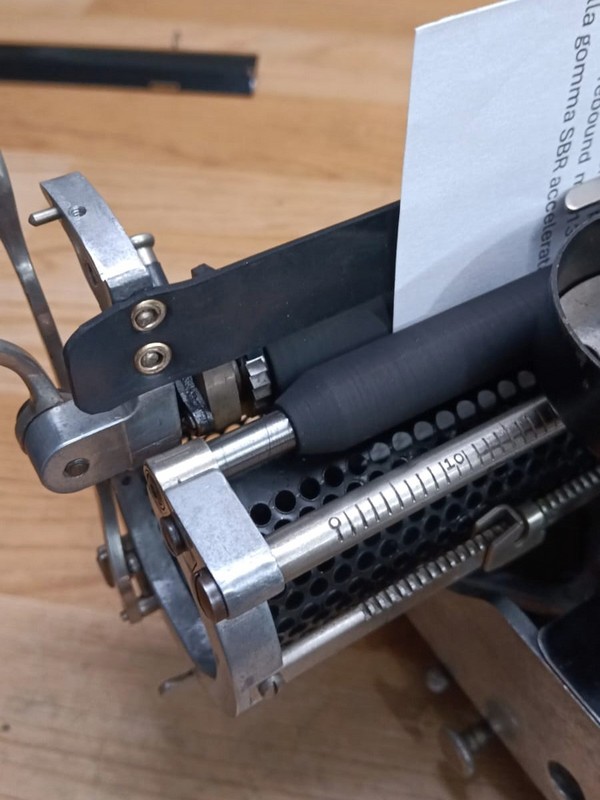
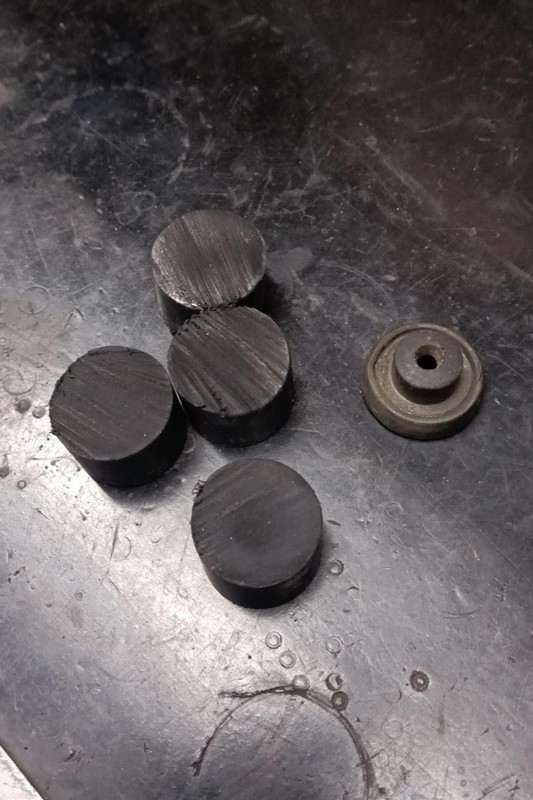
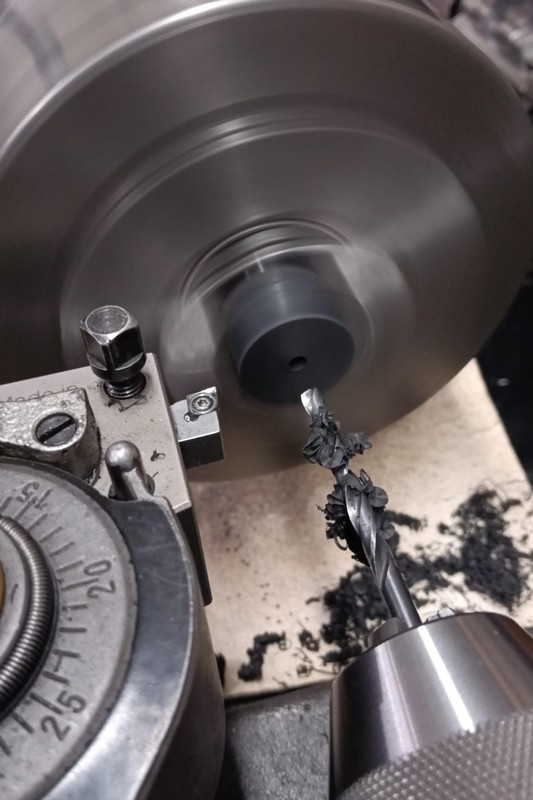
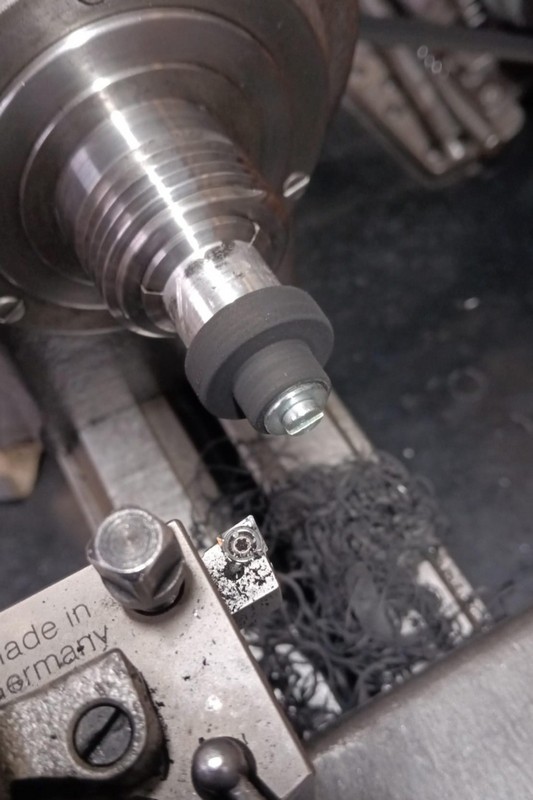
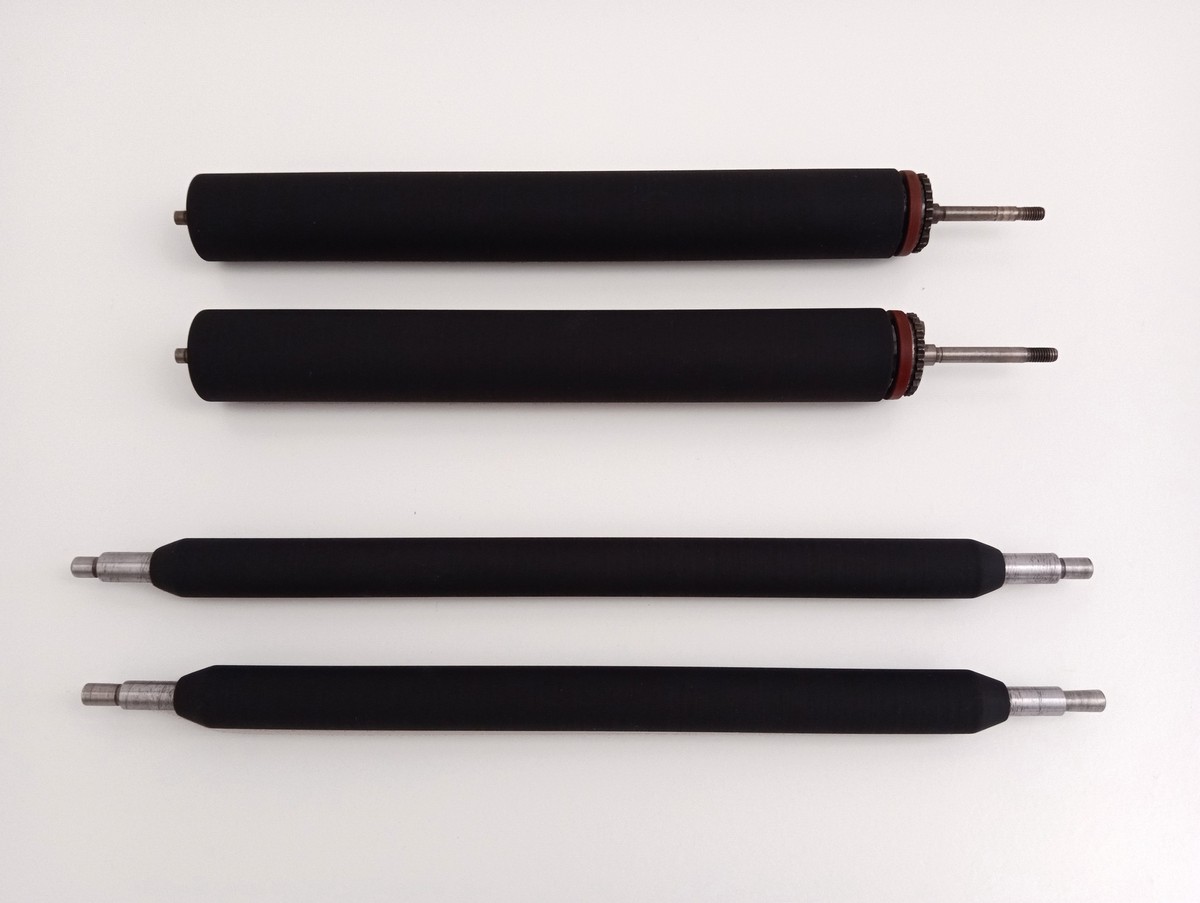
To restore a Varityper or a Hammond to perfect working condition, it is essential to rebuild the various rubber components, which over time tend to harden and, in some cases—as happened with this example—crack completely. The feet and paper feed rollers must therefore be renewed with fresh rubber. Everything is made possible thanks to the experience and specialised equipment available in the workshop. For more information on platen and roller rebuilding, please visit this page.
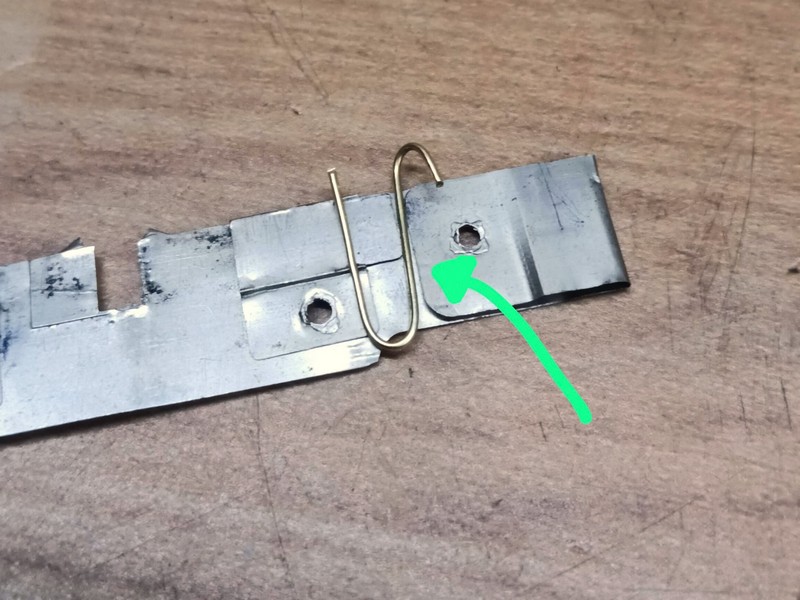
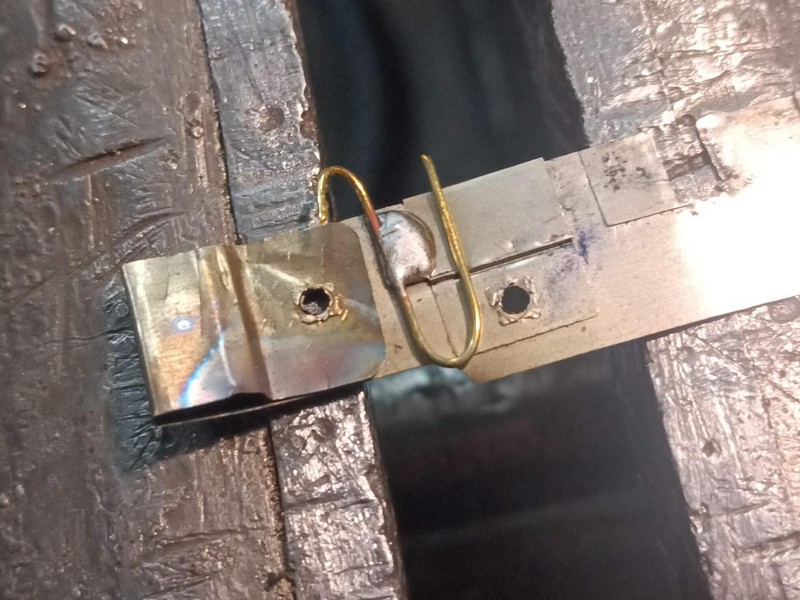
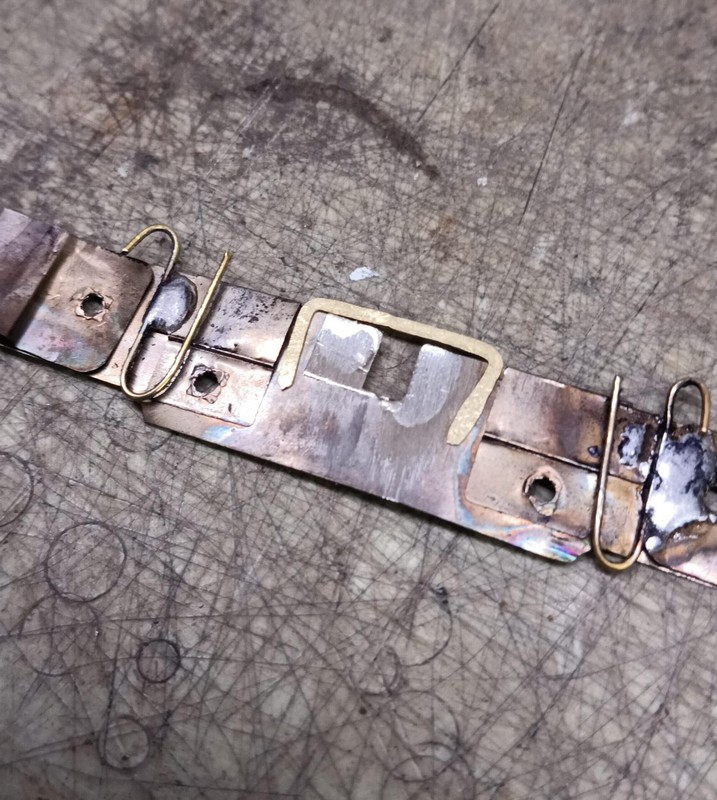
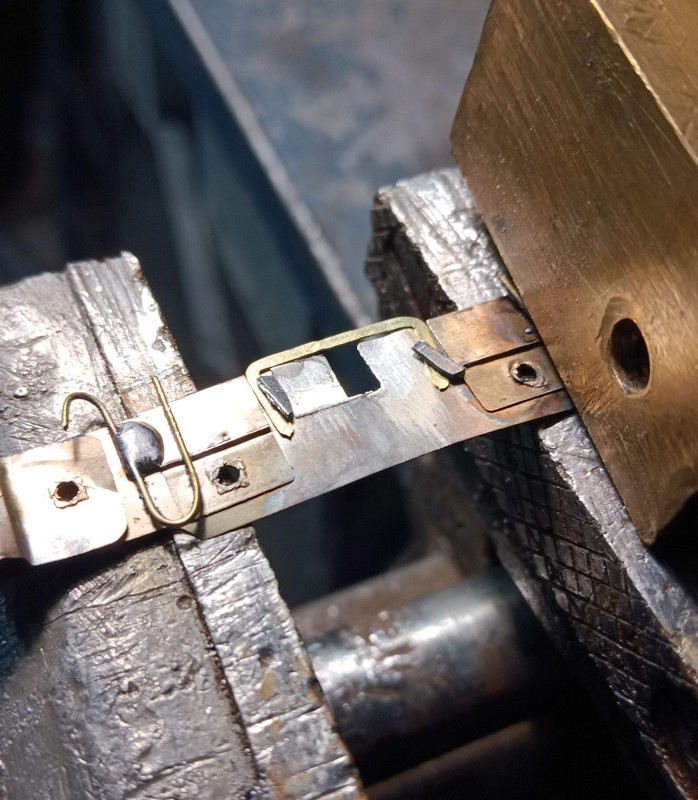
The ribbon raise strip is a very important component in the operation of Hammond-based machines. These parts are extremely difficult to find in perfect condition, so it is often necessary to repair them by soft soldering.
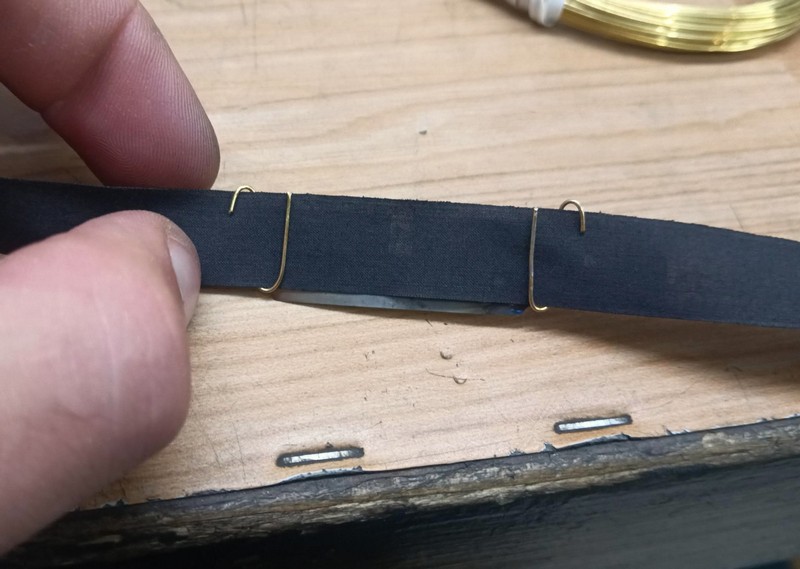
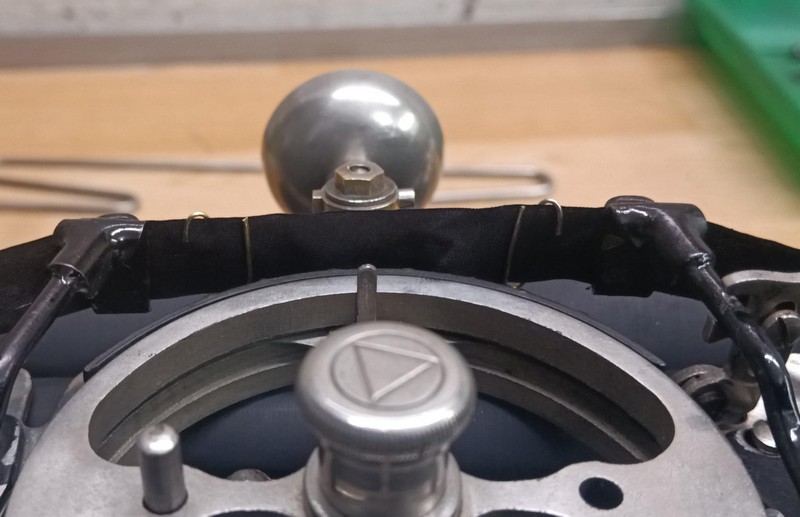
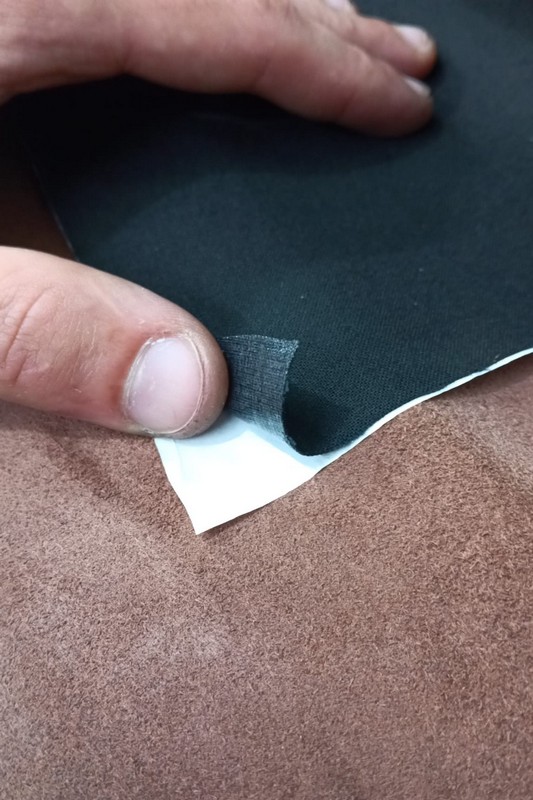
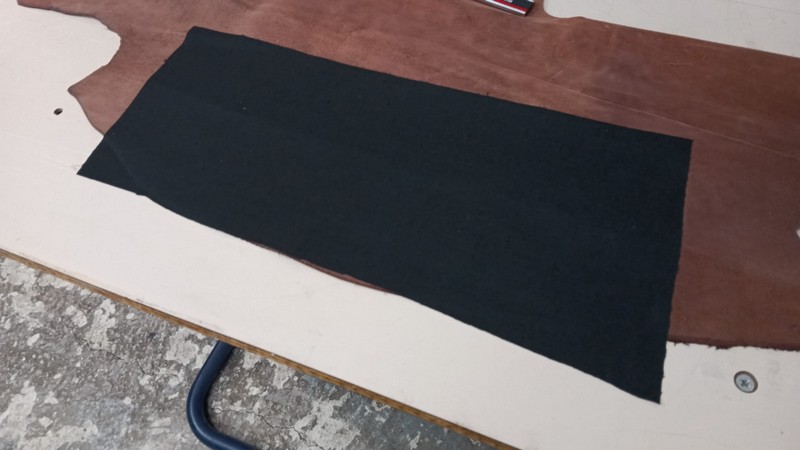
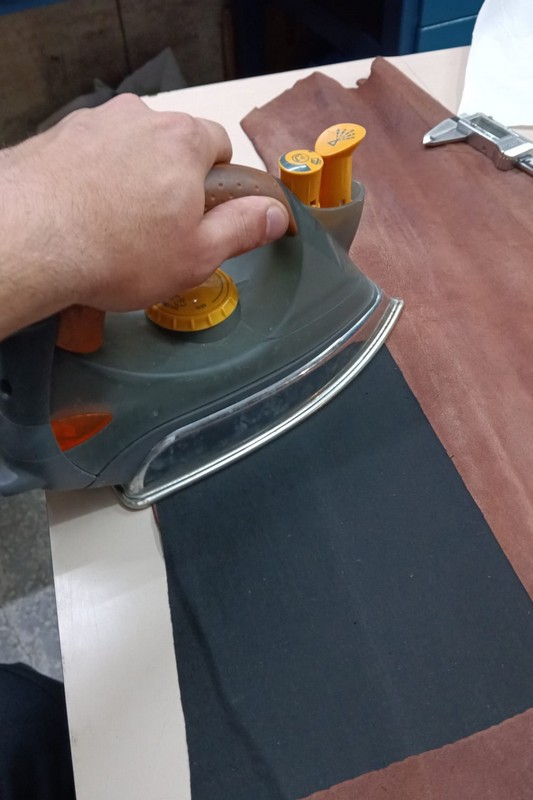
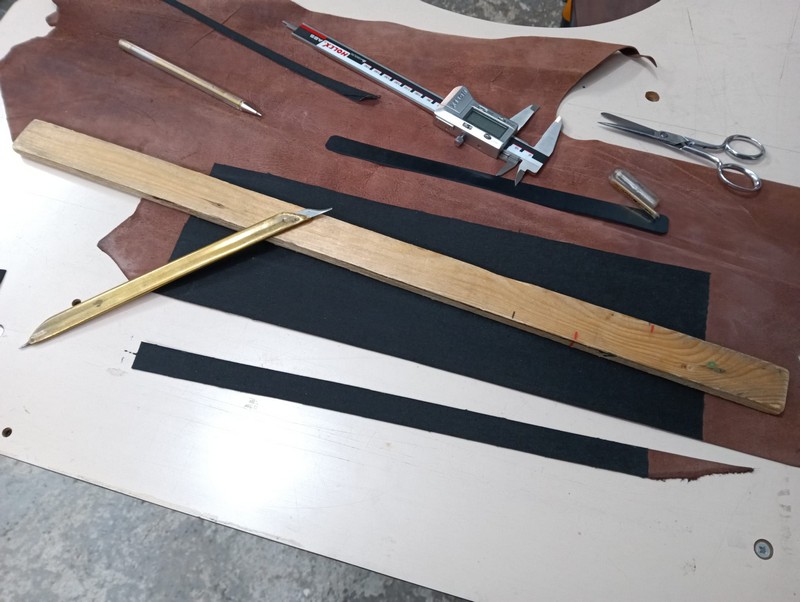
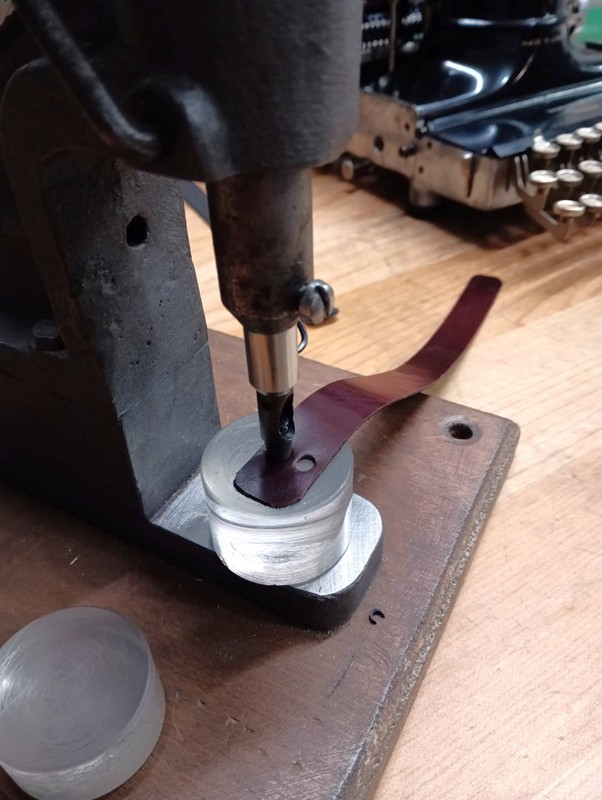
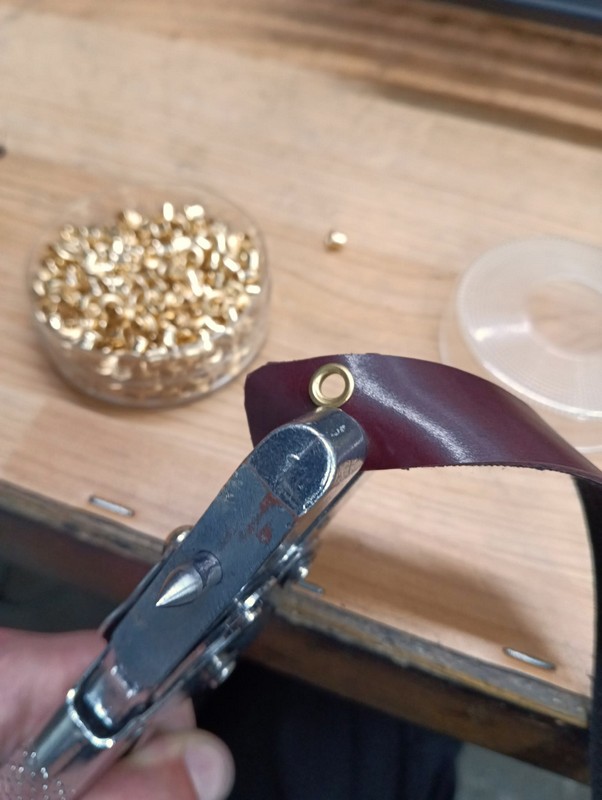
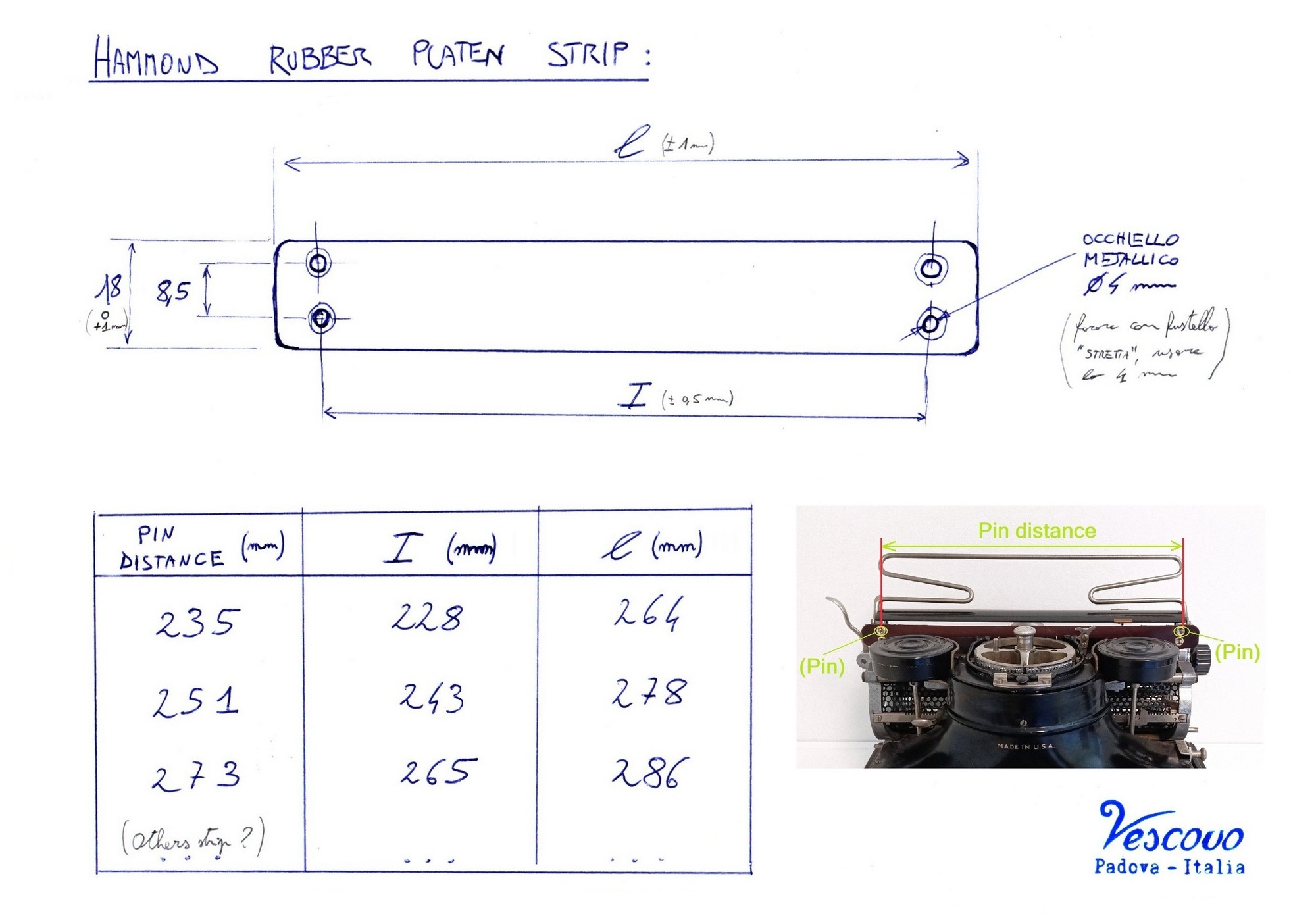
Hammond typewriters do not print against a platen in the conventional way used by most other typewriters, but against a strip of flexible material. Historical sales brochures confirm that two different solutions were used: a rubber strip or the so-called “Gossamer”, an extremely thin natural leather strip reinforced on the back with a bonded fabric layer, designed to absorb the impact of the hammer without damaging or fraying the leather.
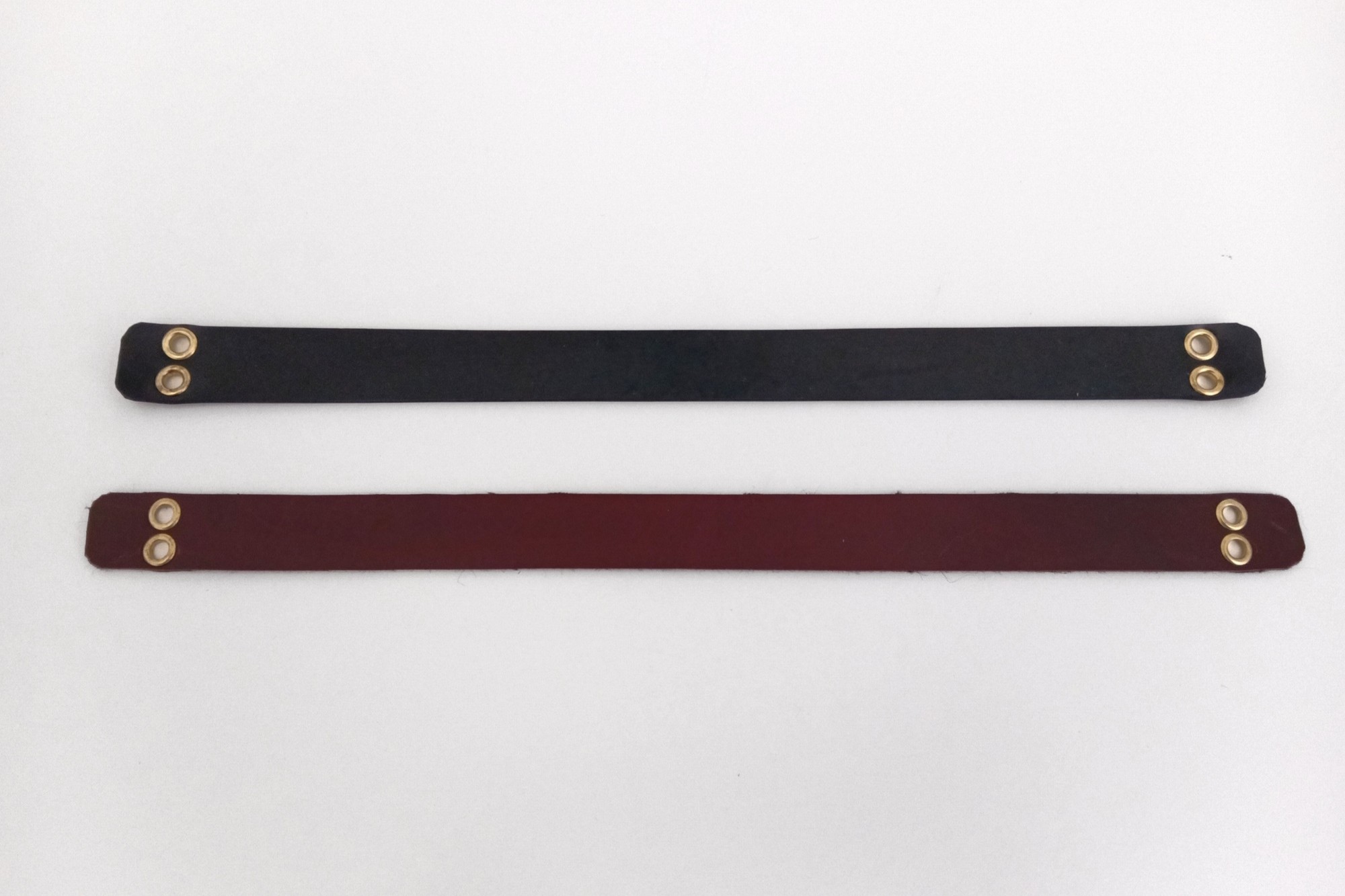
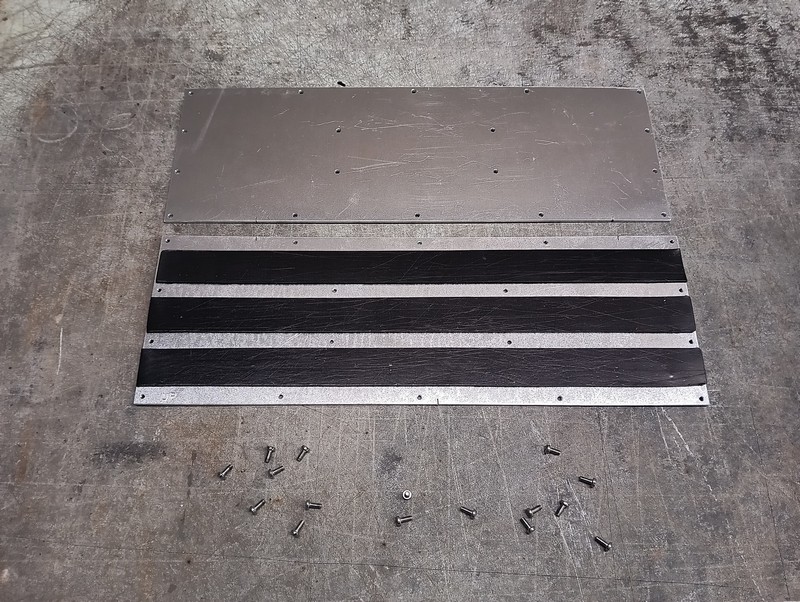
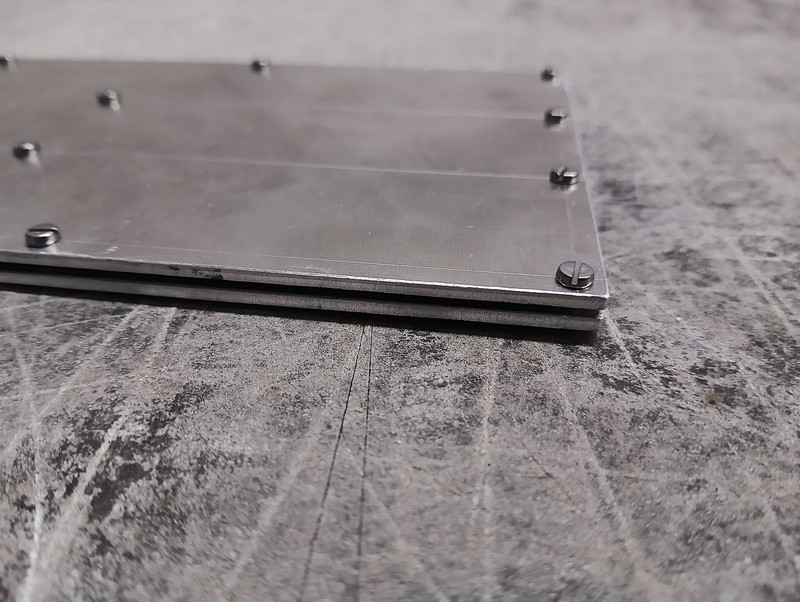
I reproduced both types of strip with the same thickness of 0.9 mm and carried out several comparative tests. The results were remarkably similar. If one wishes to distinguish between them, the rubber produces a slightly fuller type impression, while the leather gives a somewhat finer result. In practical terms, however, both solutions proved fully satisfactory. The rubber strips were made from an 88 Shore A typewriter printing rubber compound, compression-moulded on a specially made aluminium former and then vulcanised in an autoclave.
Further experimentation will certainly follow in the future, particularly with the production and testing of an extremely thin 0.6 mm rubber strip.
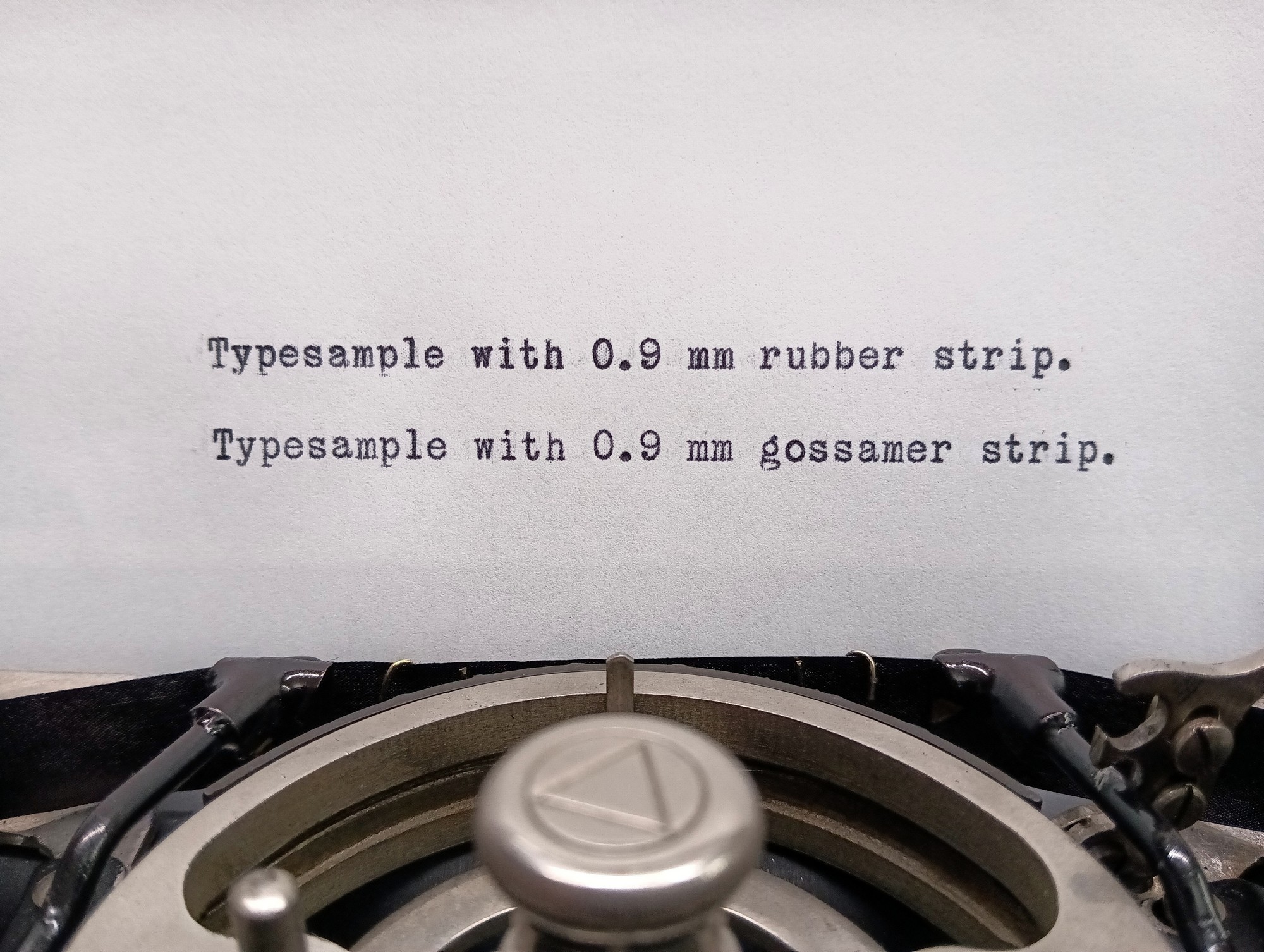
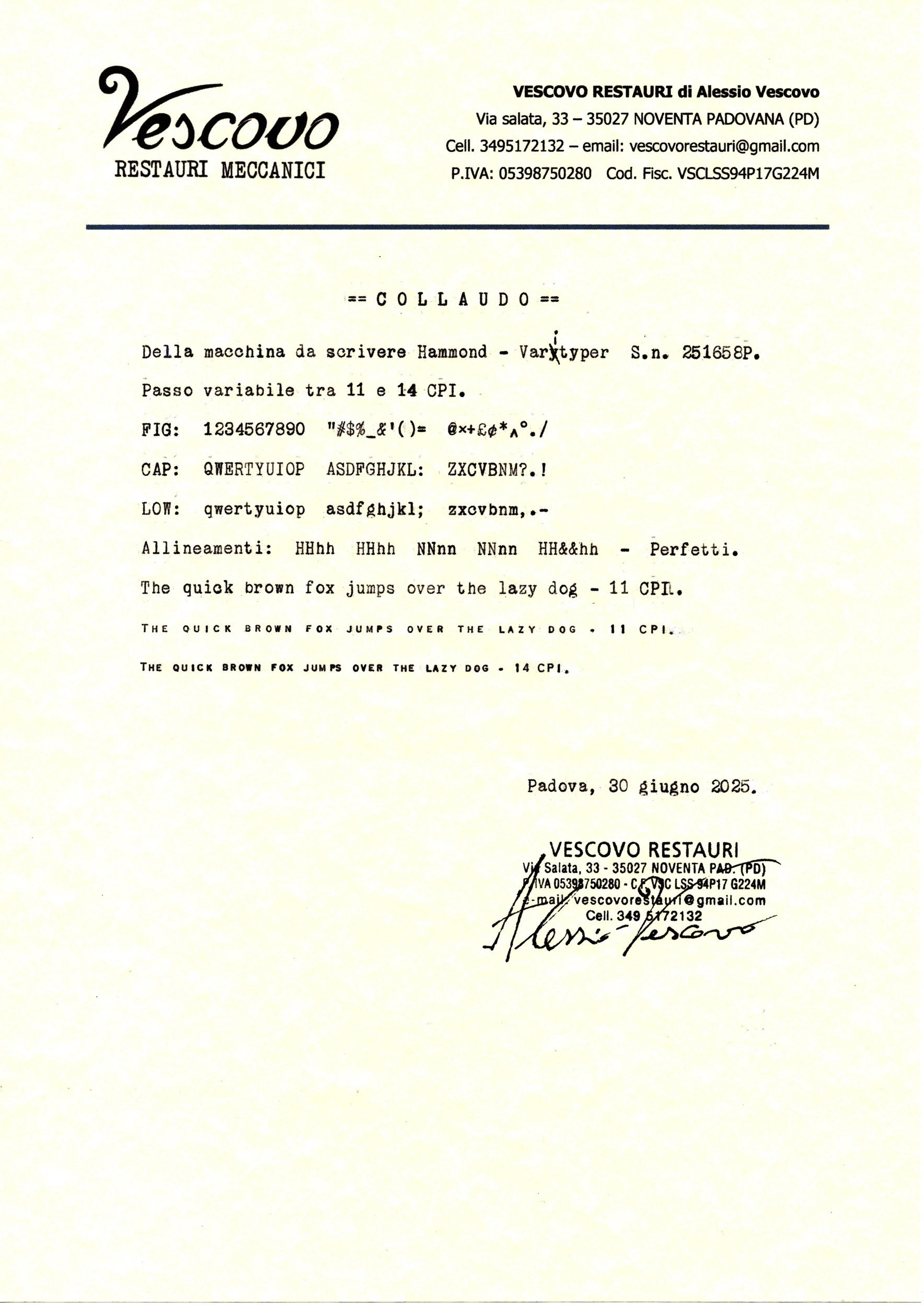
At the end of the restoration, the typewriter undergoes a complete functional test. A final test certificate—typed on the machine itself, signed, and stamped—is issued as proof of successful inspection and completion of the service.