
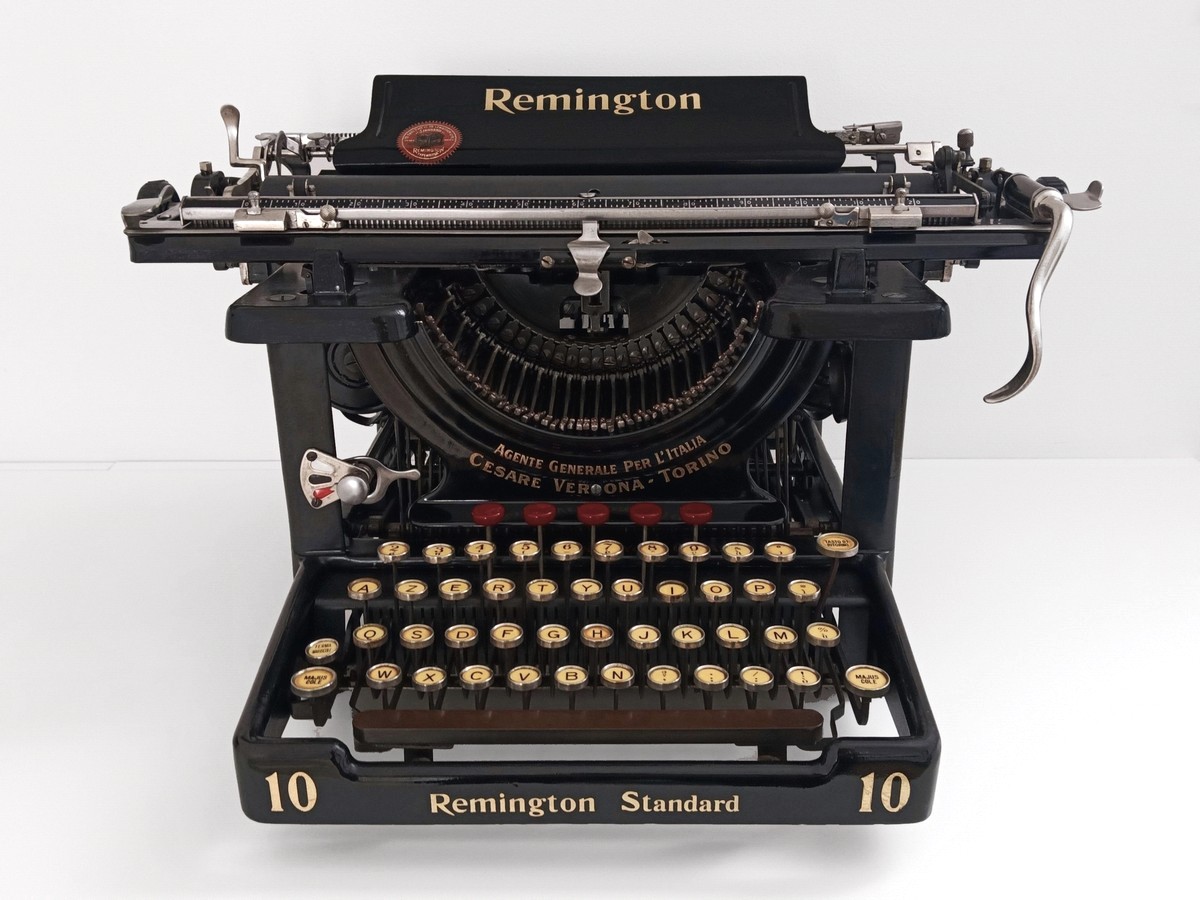





The Remington Standard No. 10 was the first visible-writing typewriter produced by the famous New York company, and remained in production from 1908 to 1927. All previous Remington models had been blind-writing machines: the typist could not see what was being written because the typebars struck the platen from below. A good example of this design is its predecessor, the Remington No. 7.
 Many features of the earlier models were retained, including the typebars with conical mountings, the forged typebars with an oval cross-section, and the indirect activation of the escapement by means of a longitudinal bar positioned beneath the key levers. Unfortunately, these features were disadvantages in terms of the overall performance of the machine, and many other manufacturers had already abandoned similar solutions in favour of better designs almost a decade earlier. Remington addressed these shortcomings with the 10L and 10S versions, produced between 1920 and 1927, and, of course, with the subsequent Remington No. 12.
Among the advantages of the No. 10 over its contemporary competitors, however, the carriage design certainly deserves mention. It was made of cast iron and ran on two opposed crossed-roller guides. This extremely rigid construction made the carriage remarkably stable and precise in its movement. Besides improving the alignment of the typed line, this rigidity also increased printing force: the stiffer the carriage, the less typing force is dissipated, resulting in a stronger impression on the paper.

Below we will see the complete repair carried out on a type “C” cast-iron carriage fitted to the machine featured in this restoration. The damage was extremely serious: the casting had fractured in three places, and a workshop before mine had attempted, with little success, to repair it using screwed-on metal plates, as can be seen in the first photograph, with the fractures circled in red.
This was a very poor solution, as the carriage had lost much of its rigidity and even the uppercase shift mechanism worked badly because of the resulting misalignment. To make it operate at all, the previous repairers had also removed the fourth mounting point; when this fourth point was refitted, the mechanism would seize.

Vescovo Restauri is today one of the very few workshops capable of welding cast iron to a high standard, and below we will follow the work step by step. The process used was TIG welding with a cast-iron filler rod.
The broken guide was aligned on two precision-ground bars, tack-welded into position and, before the final welding, its geometry was checked with a bevelled engineer’s square. The heat generated during welding removed much of the paint, which was subsequently restored. Where necessary, the weld bead was ground away; where this was not required, it was left in place to provide greater strength.


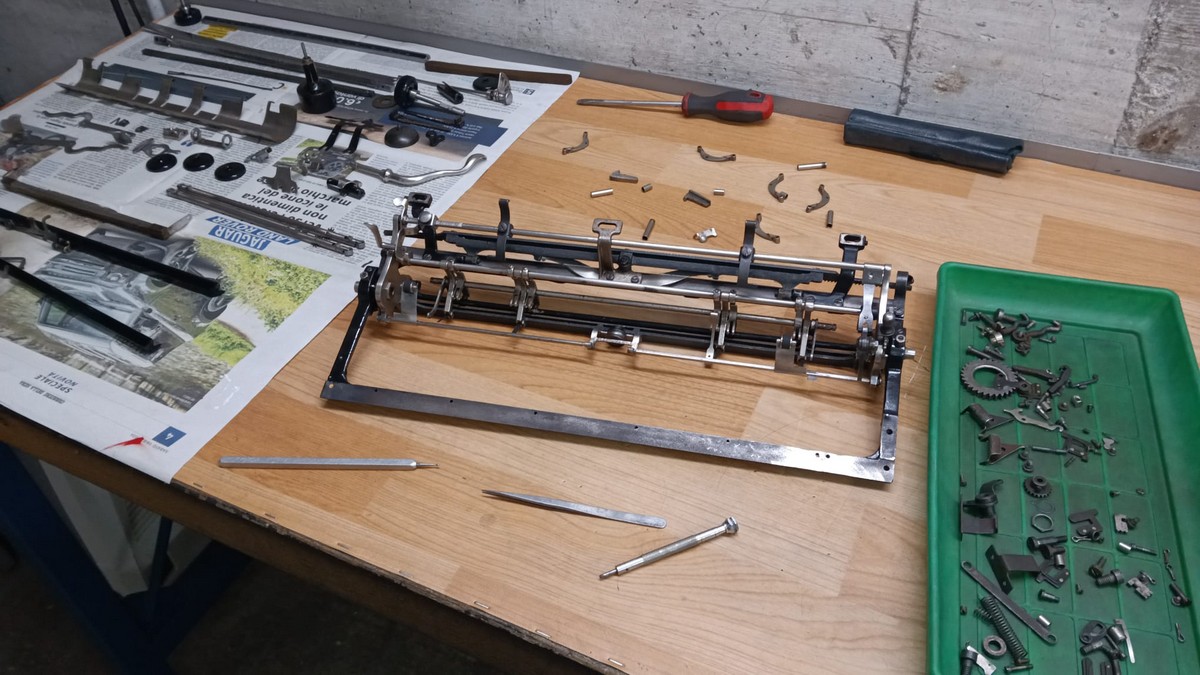
To restore a Remington 10 typewriter to perfect working condition, it is essential to rebuild the various rubber components, which over time tend to harden and eventually crumble completely. Feet, main platen, and both lower and front paper rollers—all must be renewed. Everything is made possible thanks to experience and specialized equipment. For more information, please visit this page.
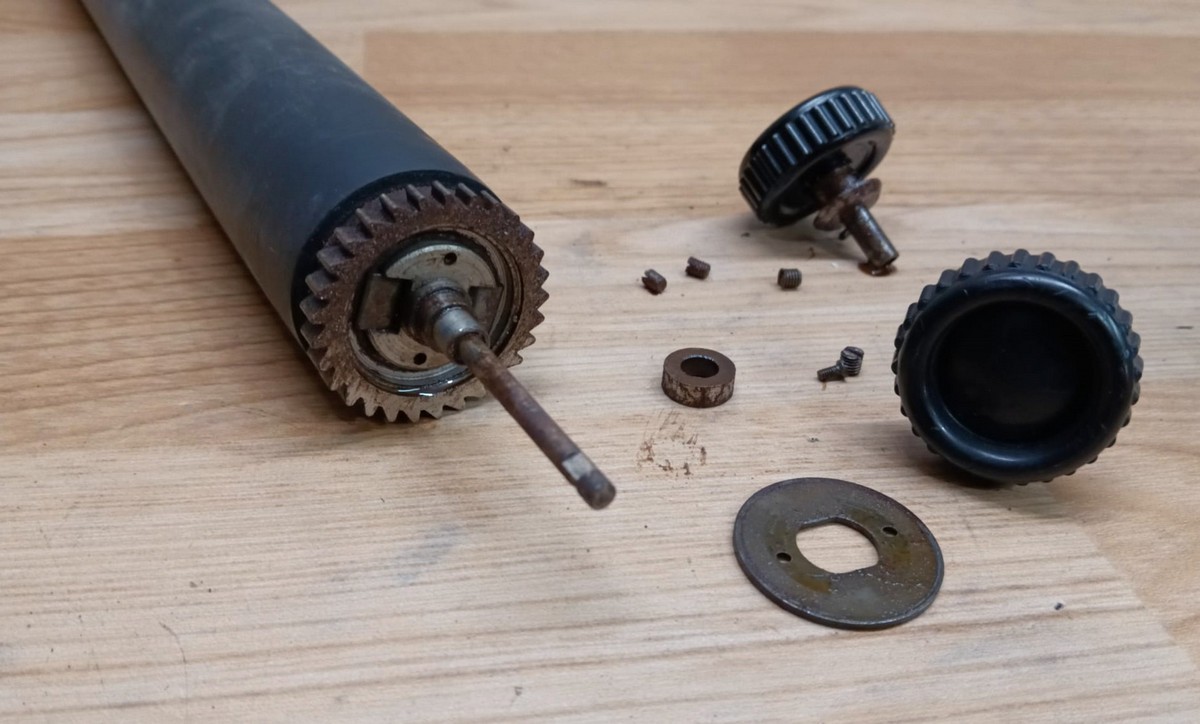


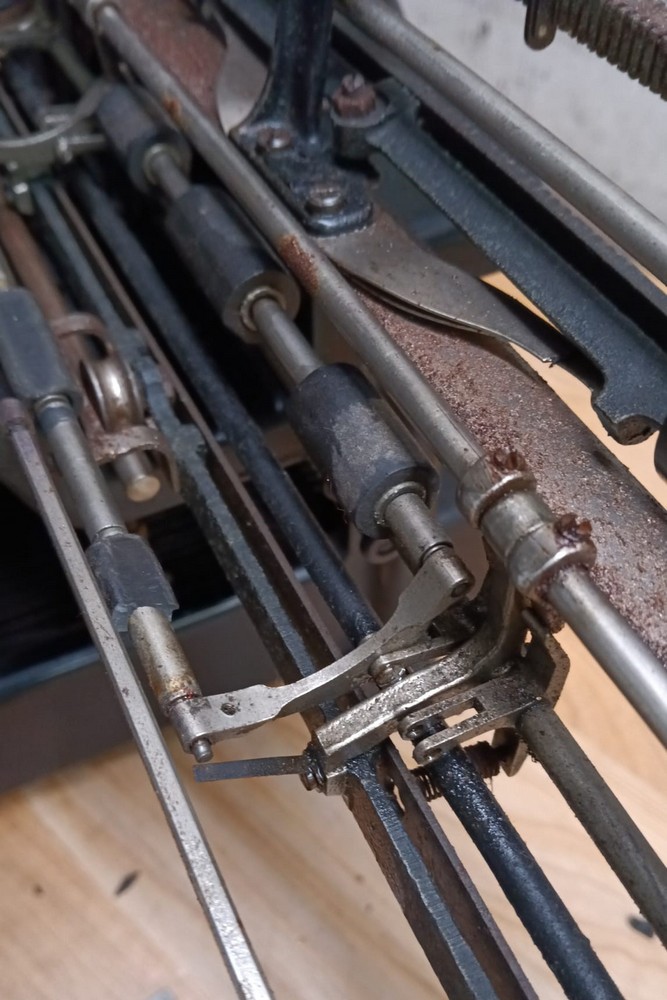


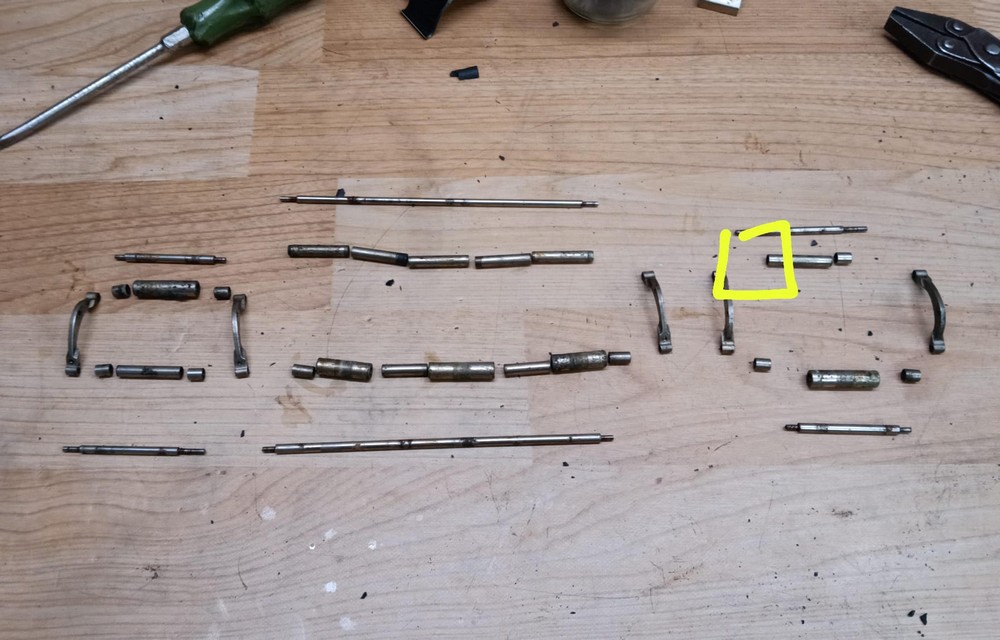


To remove dirt accumulated over decades of neglect, traditional methods such as kerosene and brushes are often ineffective. Residues such as dried correction fluid, eraser debris, hardened grease and biological deposits require a more advanced approach. For this purpose, a custom-built ultrasonic cleaning tank is used, specifically designed for typewriter restoration. Its operation is based on cavitation: high-frequency waves generate microscopic bubbles that implode against the components, producing deep mechanical cleaning combined with the degreasing action of a mild soap solution. When biodegradable detergents are used, the process is also environmentally friendly. After cleaning, all parts are rinsed in white petrol to remove moisture and prevent oxidation before lubrication and reassembly.

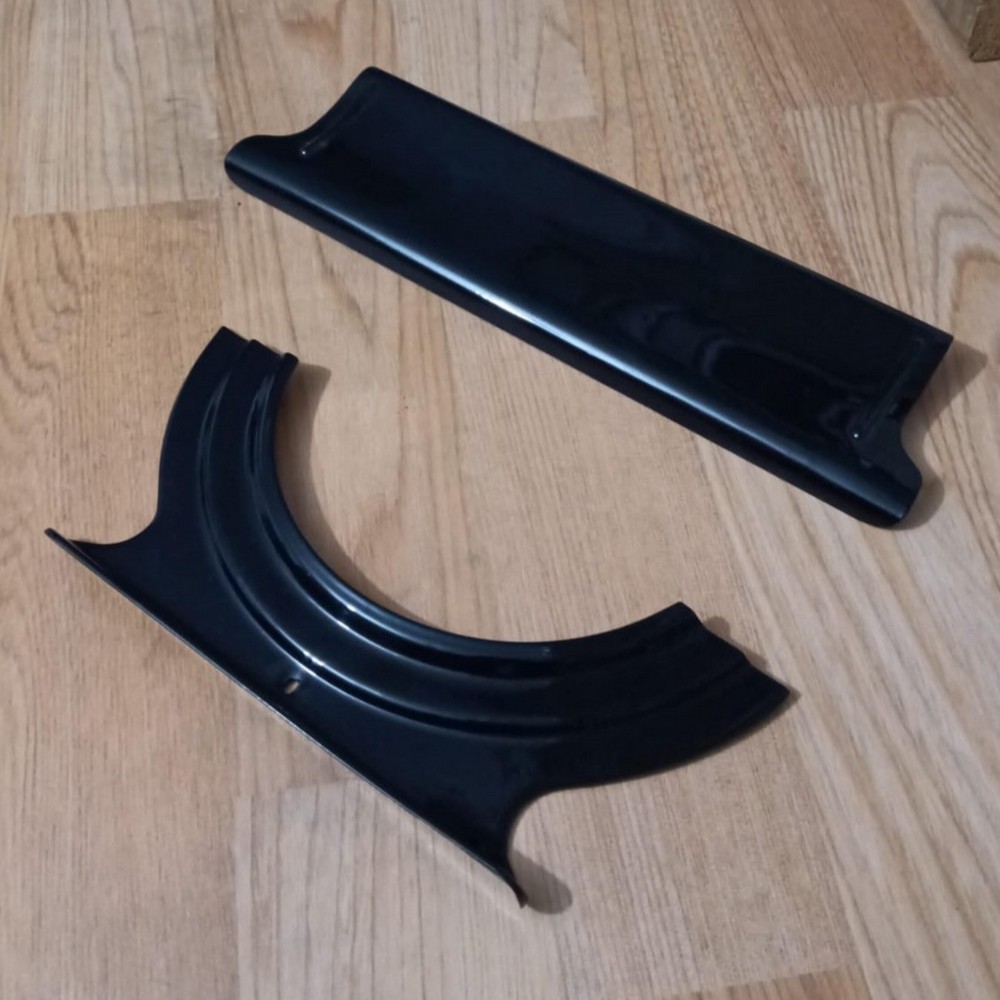
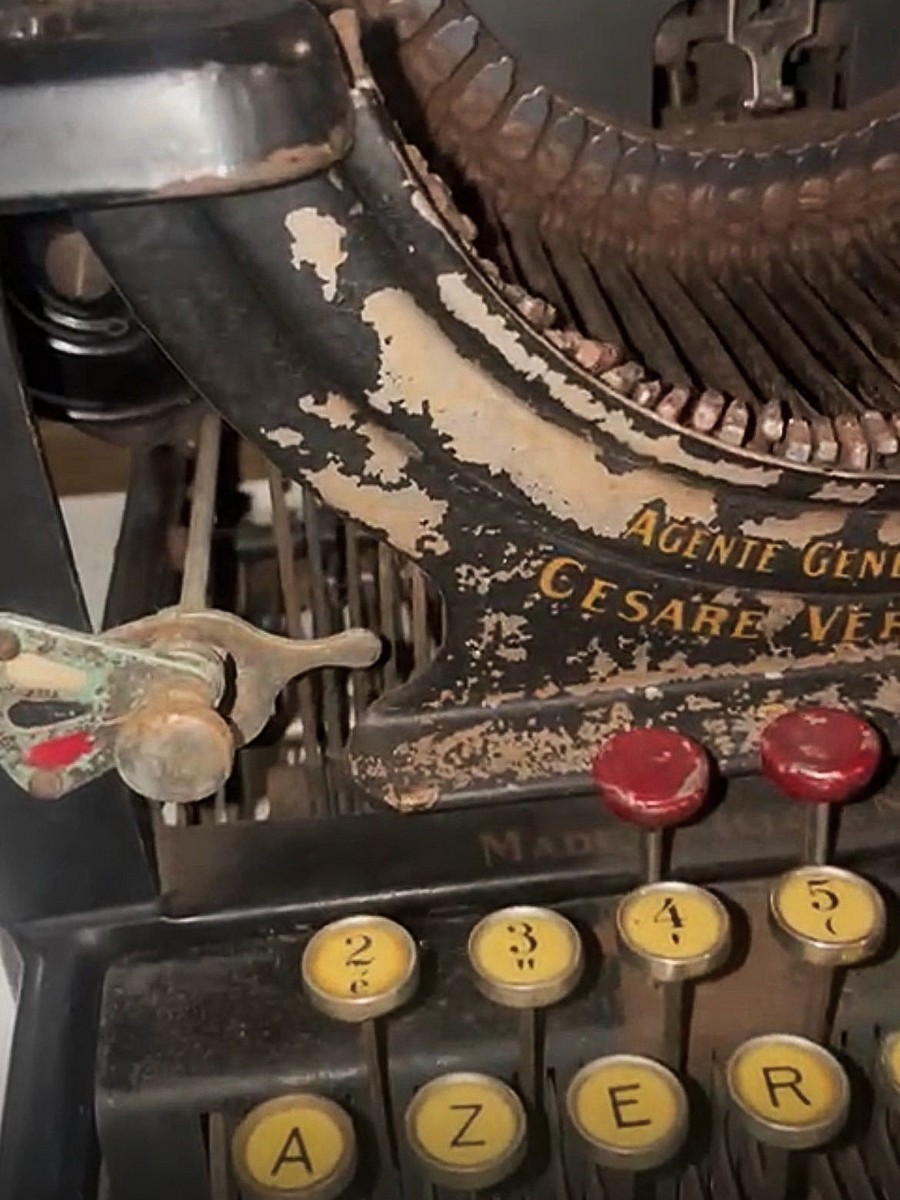
In some cases, the original paintwork of a Remington Standard No. 10 may be in poor or even very poor condition, with extensive scratches, oxidation and areas where the finish has been completely lost. When preservation of the original coating is no longer possible, the affected parts must be carefully stripped, prepared and professionally repainted. This involves considerable additional work, as many mechanical components must first be removed and later reassembled and adjusted.
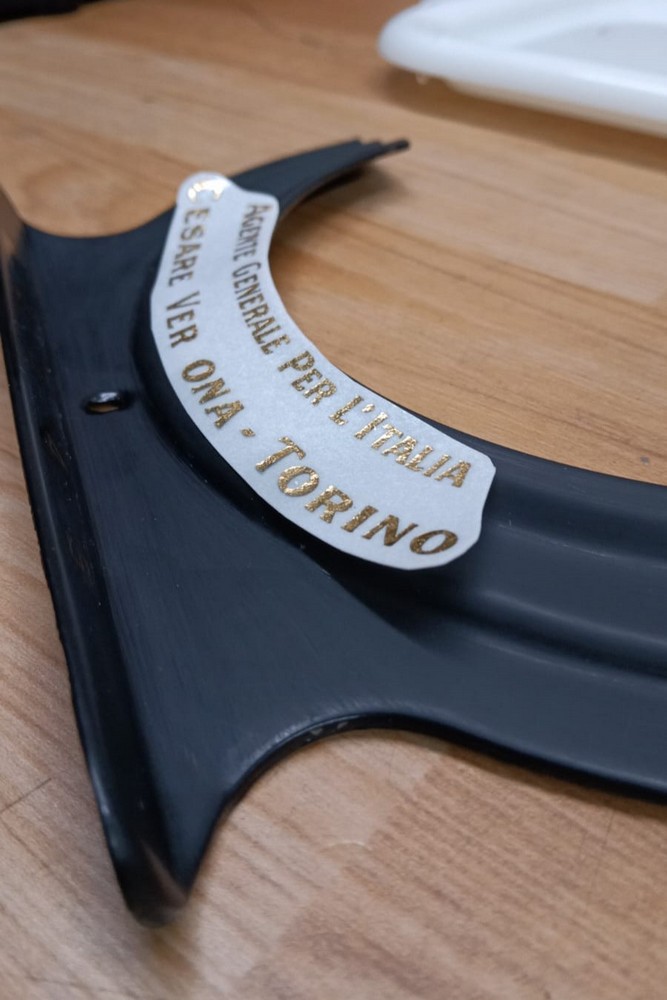
The gold decals are an important part of the machine’s appearance and include the characteristic Remington inscriptions and decorative details. When repainting is required, these markings must be accurately reproduced and applied as water-slide decals, preserving as closely as possible the proportions, position and appearance.





At the end of the restoration, the typewriter undergoes a complete functional test. A final test certificate—typed on the machine itself, signed, and stamped—is issued as proof of successful inspection and completion of the service.
