
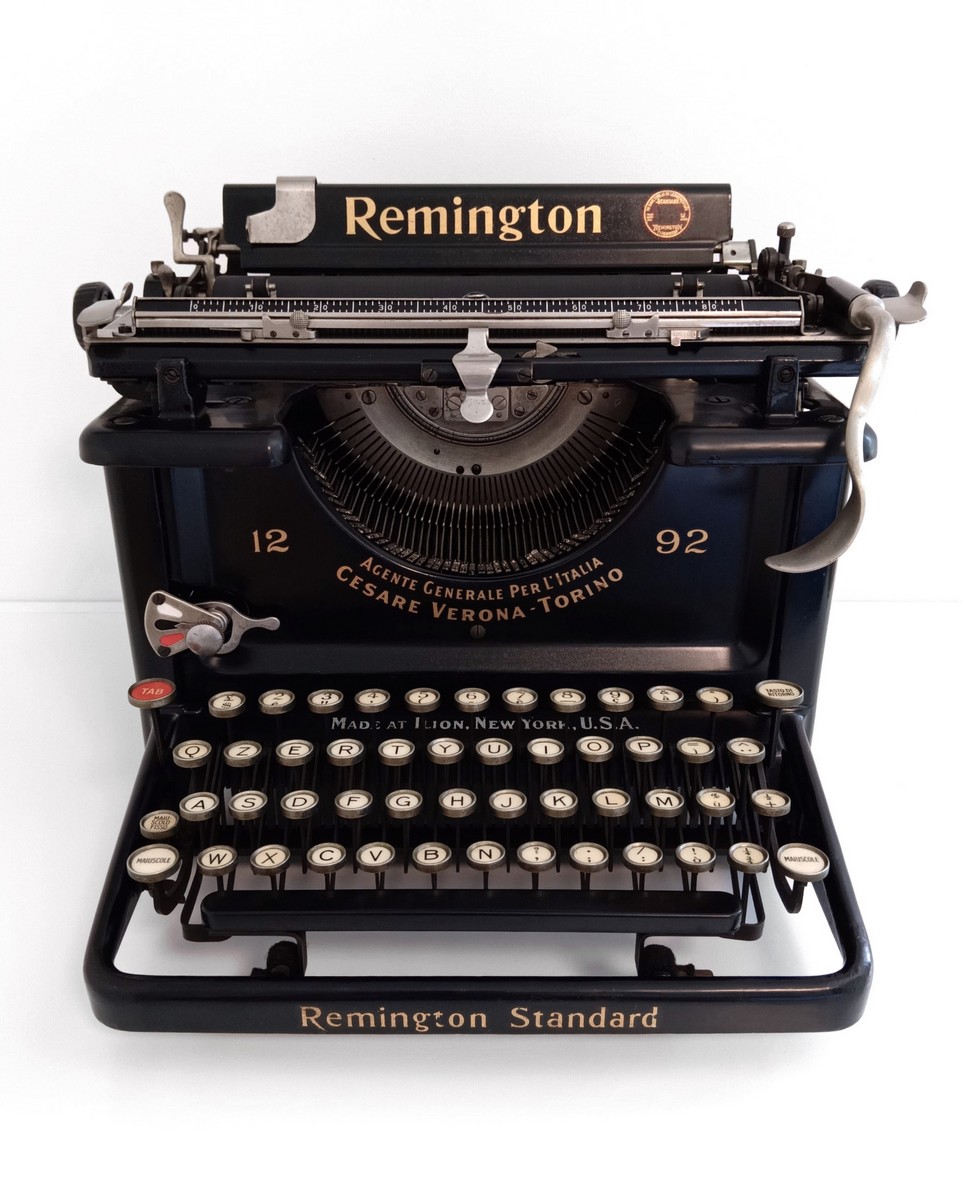





The Remington Standard No. 12 is an American typewriter model produced by the well-known New York company between 1922 and 1940. During this long production period, many different versions were made; the one whose restoration is described in detail in this article is a 12–92 from 1926, marketed in Italy by Cesare Verona.
Although it appears very similar aesthetically to the earlier No. 10 model, with the transition to the No. 12 Remington finally adopted a mechanical structure worthy of a modern typewriter. The round typebars with conical-mounted type were definitively abandoned in favor of flat stamped-steel typebars with brazed type slugs. This type of typebar runs within slots cut into a cast-iron element, giving the typewriter greater durability and precision. Behind this cast-iron component is a mechanism known as the “universal,” which engages the escapement in a more direct way compared to the No. 10, thus allowing a significantly higher maximum typing speed.

After restoration, it is a rather pleasant typewriter to use: the large carriage return knob is comfortable and very satisfying to operate; the pronounced height of the platen allows for an excellent typing posture, and its large diameter reduces paper curling; the carriage, mounted on cross-roller linear guides, is stable and precise.
However, like many “cheap” American typewriters, it still shows some shortcomings in several details: the acetate keyboard — while other manufacturers fitted more prestigious glass keyboards —, the escapement without a silencer, the rather crude line-spacing mechanism, whose coarse-toothed platen ratchet offers very limited choice of line spacing, and, in versions fitted with a wooden base, its rather poor-quality veneered construction.


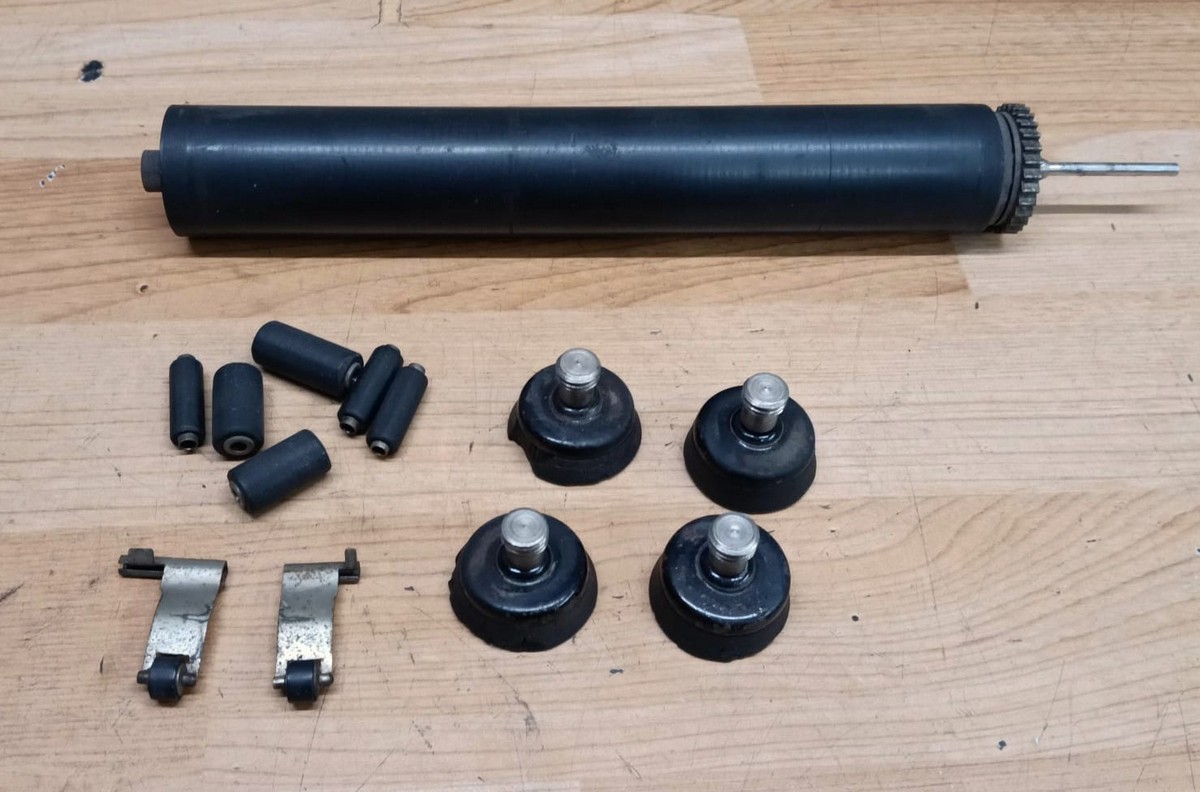
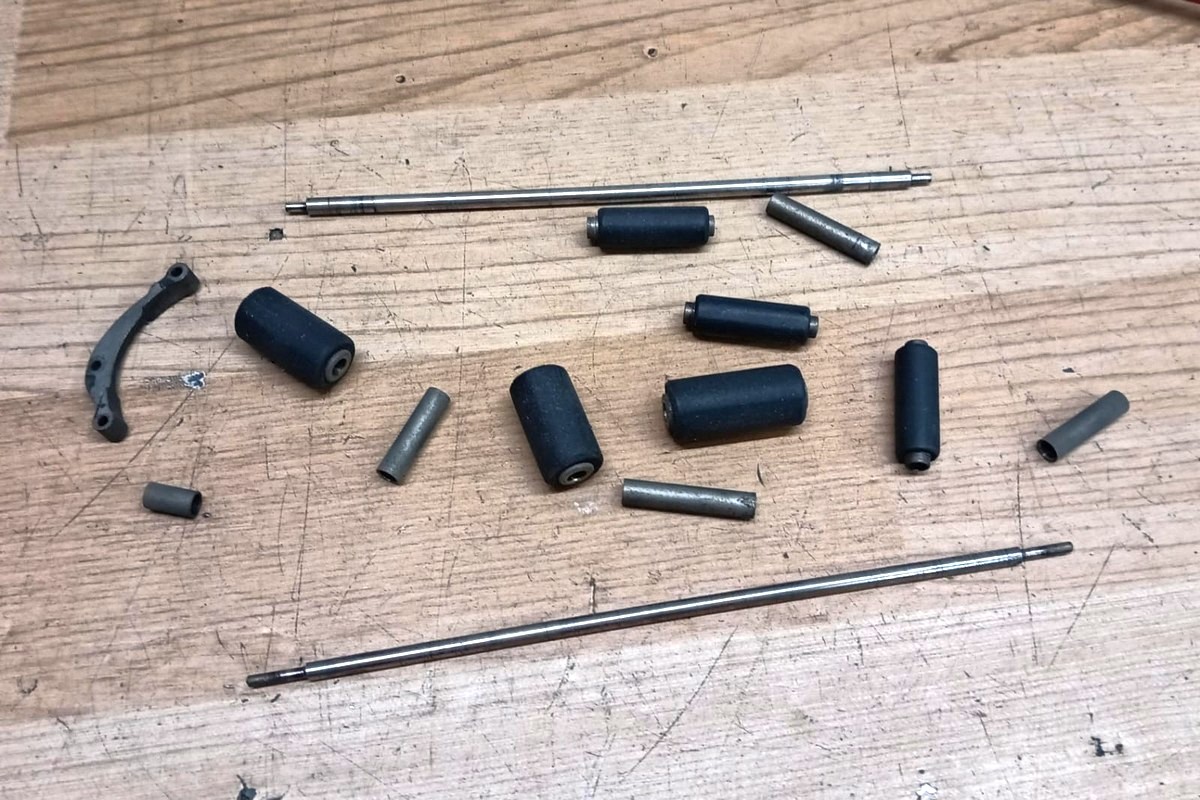
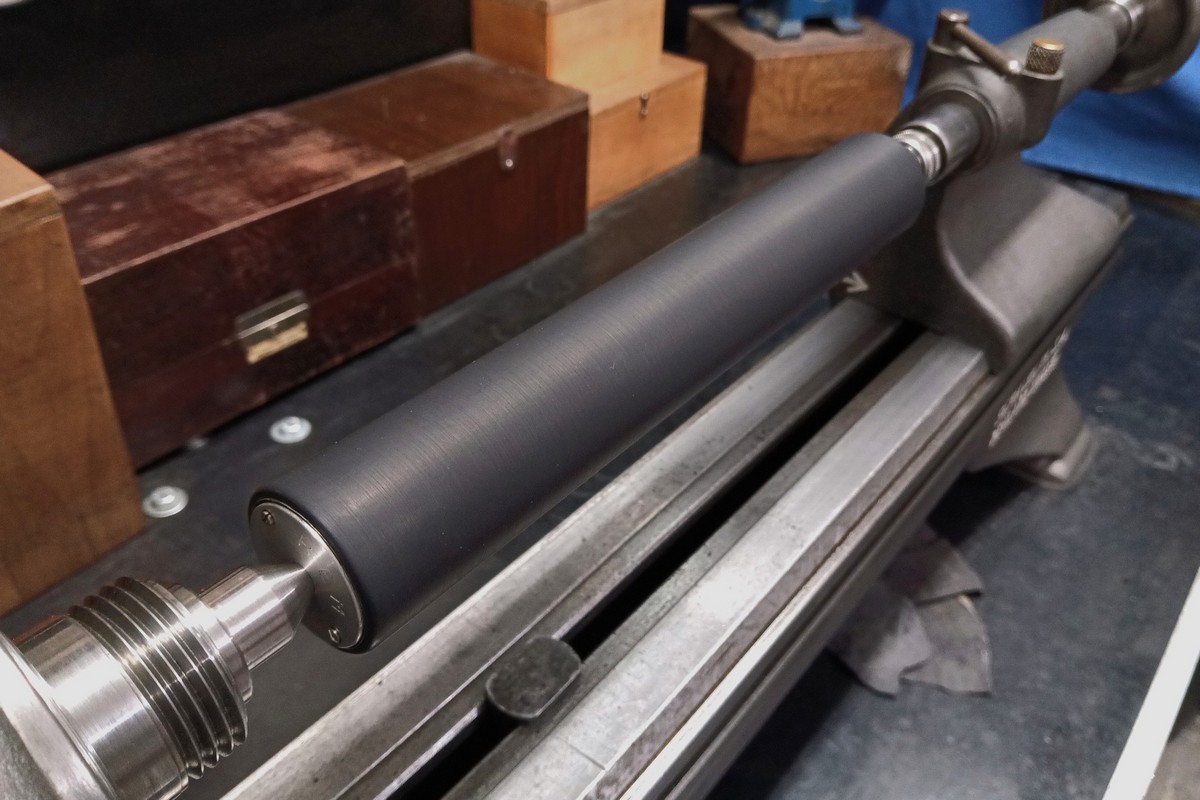
To restore a Remington 12 typewriter to perfect working condition, it is essential to rebuild the various rubber components, which over time tend to harden and eventually crumble completely. Feet, main platen, and both lower and front paper rollers—all must be renewed. Everything is made possible thanks to experience and specialized equipment. For more information, please visit this page.




To remove dirt accumulated over decades of neglect, traditional methods such as kerosene and brushes are often ineffective. Residues such as dried correction fluid, eraser debris, hardened grease and biological deposits require a more advanced approach. For this purpose, a custom-built ultrasonic cleaning tank is used, specifically designed for typewriter restoration. Its operation is based on cavitation: high-frequency waves generate microscopic bubbles that implode against the components, producing deep mechanical cleaning combined with the degreasing action of a mild soap solution. When biodegradable detergents are used, the process is also environmentally friendly. After cleaning, all parts are rinsed in white petrol to remove moisture and prevent oxidation before lubrication and reassembly.

At the end of the restoration, the typewriter undergoes a complete functional test. A final test certificate—typed on the machine itself, signed, and stamped—is issued as proof of successful inspection and completion of the service.
