

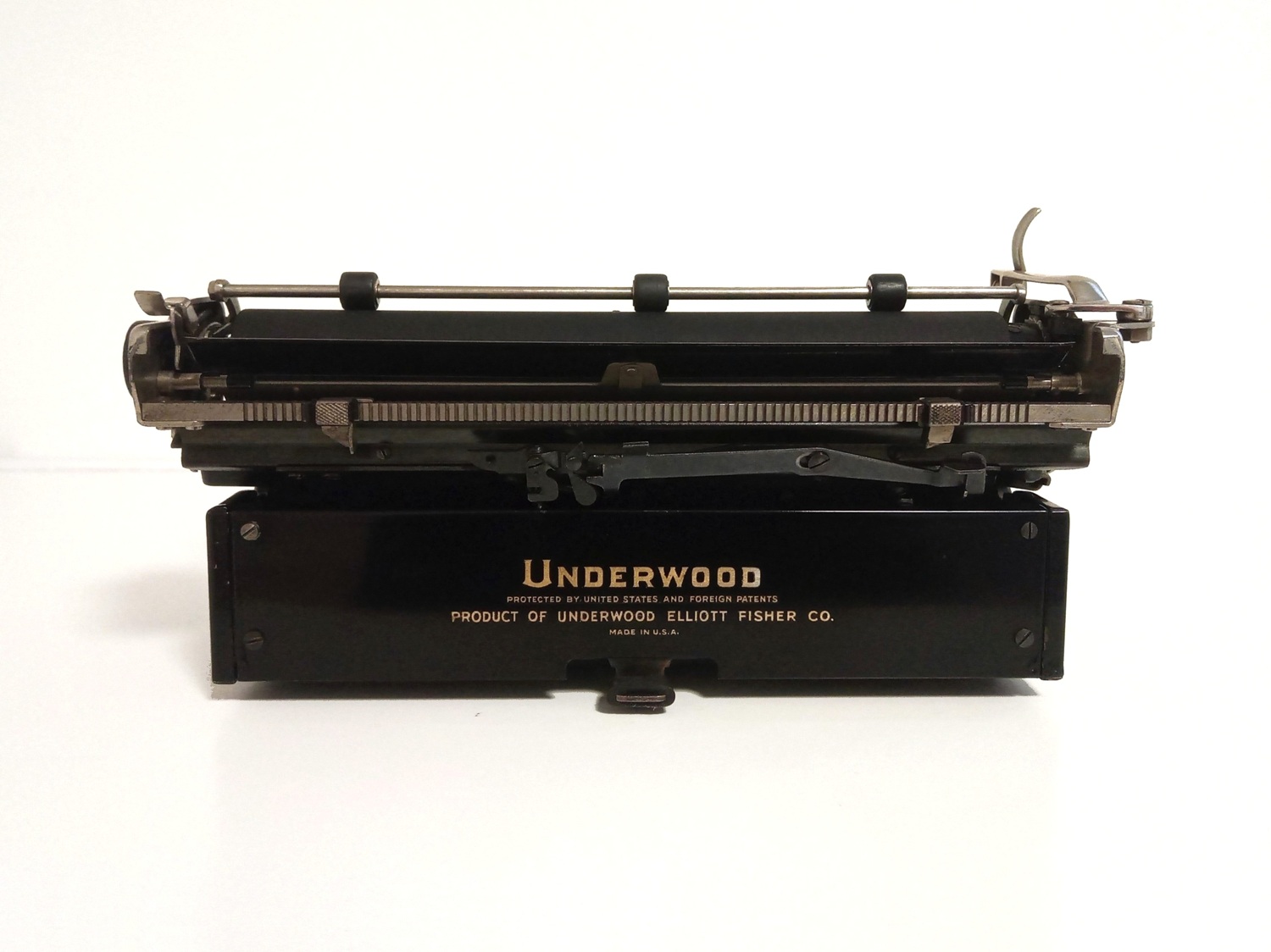



The Underwood Portable Typewriter project began in 1919 with the 3-bank model (three rows of keys and two shift keys) and evolved in 1926 with the introduction of the 4-bank model, featuring the same keyboard layout as standard office typewriters. The machine shown here is the version with the 1930s redesign, also known as the "Universal", characterized by softer more rounded front lines.
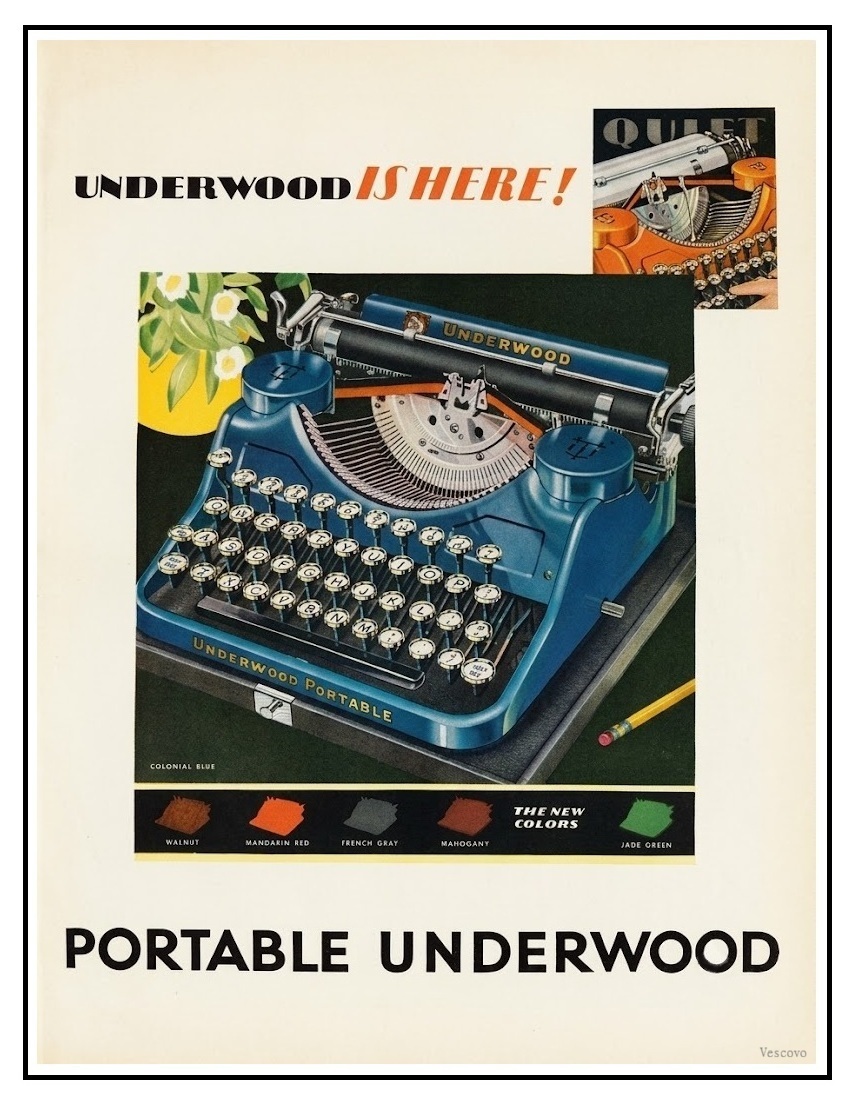 The mechanism of the 4-bank model was also completely redesigned by the German inventor Alfred Gustav Franz Kurowski. Compared with the earlier 3-bank machines, the touch is considerably lighter, the carriage return is much easier and more comfortable to operate, and the maximum typing speed is dramatically higher. These improvements, however, came at the expense of portability, as the 4-bank models are naturally larger than their predecessors. As can be seen from period advertisements, this model was marketed in several colors in addition to the traditional black, some of which are highly sought after by collectors today. Overall, the Underwood 4-bank can be regarded as a highly successful design and a pleasure to use. Its main drawback, shared by virtually all portable typewriters of the period, is the lack of an escapement silencing mechanism, which results in the characteristic ratchet-like sound accompanying each carriage return.
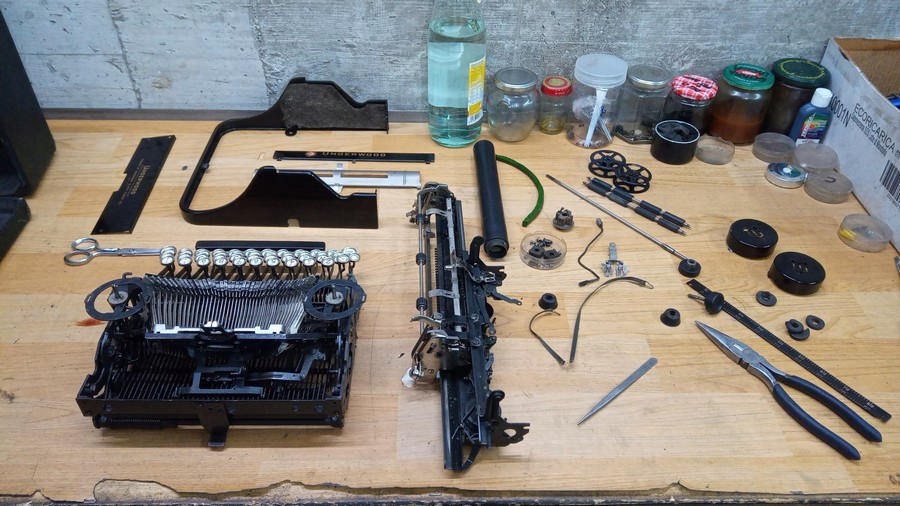
A complete restoration of a typewriter begins with the disassembly of the machine, followed by a thorough cleaning of all mechanical components, first using an ultrasonic bath and then rinse using a petroleum-based solvent.
Once cleaned, every component is carefully dried and reassembled, and then the internal mechanism is precisely lubricated to guarantee optimal performance. The mainspring is also dismantled, cleaned, and reassembled with fresh grease, ensuring consistent tension and smooth carriage movement.
The machine then undergoes a comprehensive adjustment process, including fine-tuning of the kinematics, ribbon lift, and upper/lower case alignment. Components subject to natural wear, such as the ink ribbon, rubber grommets, carriage drawcord, and any weakened springs, are replaced with new parts.


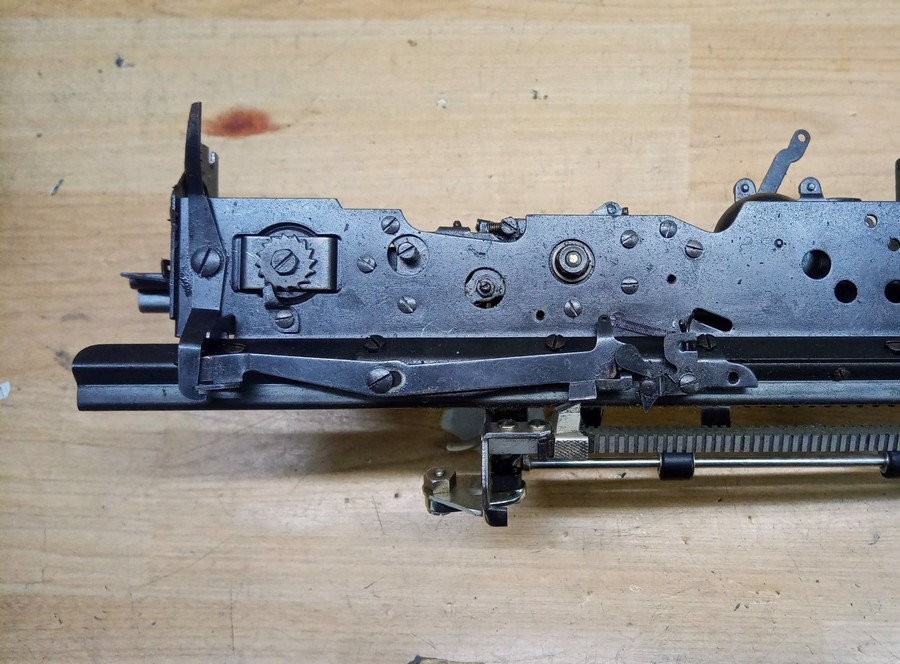


In order to carry out a proper restoration, the carriage must be removed from the machine to allow the mainspring assembly to be taken out and serviced. Fortunately, there is a simple trick that makes the job fairly straightforward: just undo the screws and flat-spring connections highlighted in the photograph below.


To restore a underwood-portable-4b Typewriter to perfect working condition, it is essential to rebuild the various rubber components, which over time tend to harden and eventually crumble completely. Feet, main platen, and both lower and front paper rollers—all must be renewed. Everything is made possible thanks to experience and specialized equipment. For more information, please visit this page.


At the end of the restoration, the typewriter undergoes a complete functional test. A final test certificate—typed on the machine itself, signed, and stamped—is issued as proof of successful inspection and completion of the service.
