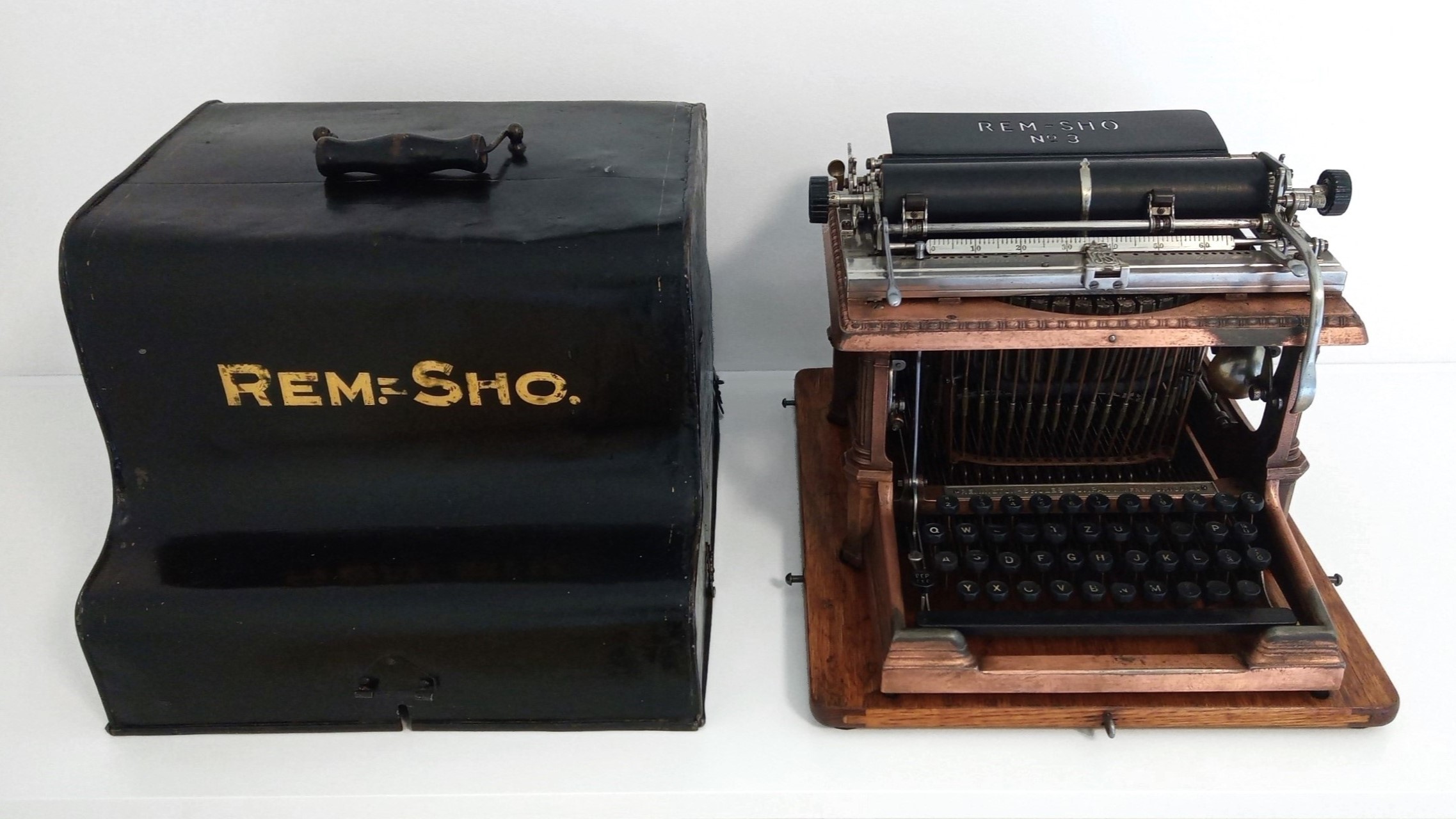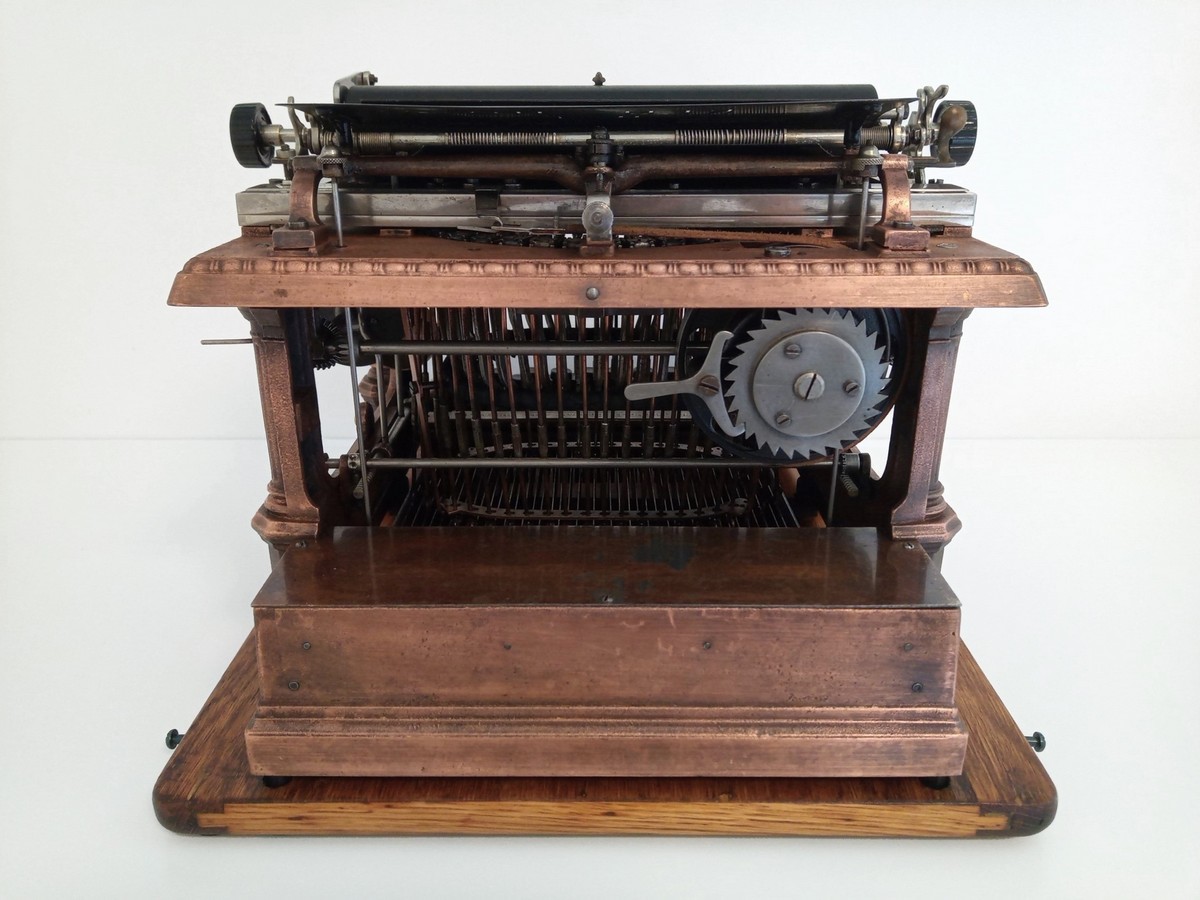





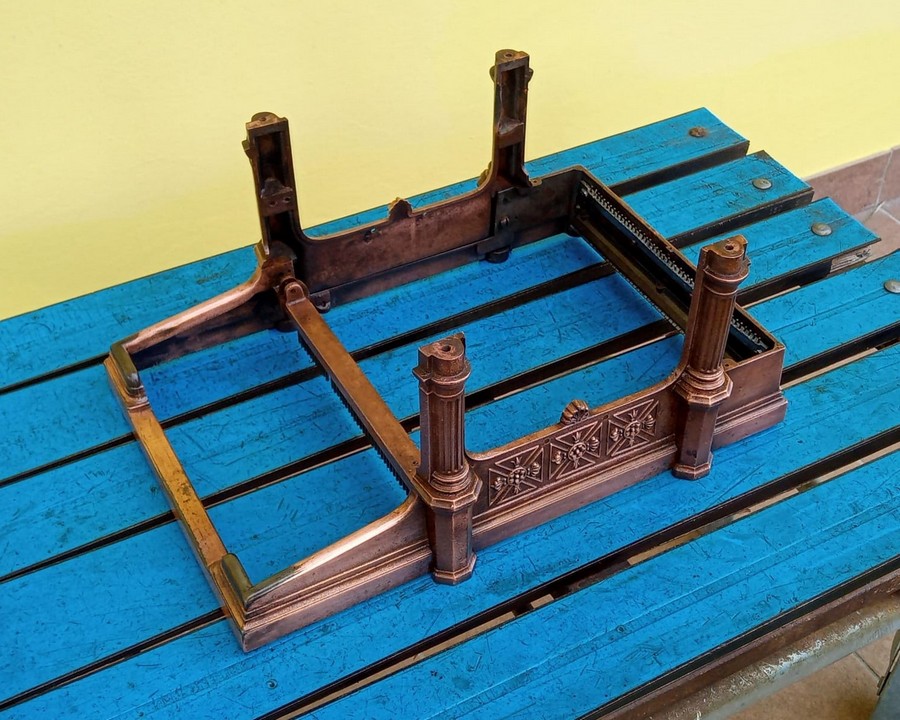
The Remington-Sholes typewriter was designed by architect Charles B. Atwood, who among his various works also designed the Palace of Fine Arts in Chicago. This particular typewriter perhaps reflects the design of that building, with its imposing neoclassical form reminiscent of a Greek temple. The frame is made of cast iron, as with most typewriters, but it features a special surface finish that some texts describe as “bronzed,” though more accurately it should be referred to as copper plating.
 The Remington-Sholes was the first typewriter to feature a typebasket that moved under the action of the shift key, allowing the selection of uppercase characters. The alternative approach adopted by many other manufacturers was the shifting of the carriage; however, over time all manufacturers eventually adopted the swinging typebasket system, as it provided significant advantages, especially in standard large-carriage typewriters. The Model No. 1 is exceptionally rare. I have been unable to find a single photograph of one online; the only known illustration appears as a wireframe drawing in the well-known reference book Kleines Lexikon Schreibmaschinen, where it is dated to 1896. The machine is believed to have featured 43 keys and 86 characters, and was visually almost identical to the later Models No. 2 and No. 3, the only noticeable difference being the bell mounted on the front of the machine.
Both the Model No. 2 and Model No. 3 entered production in 1897. They differ only in the number of keys and characters: the Model No. 2 has 38 keys and 76 characters, while the Model No. 3, presented here, has 43 keys and 86 characters, effectively matching the specifications of the earlier Model No. 1.
The name derives from Franklin Remington, who was the company director, and Zalmon Sholes, who was the inventor. It should be noted that there was no commercial connection with the Remington company, already at that time a well-known typewriter manufacturer. This naturally led to a lawsuit by Remington, which was won in 1901. The typewriter was then rebranded as Fay-Sholes, and the company name was changed to Fay-Sholes Typewriter Co.
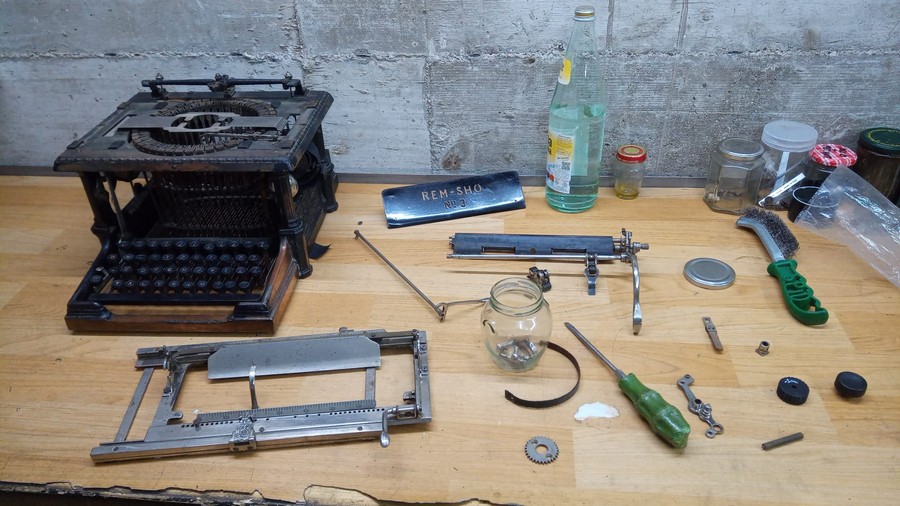
The restoration of this example proved to be particularly demanding, despite being a fully conservative intervention. It was a delicate process, somewhat akin to removing layers of paint or wallpaper from historic villas to reveal the beautiful original frescoes beneath—frescoes that had once been covered simply because they had fallen out of fashion.


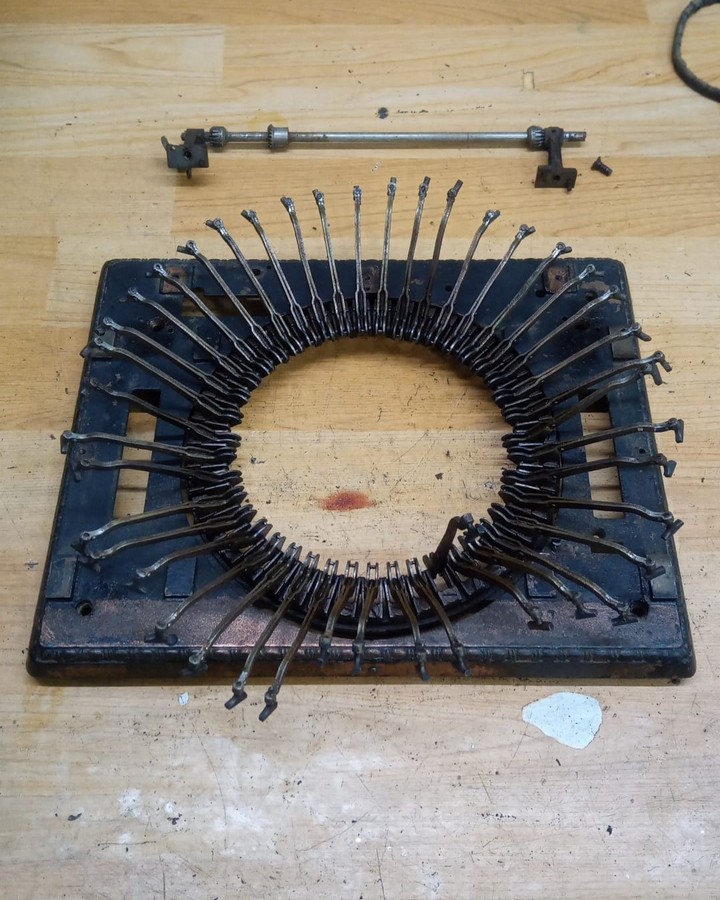

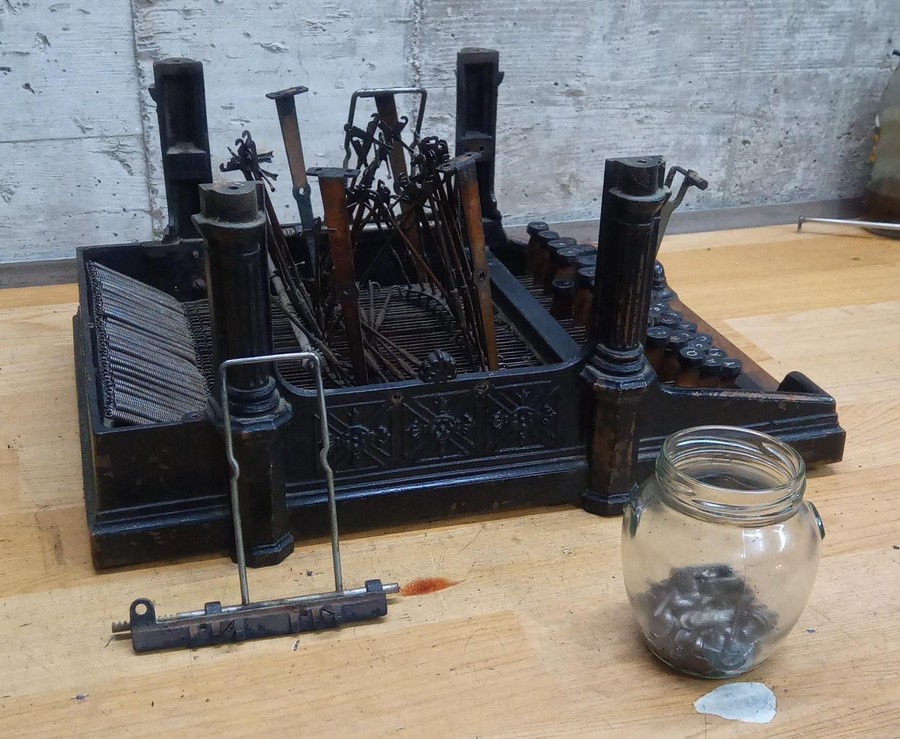
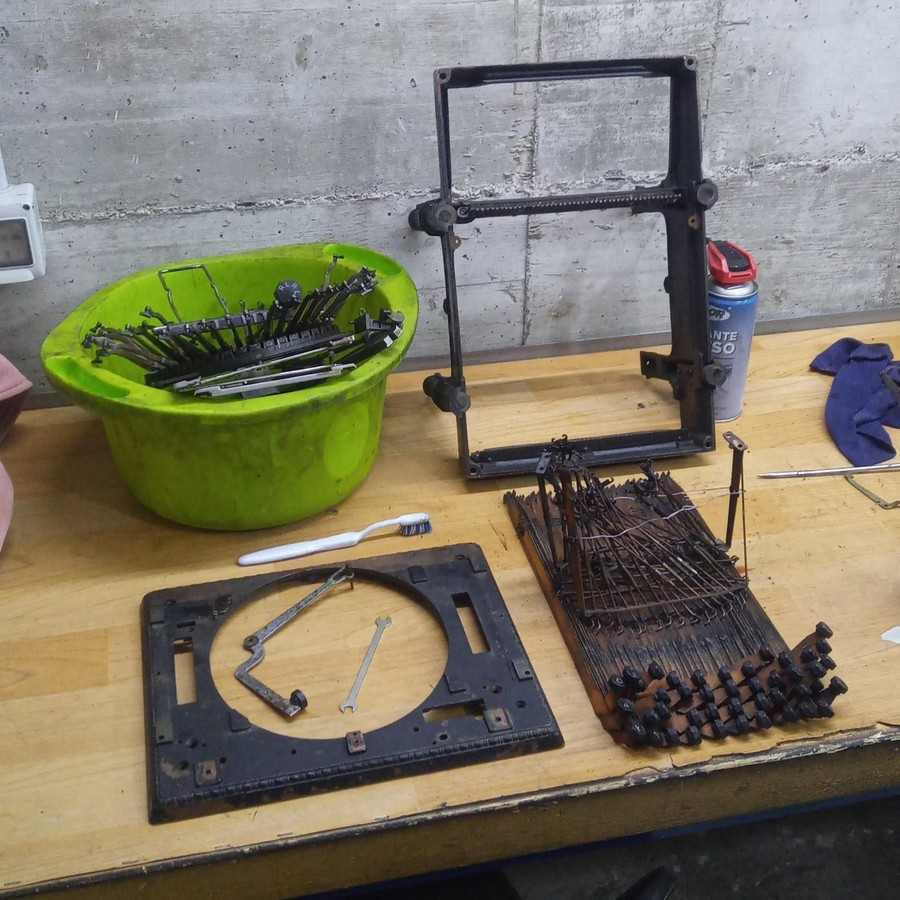

The Rem-Sholes machines were originally produced in a so-called "bronze" finish—an, improper term as already mentioned, since the surface was actually created by bright copper electroplating over cast iron. There were dealers who purchased obsolete American models for next to nothing, as they had little value in their country of origin, and resold them in Europe. This occurred especially after the wars that devastated our countries, particularly the First and Second World Wars, although the practice was by no means confined to wartime.
I am convinced that, for many customers, purchasing these late nineteenth-century machines was already something unusual; acquiring one with its distinctive copper finish was considered even more eccentric. For this reason, dealers often painted them black by hand in order to make them easier to sell. In much the same way, this machine had also been painted black, perhaps because its unusual copper-plated finish was no longer appreciated. The main challenge was therefore to remove the later paint without affecting the original copper coating beneath. The restoration was carried out successfully, allowing the machine to recover its original "bronze" appearance without causing the slightest damage to the copper plating. As a first step, the entire machine was carefully dismantled, piece by piece.


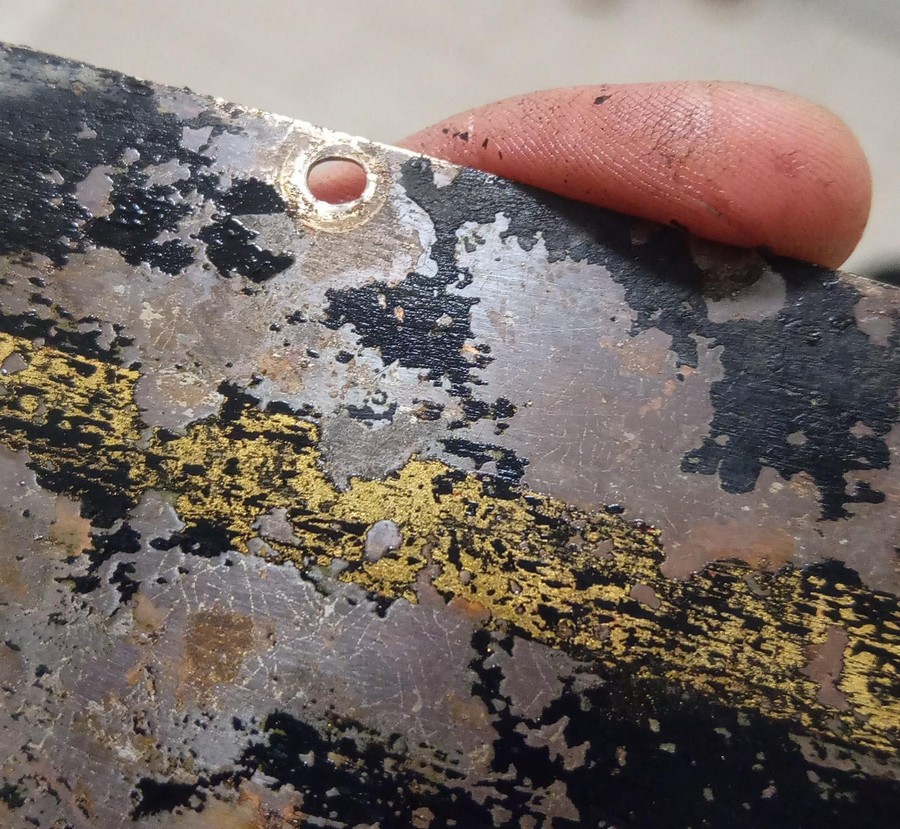


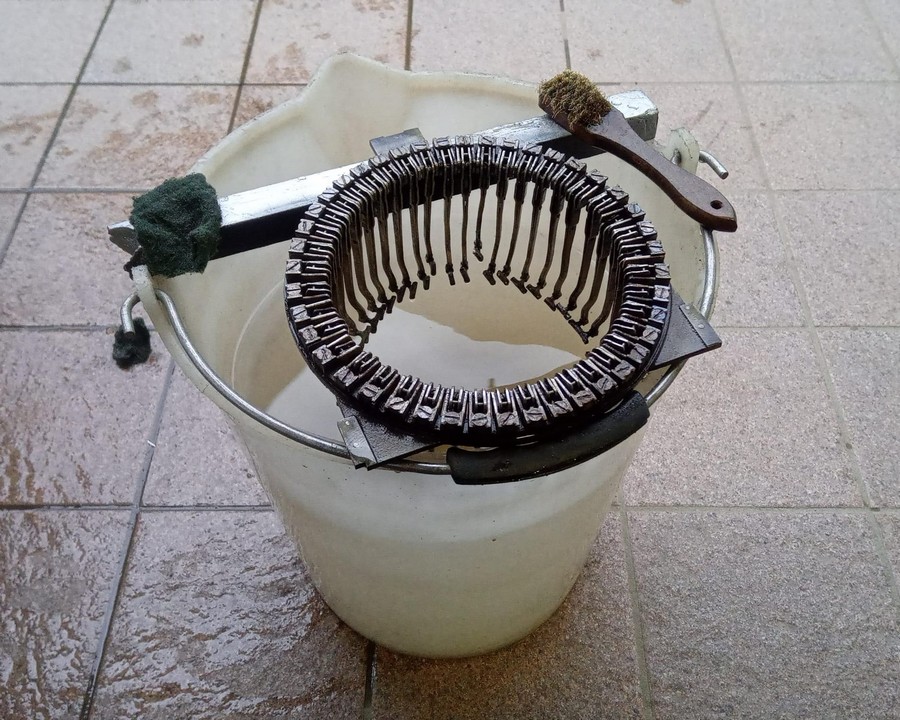

Mechanical cleaning with a jeweller's rotary brush or abrasive blasting was out of the question, as the thin copper coating would have been irreparably damaged. The solution, which ultimately proved highly successful, was to weaken the paint with pure acetone and then induce its separation using a powerful ultrasonic cleaning machine.
Chemical paint strippers were deliberately avoided for fear that they might attack or corrode the copper surface. Instead, the disassembled components were generously brushed with pure acetone. This caused the paint to wrinkle and soften, fortunately because the hand-applied black paint lacked the durability and adhesion of the electro-deposited black finish typically used on typewriters.
Pure acetone is known to have no detrimental effect whatsoever on the copper layer. Once the paint had been sufficiently compromised, the components were placed in a powerful ultrasonic bath, whose action promoted the separation of the paint. From time to time, the process was gently assisted by hand using a nylon-bristle brush.


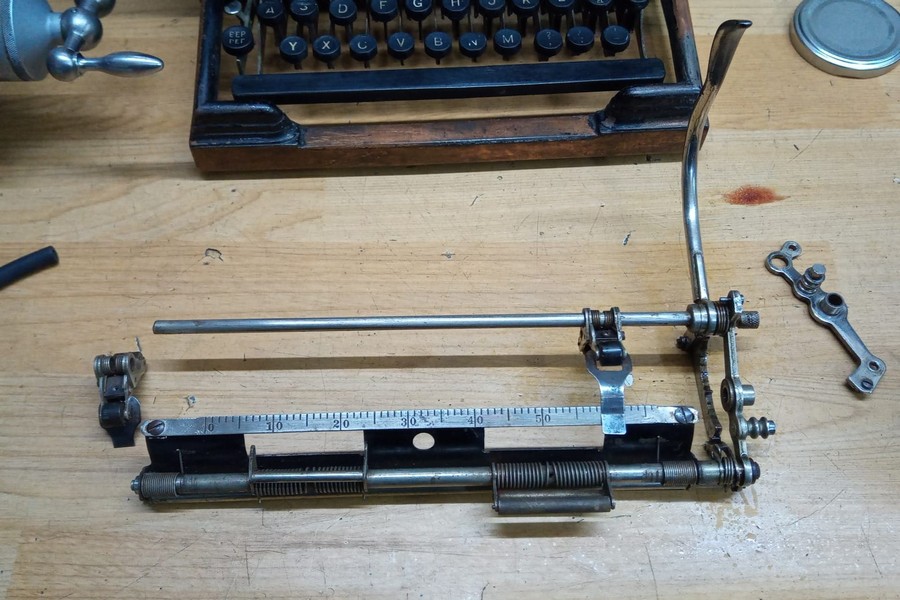
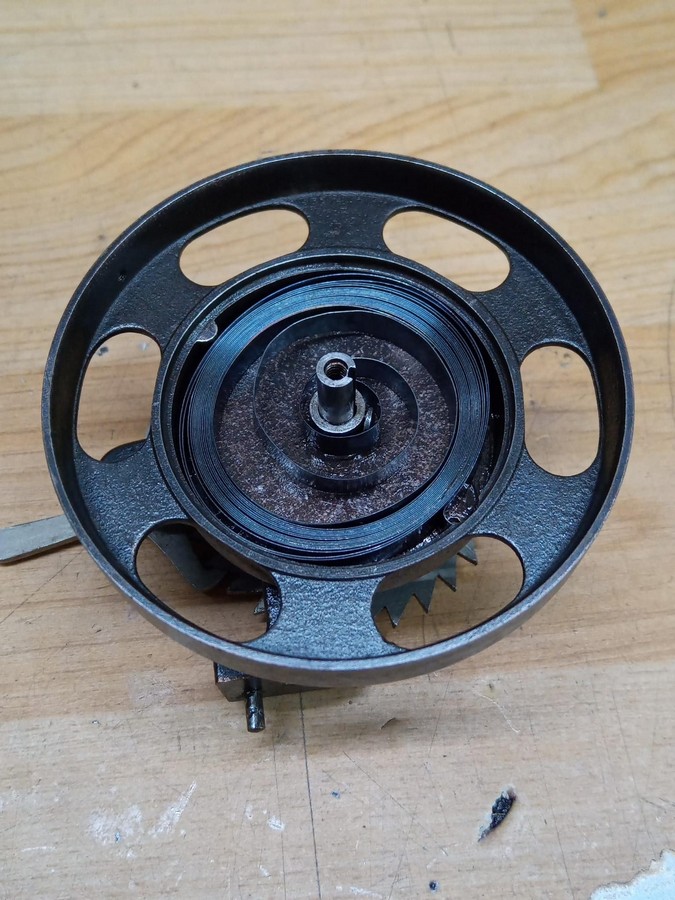
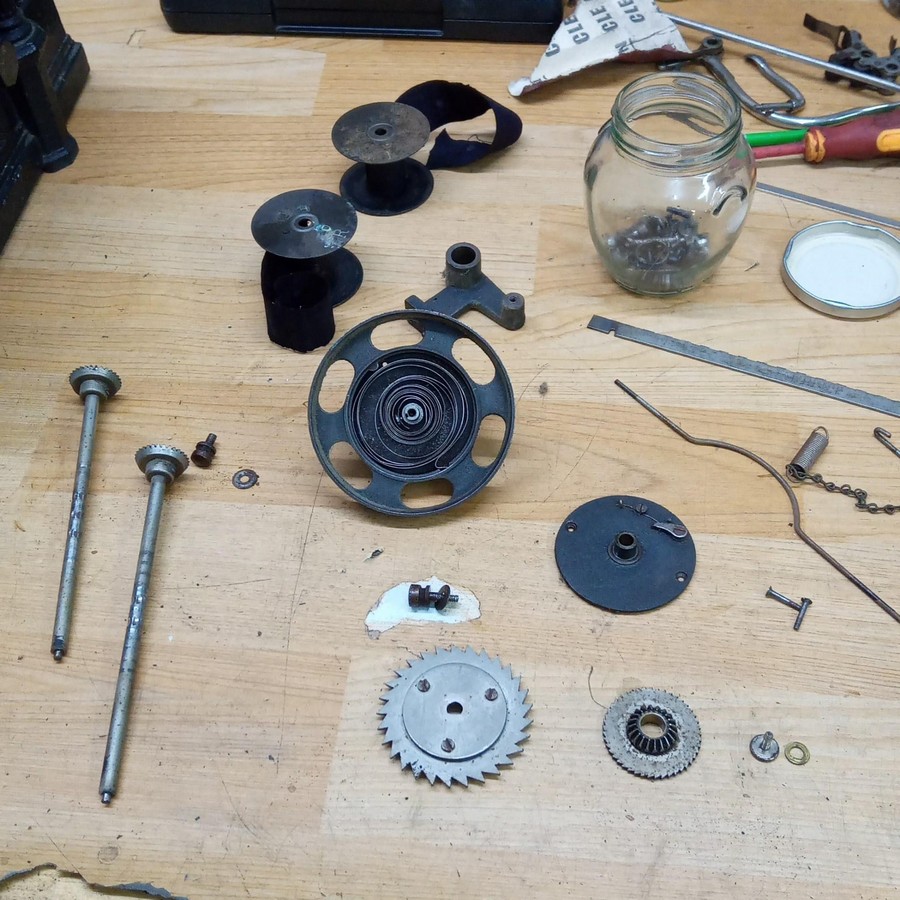
In order to perform a proper restoration, the carriage was removed from the machine and entirely dismantled piece by piece. Every component was meticulously cleaned and brought back to a bright, polished finish by hand using automotive polishing compound and a soft cotton cloth. The mainspring assembly was also completely disassembled. This allowed the old, dried grease to be removed, fresh lubricant to be applied, and the mechanical condition of all the components to be carefully inspected and verified before reassembly.



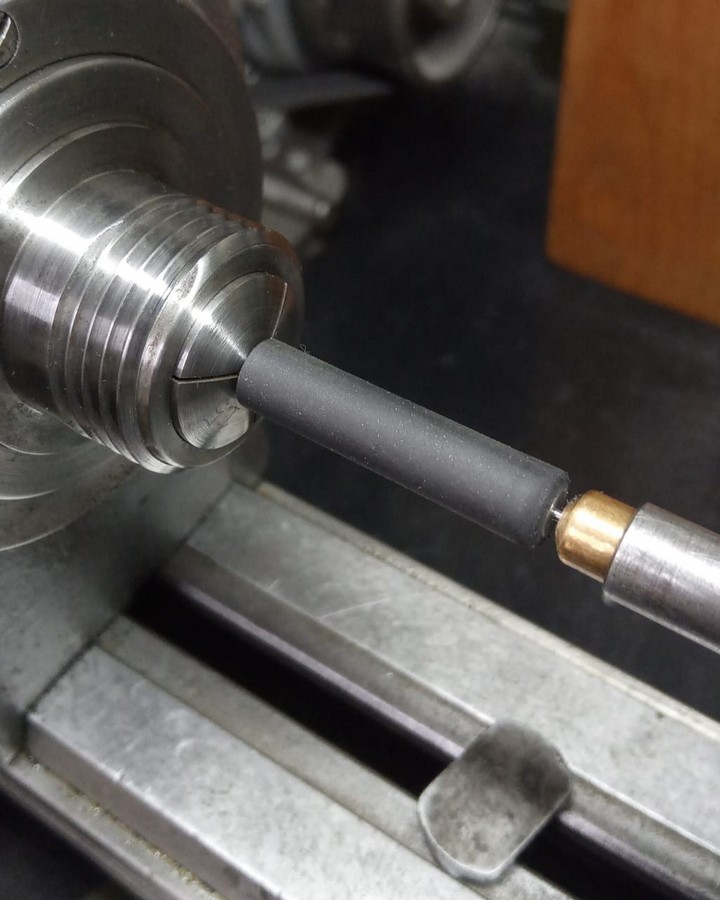
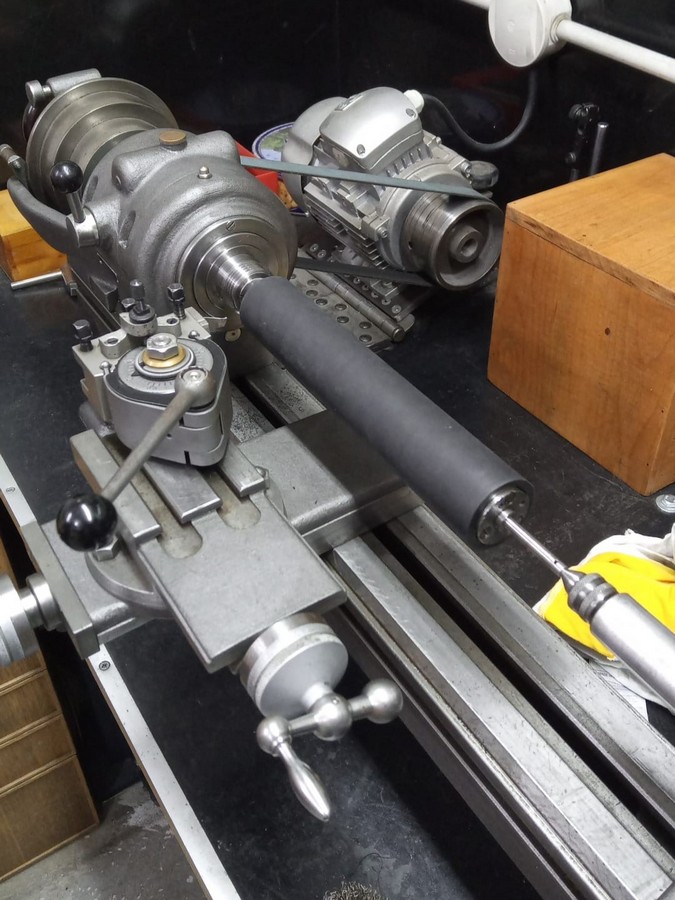
In order to return the typewriter to full working condition, it was necessary to reconstruct the various rubber components, which, over time, had hardened and in some cases completely disintegrated. The feet, main platen, lower rollers, and front paper rollers were all renewed using specialized equipment and techniques developed through years of experience. For more information, please visit this page.
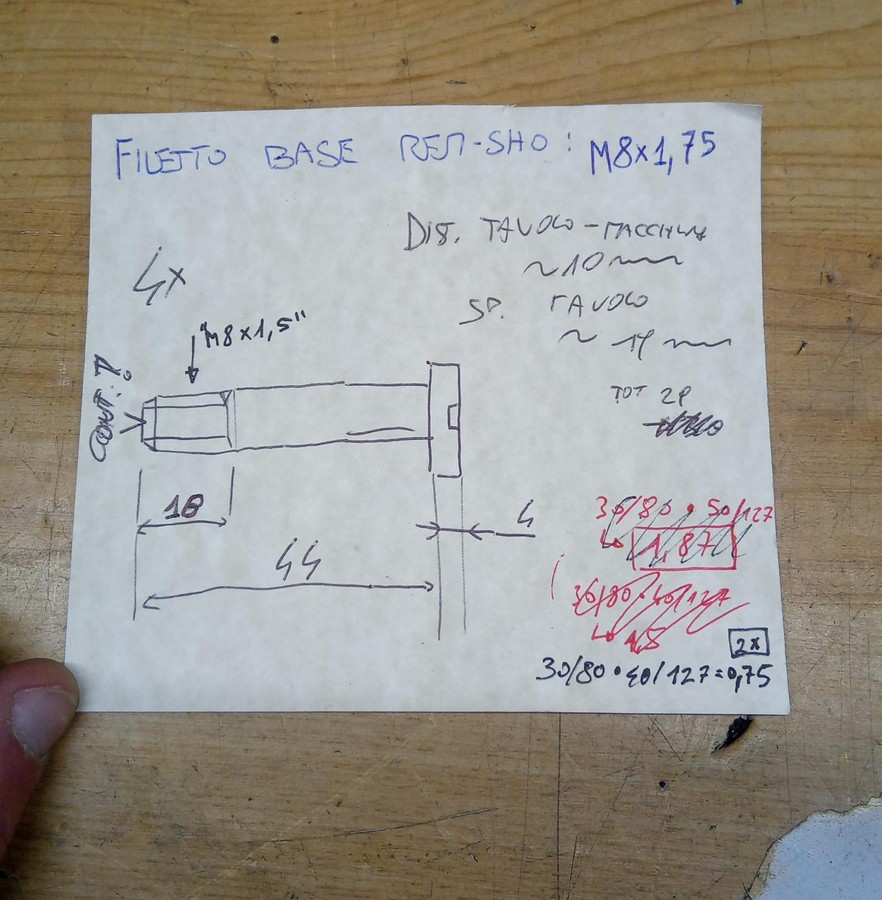
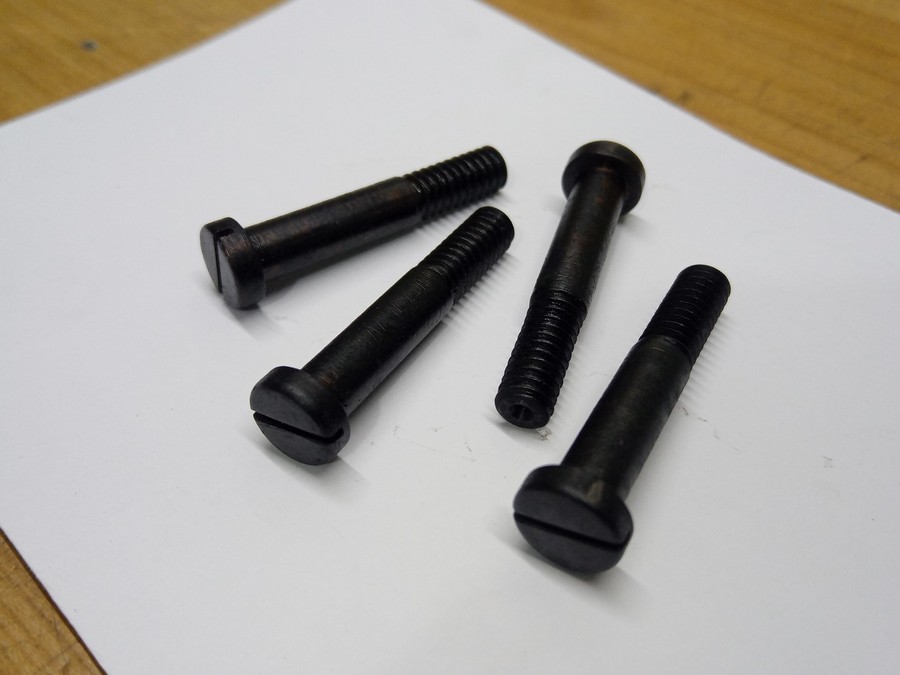
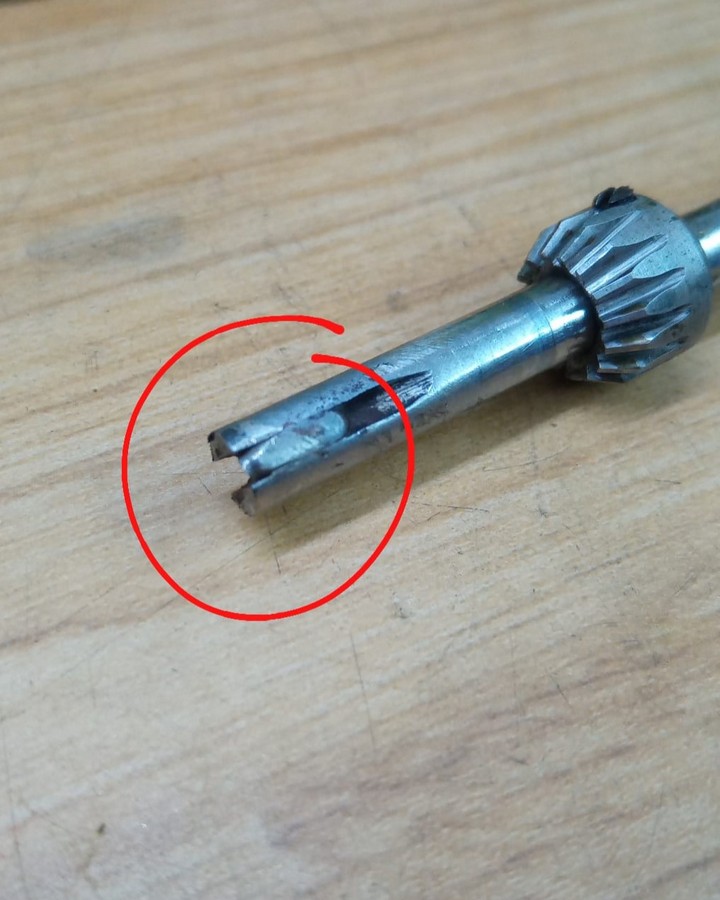
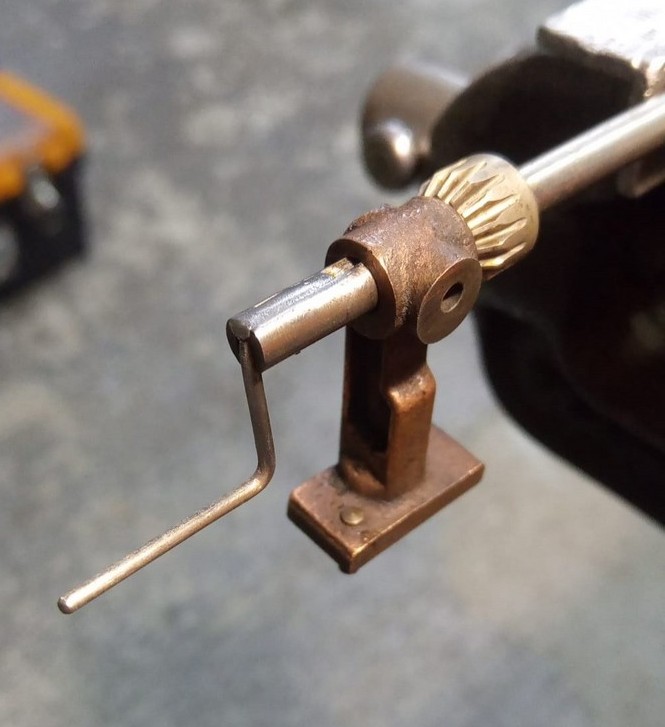
A number of missing or damaged mechanical components were also recreated, including a carriage stop pin, four non-standard screw, and a resin knob. Wherever possible, original parts were preserved, and every replacement was carefully made to match the appearance and function of the originals, thus maintaining the historical integrity of the machine.









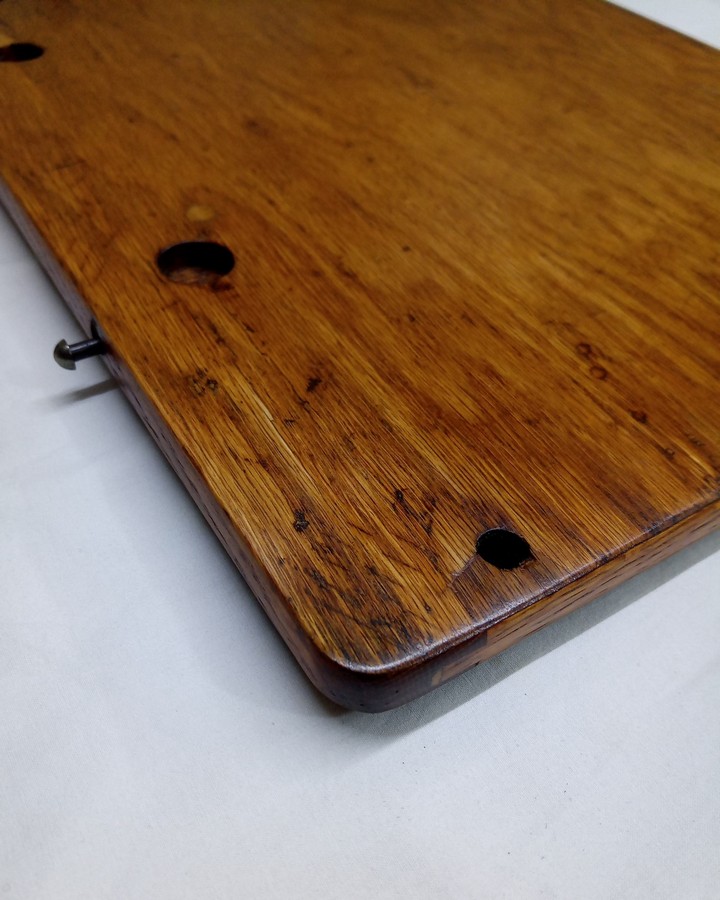
The original wooden base is veneered in American oak. During the restoration, several repairs were carried out on the upper, visible surface using period-correct American oak veneer recovered from another antique piece. This approach ensured visual and historical consistency with the original finish.
The lower section, however, was too extensively damaged for conservative repair. In this case, the veneer was entirely replaced with new American oak veneer, carefully matched in grain and tone to maintain the overall integrity and appearance of the base while respecting its original character.


At the end of the restoration, the typewriter undergoes a complete functional test. A final test certificate—typed on the machine itself, signed, and stamped—is issued as proof of successful inspection and completion of the service.