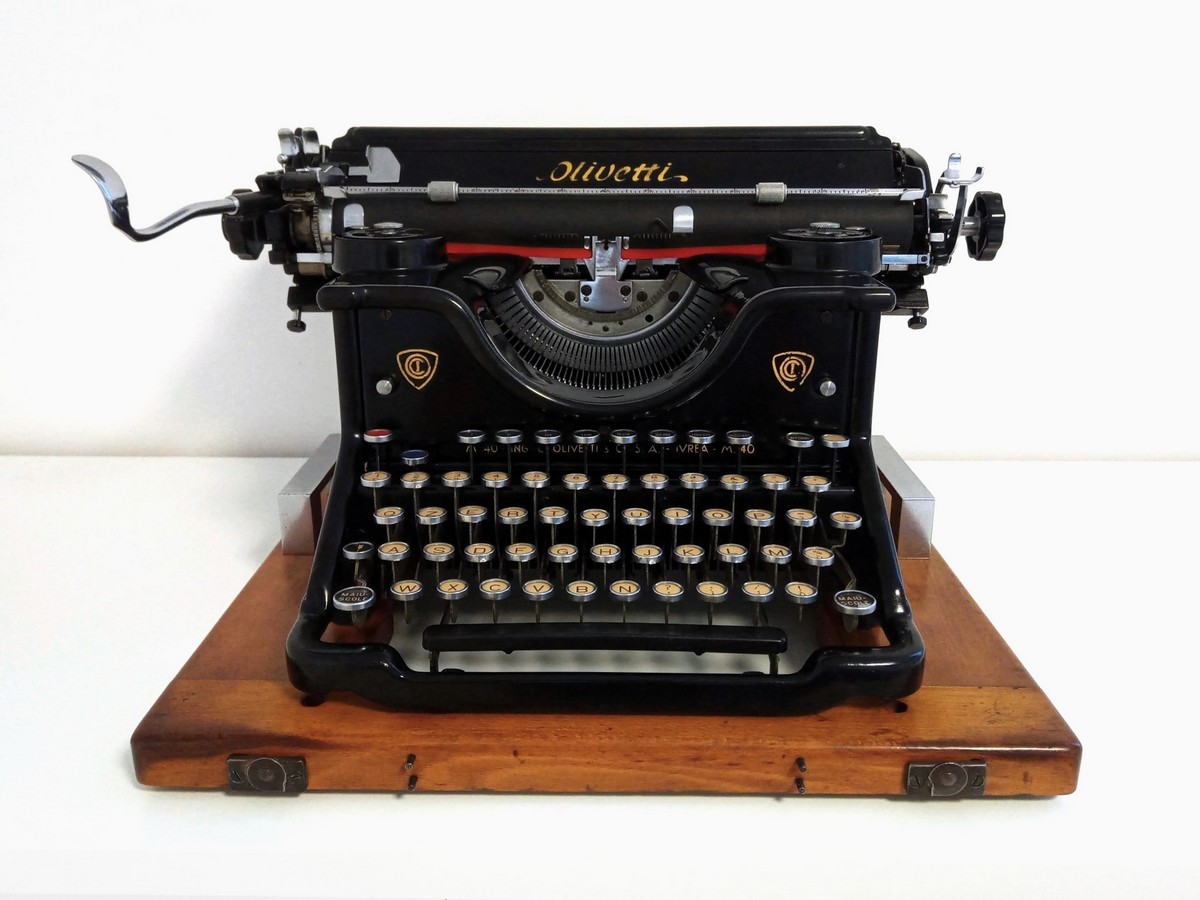


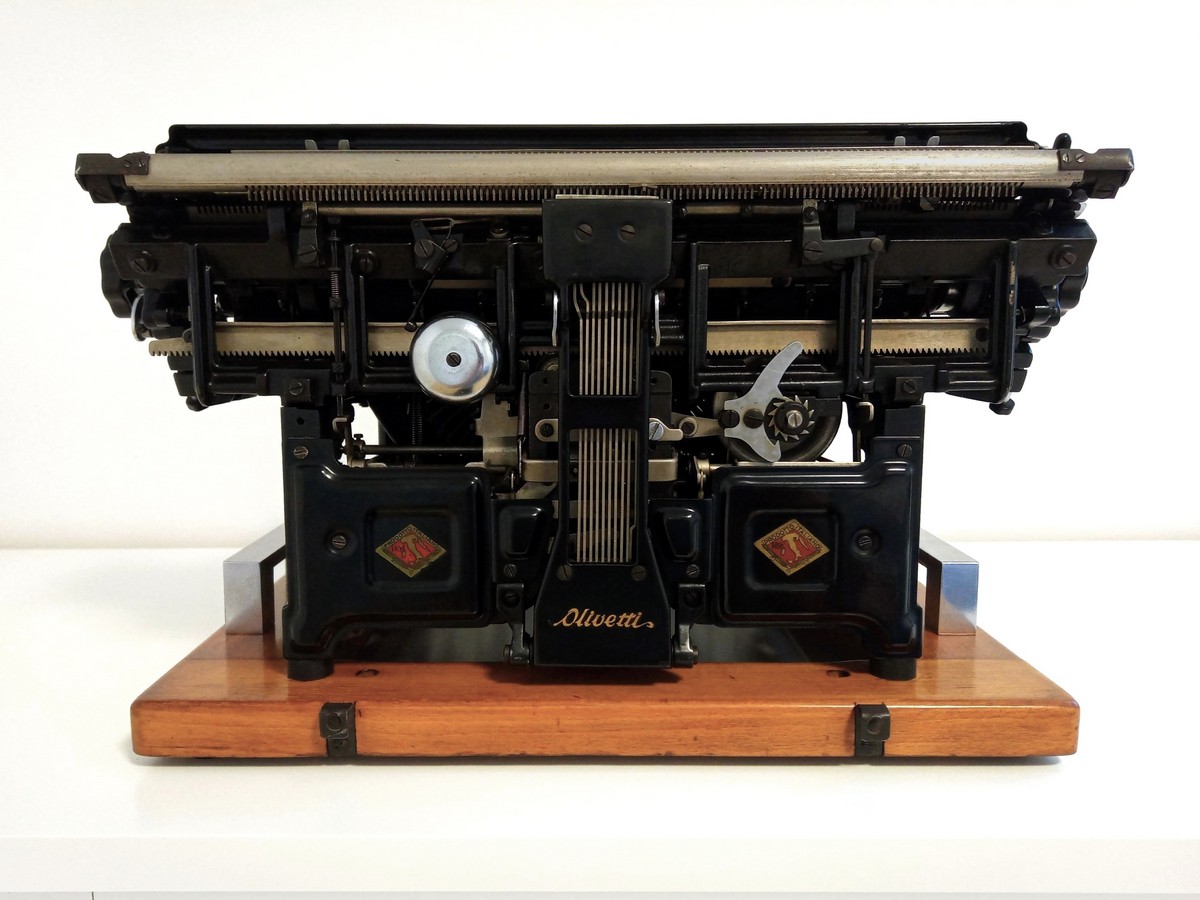



The Olivetti M40 is not only a beautiful standard typewriter; personally, I consider it the finest standard typewriter produced before the Second World War. It was manufactured from 1930 to 1948 and underwent numerous modifications and restylings over the years, resulting in three main versions and several minor variants, while retaining the key characteristics that define its precision and solidity.
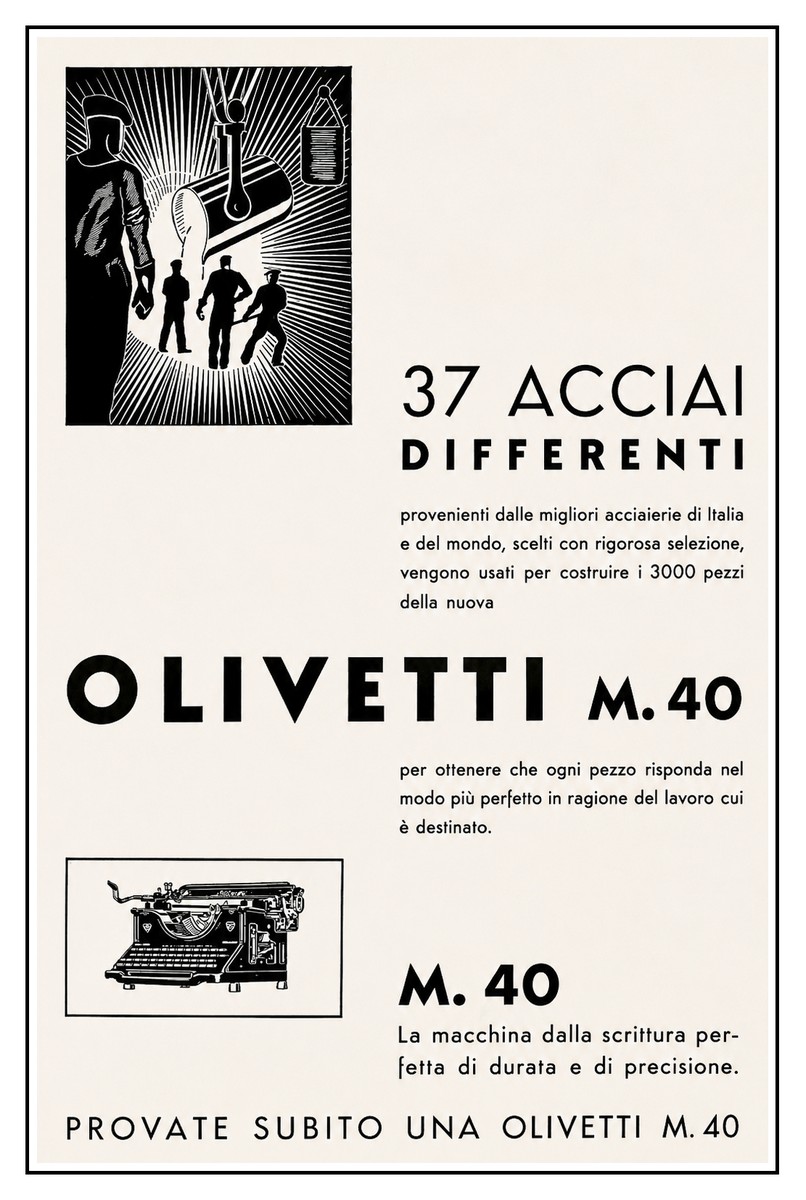 The most important characteristic is that the machine is fundamentally based on cast-iron components, machined to an extremely high degree of precision on machine tools and assembled together.
Many typewriters from the same period share this characteristic, but the M40 is the only machine in the world to have its carriage also made 100% using this construction method. The fixed guide consists of a single casting, ground at all points where precision is required, while the moving guide is likewise made from a single casting and ground to the same exacting standards.
This applies to both the smaller and larger carriages. This demonstrates an extraordinary and unparalleled mastery of foundry and metalworking processes within the Olivetti workshops!
Writing with a perfectly restored Olivetti M40 is a truly rewarding experience: it has a solid sound, a crisp response, and a very precise and powerful touch, the latter being a highly sought-after characteristic at a time when documents often had to be produced in multiple copies.
The most important characteristic is that the machine is fundamentally based on cast-iron components, machined to an extremely high degree of precision on machine tools and assembled together.
Many typewriters from the same period share this characteristic, but the M40 is the only machine in the world to have its carriage also made 100% using this construction method. The fixed guide consists of a single casting, ground at all points where precision is required, while the moving guide is likewise made from a single casting and ground to the same exacting standards.
This applies to both the smaller and larger carriages. This demonstrates an extraordinary and unparalleled mastery of foundry and metalworking processes within the Olivetti workshops!
Writing with a perfectly restored Olivetti M40 is a truly rewarding experience: it has a solid sound, a crisp response, and a very precise and powerful touch, the latter being a highly sought-after characteristic at a time when documents often had to be produced in multiple copies.
 This particular first-series Olivetti M40 was manufactured in 1935. The typewriter was found completely original and complete with its solid wood table, which was restored using the original technique, namely shellac applied with a pad. Particular care was taken to preserve some of the small and pleasing signs of age. It is fitted with a 36 cm roller carriage, accommodating 120 characters, an uncommon intermediate size that makes the machine more imposing without making it appear awkward or cumbersome. The decals are all original and in good condition, including the autarkic emblems, which were often removed or altered after the war, with the two fasces being covered with paint.


In 1938, the Olivetti M40 was redesigned, giving rise to a second version which, with a production run of 230,000 units, is by far the most common. The changes were mainly aesthetic: greater protection against dust was provided by various covers, while the historic gold decals were replaced by more modern plaques and raised lettering, which were quicker to produce.
From a mechanical standpoint, however, the machine remained substantially unchanged and continued to be an excellent typewriter, although the overall quality of the finishes gradually declined as production moved beyond the first two or three years. This is perfectly understandable considering the difficulties brought about by the Second World War, which lasted in Italy from June 1940 to April 1945.
As for the finishes, the machines were initially produced with glossy black paint; later, a textured or so-called hammered finish was introduced. The keyboard also initially followed the design of the early series, with black lettering on a light background; later, this was replaced by light lettering on a black background.

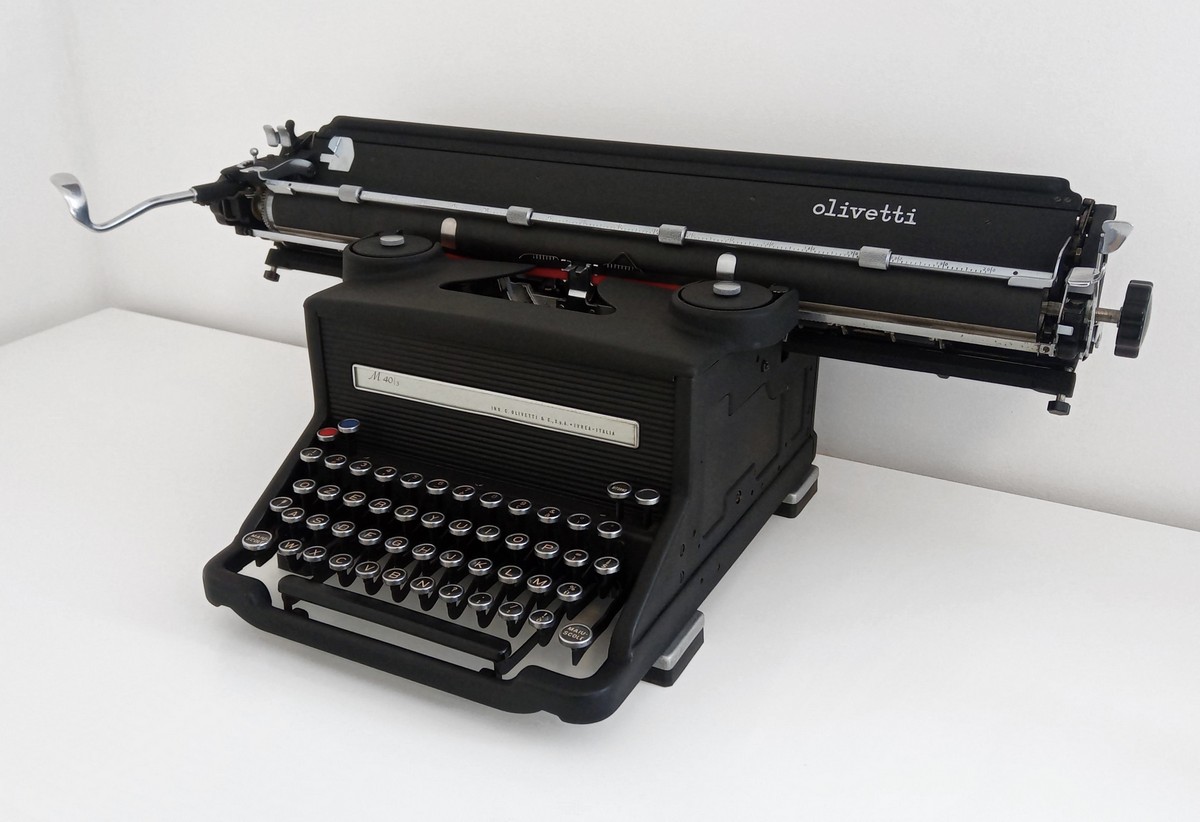
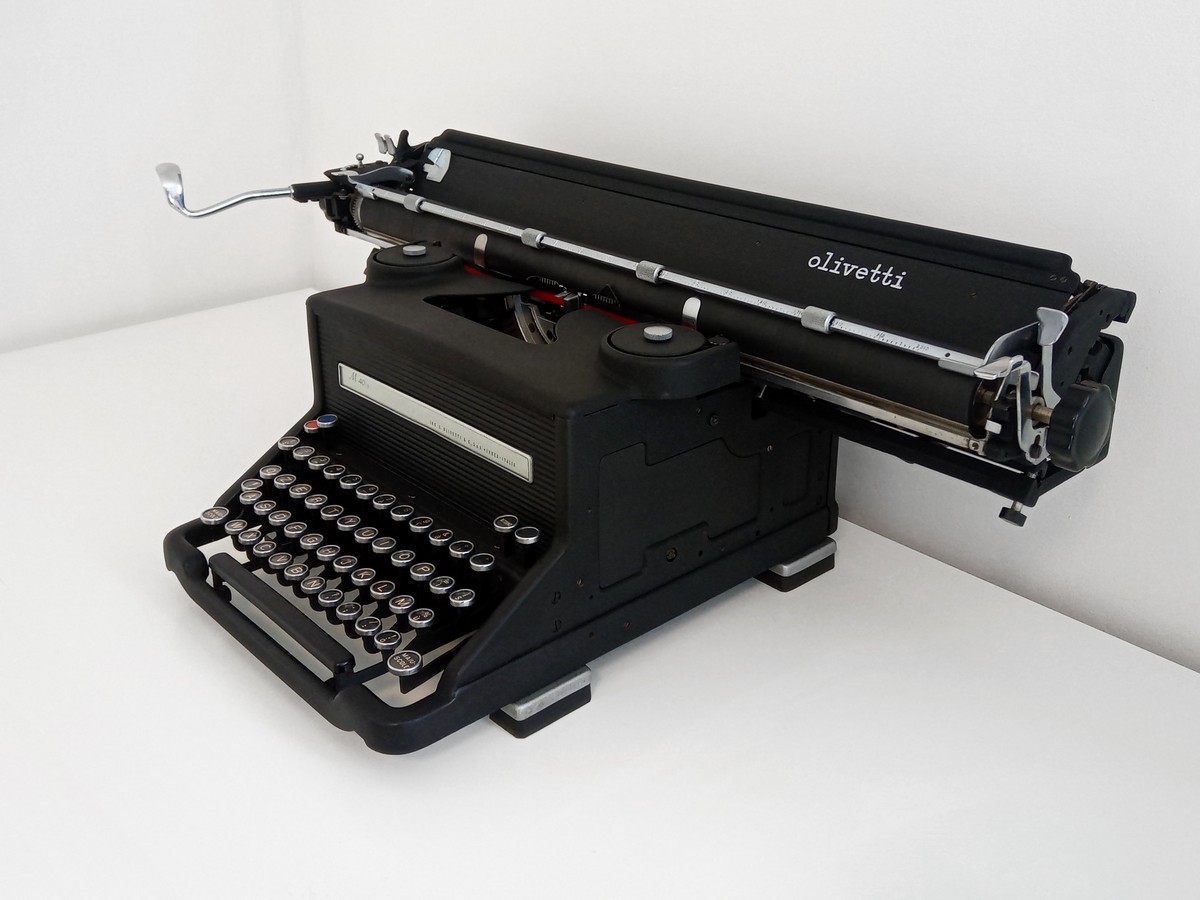

Immediately after the end of the Second World War, a third version was introduced with only minor aesthetic changes, consisting of a new top cover with a “button” fastening system and a wavy front panel featuring an elegant glass insert, very similar to the one already used on the Olivetti Studio 42. The mechanical design remained substantially the same as that of the final Olivetti M40/2 examples. The restored model shown here is fitted with an oversized carriage capable of accommodating up to 200 characters, allowing sheets of paper up to 57 cm wide to be inserted.

A complete restoration of a typewriter begins with the disassembly of the machine, followed by a thorough cleaning of all mechanical components, first using an ultrasonic bath and then rinse using a petroleum-based solvent.
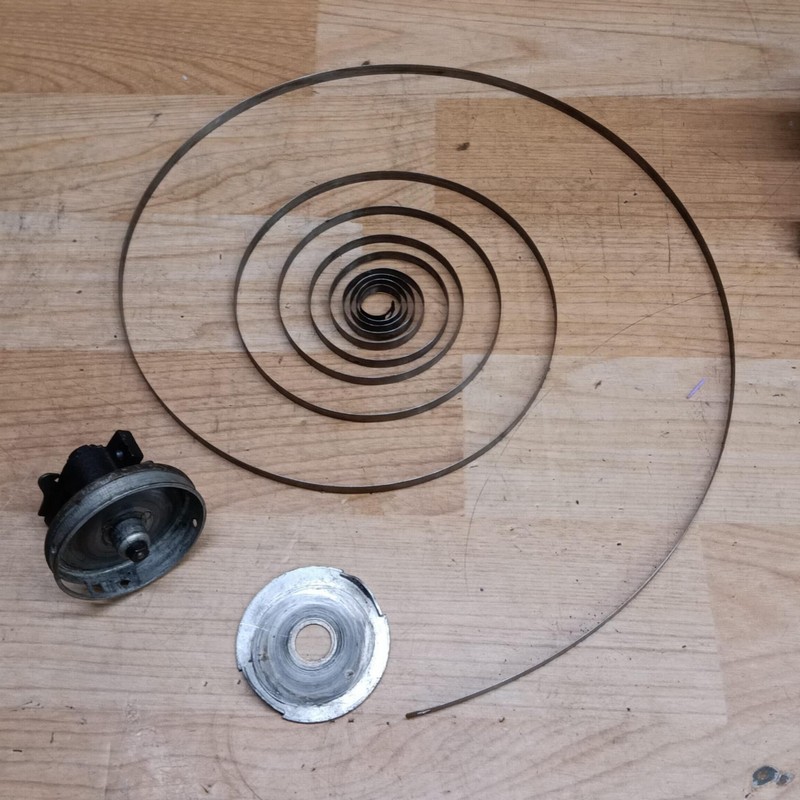
Once cleaned, every component is carefully dried and reassembled, and then the internal mechanism is precisely lubricated to guarantee optimal performance. The mainspring is also dismantled, cleaned, and reassembled with fresh grease, ensuring consistent tension and smooth carriage movement.
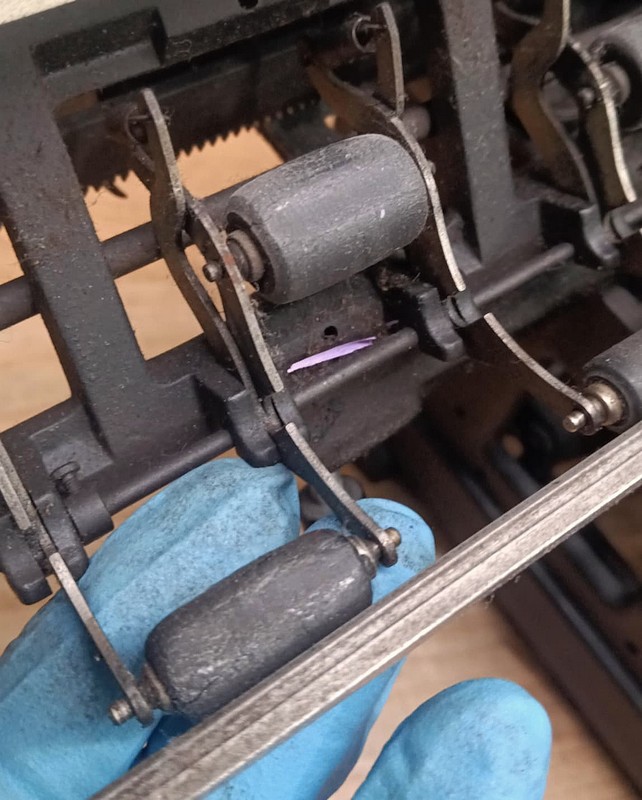
The machine then undergoes a comprehensive adjustment process, including fine-tuning of the kinematics, ribbon lift, and upper/lower case alignment. Components subject to natural wear, such as the ink ribbon, rubber grommets, carriage drawcord, and any weakened springs, are replaced with new parts.




All Olivetti typewriters produced before 1950 were originally fitted with a prestigious glass-covered keyboard. Each letter is printed on a piece of card, protected by glass and secured by a nickel-plated brass bezel.
The problem with these keyboards, which would otherwise be virtually everlasting, is the poor maintenance they have received over the years. In the post-war period, typewriters were cleaned using petroleum-based washing machines rather than by hand, as had previously been the practice. The petroleum would seep underneath the glass, soaking the letter cards and causing their inevitable deterioration.
The Olivetti M40 was fitted with two different types of keyboard depending on the year of production. Based on my personal experience, it can be established that up to 1940, the original keyboard was the same as that used on the M20/2 and M20/3, with black lettering on a light background. From 1940, a version with the same font but inverted colours was fitted, with light lettering on a black background.


Against stubborn dirt dried after fifty or more years of neglect, the classic combination of kerosene and a brush would achieve very little. I am referring specifically to dried correction fluid, eraser residue —sometimes melted by the heat of an attic—, hardened grease, deposits of sebum mixed with dead skin, and so on. The ultrasonic cleaning tank I use in my restorations was built by a specialized company and is specifically designed and custom-made for cleaning typewriters.
How does it work? The phenomenon involved is cavitation. The powerful waves generated by the sonotrodes are transmitted into the water, creating microbubbles at extremely high pressure that implode upon contact with the object. Using a simple solution of water and soap, a combined action is achieved: a physical high-frequency “micro-brushing” effect together with the degreasing action of the detergent dissolved in the bath. The result is excellent, with a low environmental impact when biodegradable soaps are used.

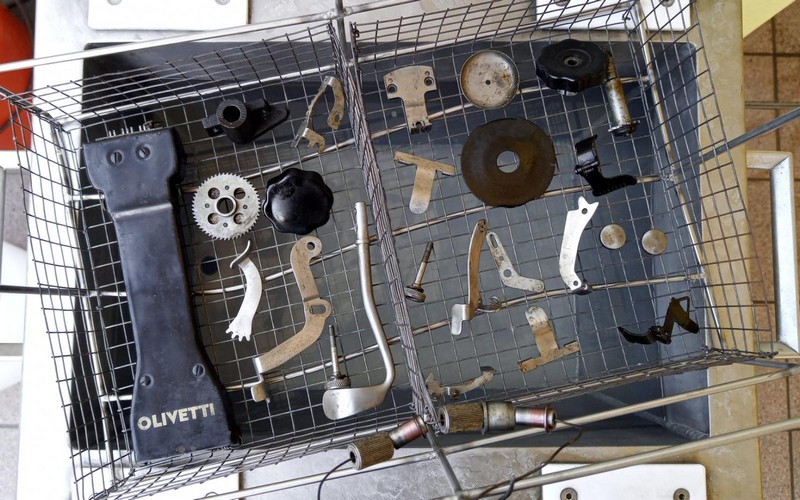
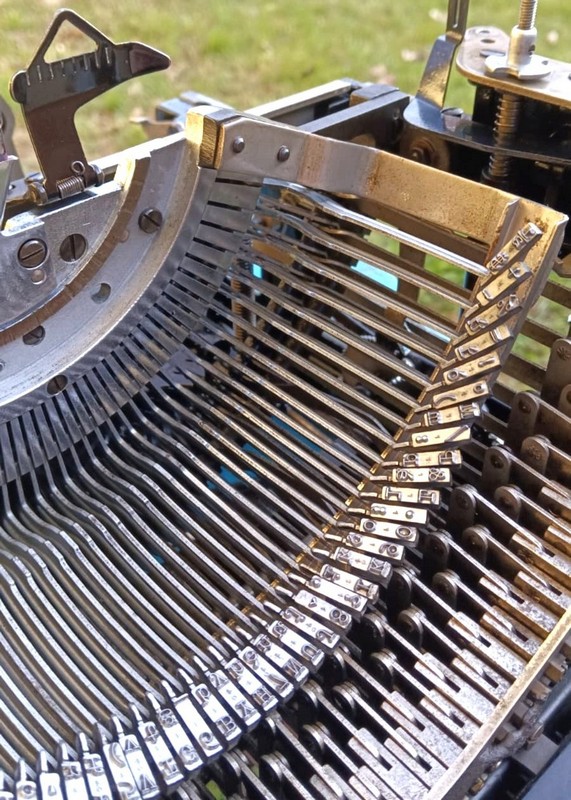
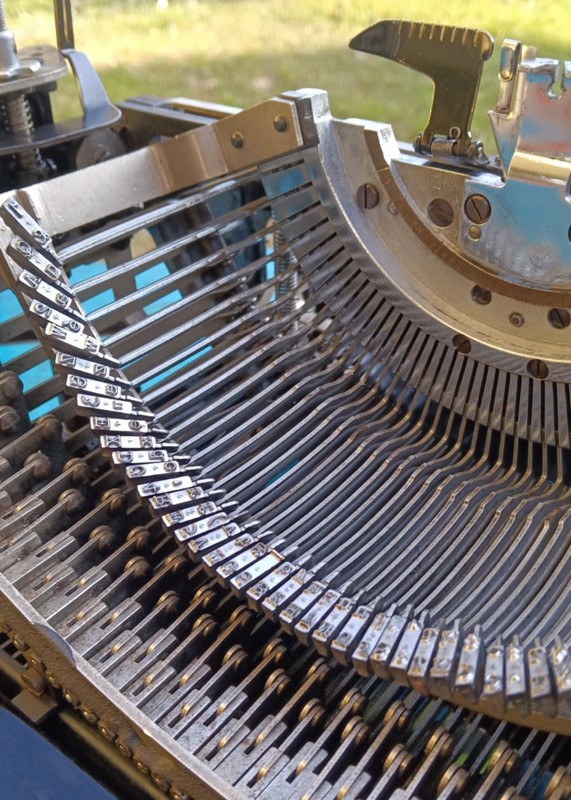
Typewriters are made primarily of metal: cast iron, steel and brass, with light alloys of aluminum and zinc being used more rarely. Cast-iron and light-alloy parts are generally painted, while steel and brass parts are nickel-plated or, in some cases, chrome-plated. Over time and with use, this thin layer of nickel or chrome, applied through electroplating processes, tends to deteriorate, peeling away or developing extensive and highly visible areas of oxidation.
A key step in the restoration process is therefore the removal of this oxidation. For this purpose, a jeweller's rotary tool fitted with specific Scotch-Brite abrasive wheels of various grades, progressively finer, is used. The parts are then hand-polished using fine abrasive polishing compounds. Finally, the parts are coated with a thin layer of clear protective coating, or re-plated with nickel or chrome, depending on the customer's preference and the type of restoration chosen.

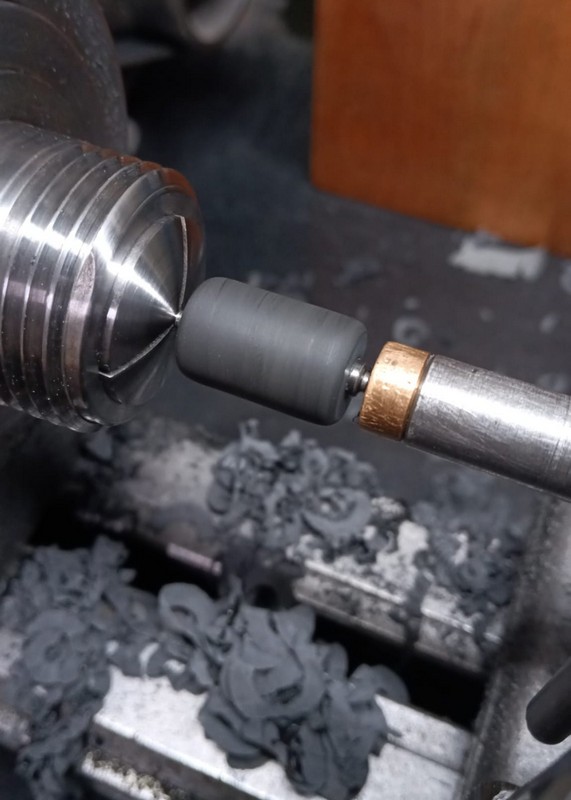
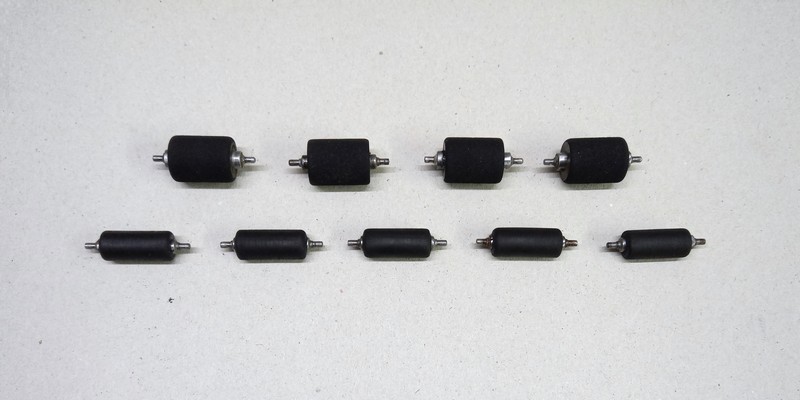
To restore an Olivetti M40 typewriter to perfect working condition, it is essential to rebuild the various rubber components, which over time tend to harden and eventually crumble completely. Feet, main platen, and both lower and front paper rollers—all must be renewed. Everything is made possible thanks to experience and specialized equipment. For more information, please visit this page.


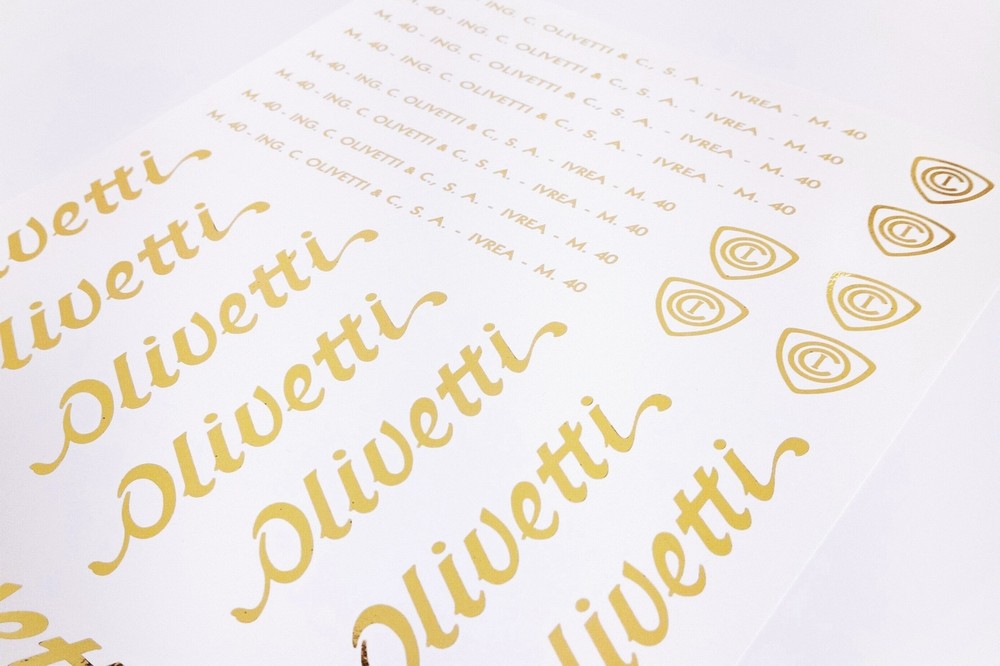
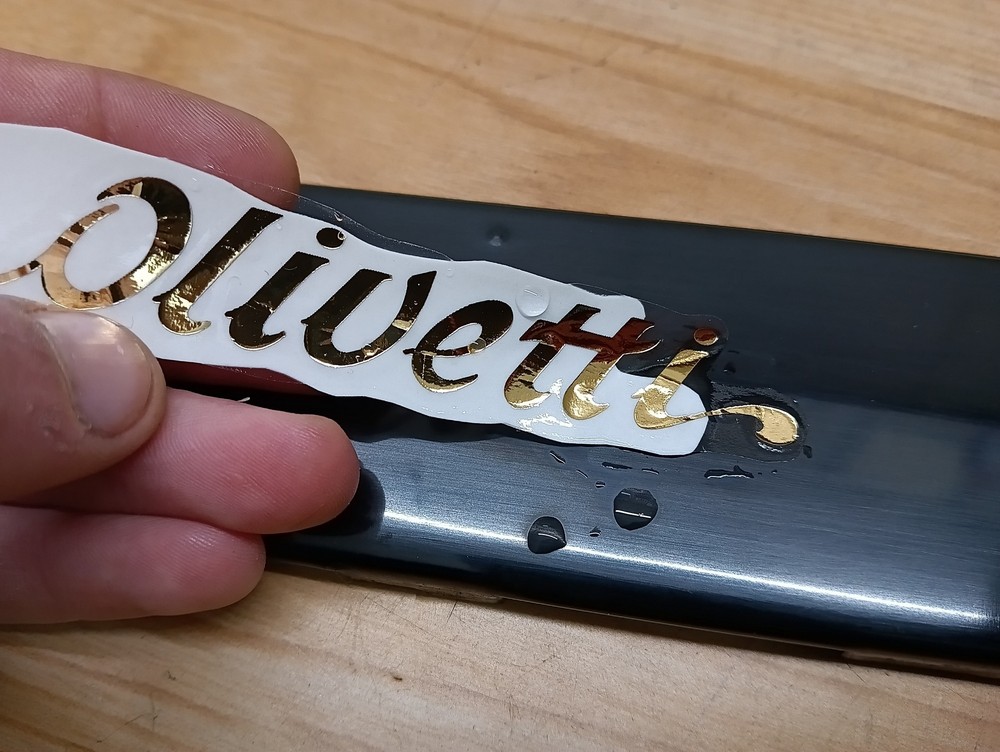
The gold decals consist of an elegant cursive inscription and two decorative emblems, all applied as water-slide decals. Their delicate nature requires careful restoration to preserve the original appearance and character of the machine.

At the end of the restoration, the typewriter undergoes a complete functional test. A final test certificate—typed on the machine itself, signed, and stamped—is issued as proof of successful inspection and completion of the service.

