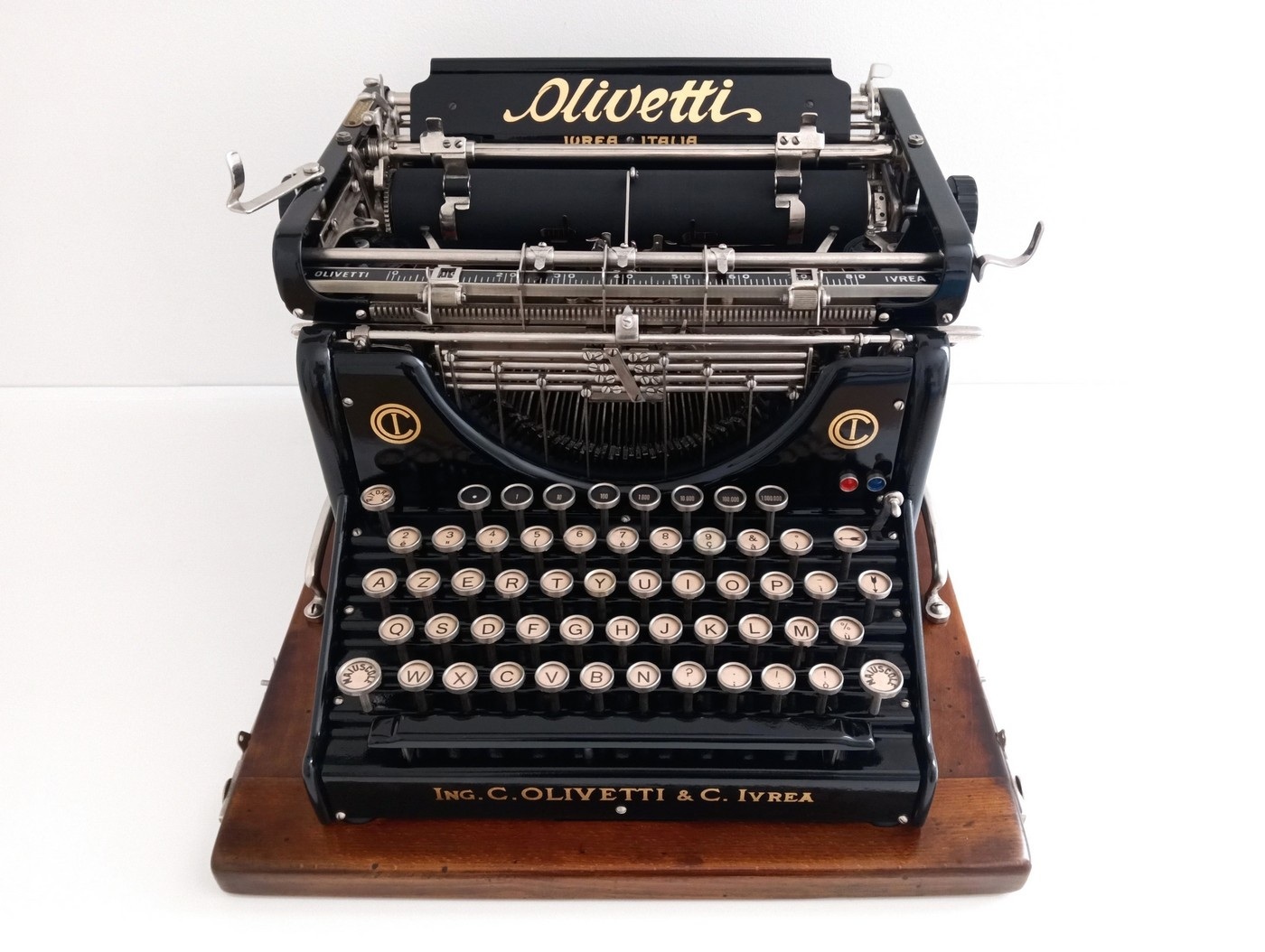


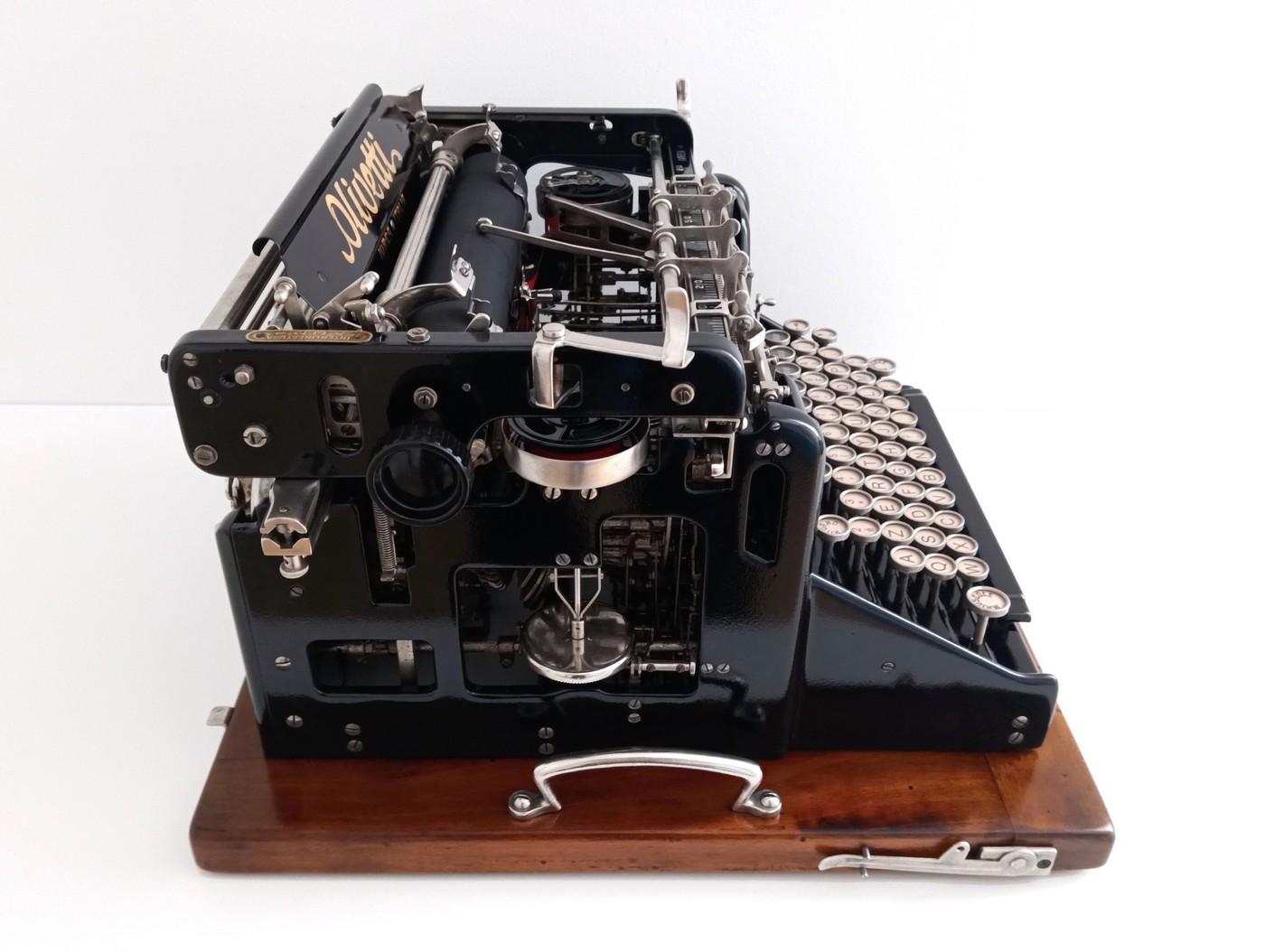





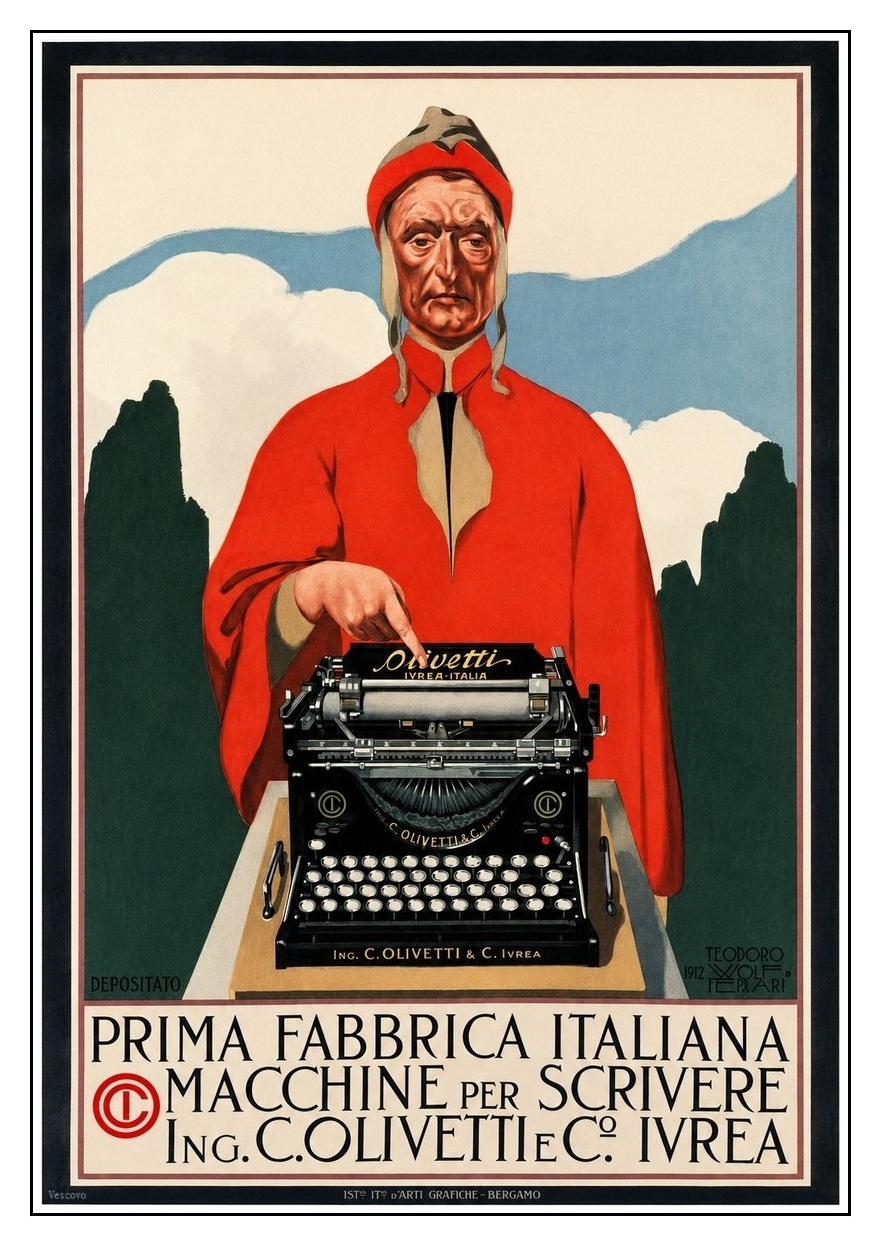
Olivetti M1 is the first typewriter produced by Olivetti. Its mechanism is among the most complex ever designed for a manual typewriter, if not the most complex of all. Engineer Camillo Olivetti adopted ingenious technical solutions in order to obtain exclusive patents and thus begin independent typewriter production in Italy. Alternatively, by using mechanically simpler (and cheaper) solutions, he would have had to pay royalties, since all the simpler mechanisms had already been patented by other manufacturers. Before Olivetti, in fact, a long series of modern and industrial visible-writing typewriters had already been patented and commercialized. To name only a few: the Underwood No. 1 in 1897, Underwood No. 5 and Ideal A1 in 1900, LC Smith in 1905, Royal in 1906, Mercedes in 1907, Remington No. 10 in 1908, and so on. It was only in 1911, on the occasion of the International Exhibition of Turin, that the Olivetti Model One was presented to the public.
 And so the M1 was born, featuring a kinematic system based on a rotary crank mechanism. The vertical force applied to each key is transformed into the rotation of shafts and amplified through three crank systems until it reaches the typebar. This complex mechanism could give the impression of tiring the user’s fingers, so each key was fitted with a spring suspension, effectively creating a damped mechanism that made typing smoother and more uniform.
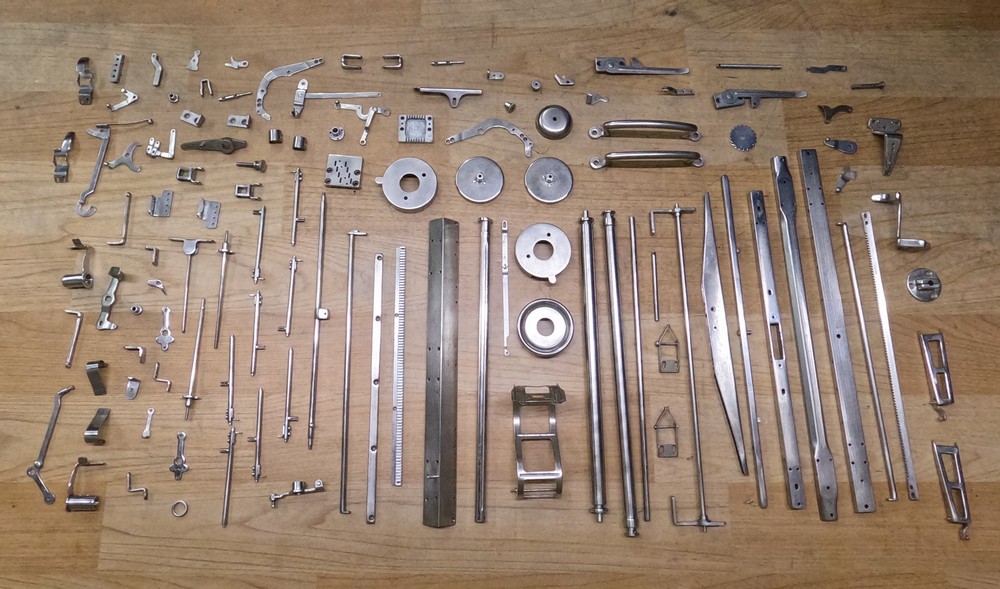
The escapement system, unique in its design, is indirect with respect to the typebars and is quadripartite. The escapement, as well as other moving parts, is mounted on custom-made free ball bearings. The carriage shift mechanism for capital letters is highly complex, and the ribbon color selector is no less sophisticated. The adjustment of all elements of the machine, from the most remote shaft to each individual typebar, is finely tunable. All these enormous mechanical complexities naturally led to a significant increase in the number of components that make up the Olivetti M1 typewriter, bringing the total to the astonishing figure of approximately 6,000 parts.
Before restoration, the machine was certainly far from being in pristine condition, as can be seen from the photographs below.

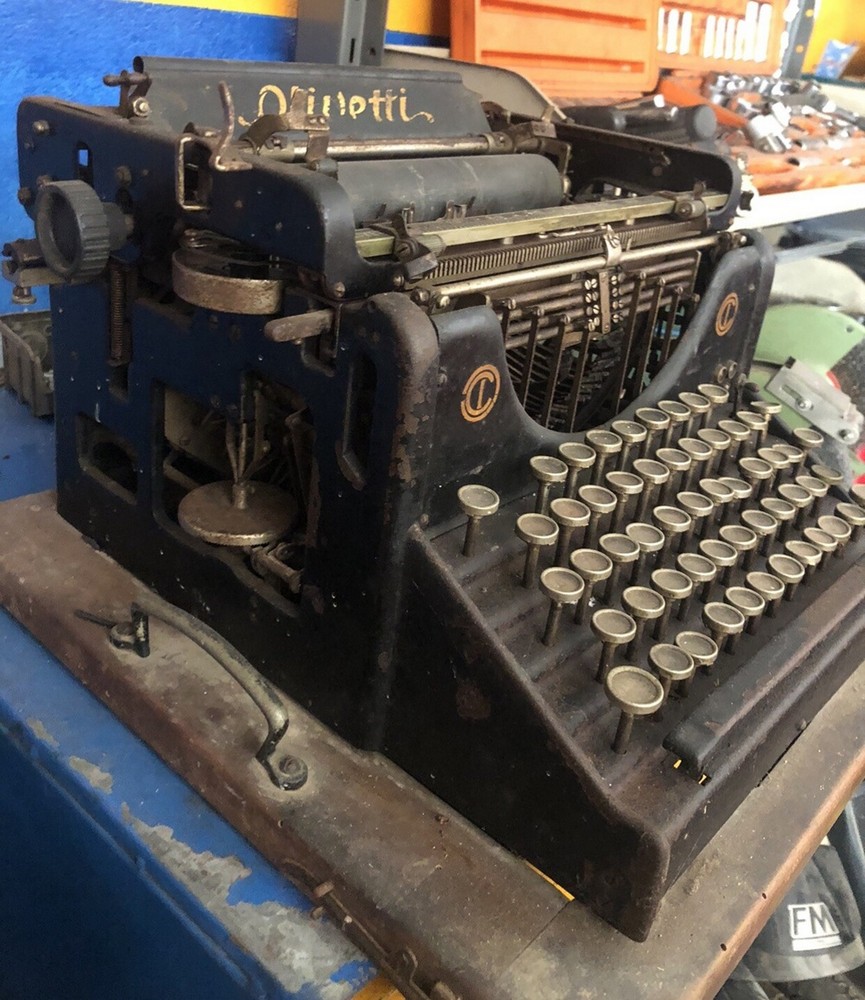
The paintwork on all the parts was partly missing and partly peeling, while all exposed nickel-plated components were heavily oxidized. Its fine solid-wood table was very dirty and infested with live woodworm. All the rubber suspension mounts supporting the machine on the table had deteriorated beyond use, while the rubber feet underneath the table were almost entirely gone. What remained had hardened, making their replacement particularly difficult. Mould had affected parts such as the table and the ribbon spools. The mechanism was covered in a thick crust of dried grease. On the positive side, this had protected the internal mechanisms from rust, but it clearly needed to be removed. A careful examination of these and other elements made it possible to determine the best course of action for the restoration.
A complete typewriter restoration begins with the disassembly of the machine, followed by thorough cleaning of all mechanical components, first in an ultrasonic bath and then with a petroleum-based solvent.

Once cleaned and dried, every component is carefully reassembled and the mechanism precisely lubricated to ensure smooth and reliable operation. The machine then undergoes comprehensive adjustment, including fine-tuning of the kinematics, ribbon lift, and upper- and lower-case alignment. Worn components, such as the ink ribbon, rubber grommets, carriage drawcord, and weakened springs, are replaced with new parts.

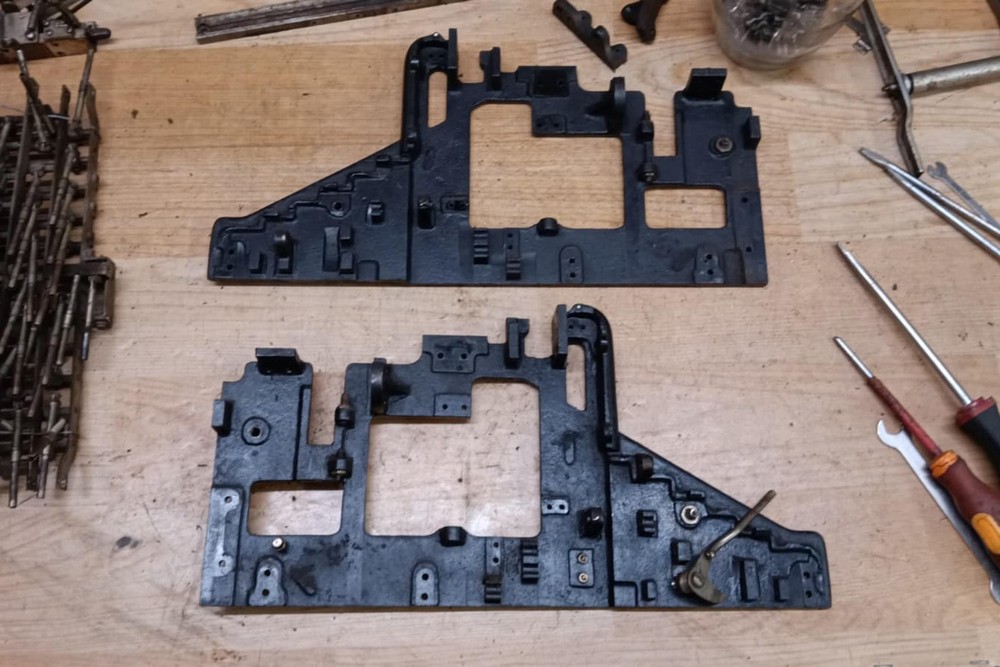


The original paintwork of this Olivetti M1 was in very poor condition. This is particularly common on the sheet-metal components: the two carriage side panels, the paper support, and the stepped support beneath the keyboard, all of which may require repainting. In such cases, sandblasting and professional repainting by our partner body shop are required. This also involves a considerable amount of additional work, as the carriage and keyboard must be completely disassembled and subsequently reassembled piece by piece.

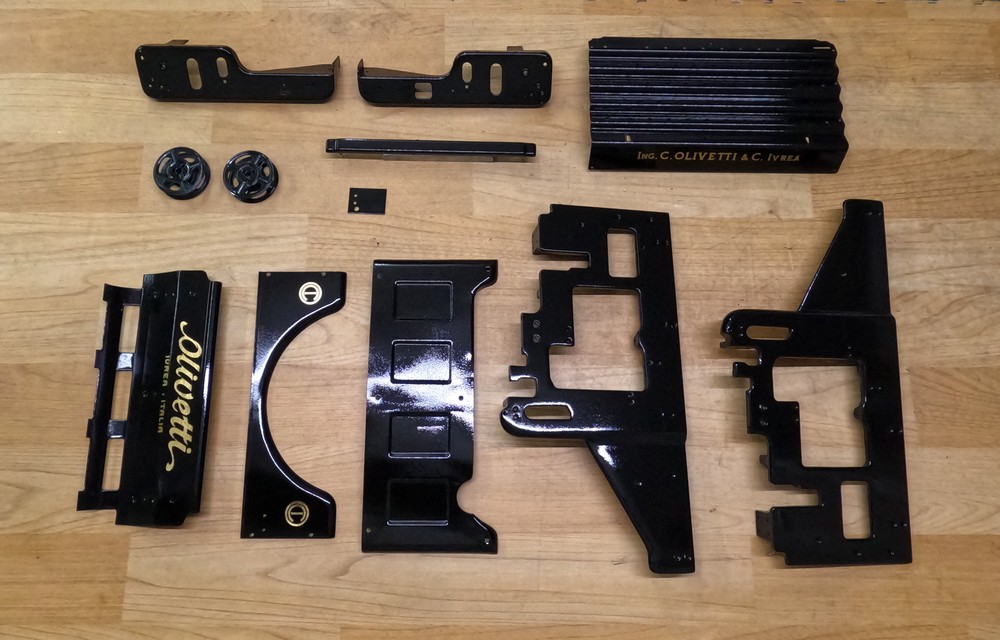
The gold decals consist of an elegant cursive inscription and two decorative emblems, all applied as water-slide decals. Their delicate nature requires careful restoration to preserve the original appearance and character of the machine.
Against stubborn dirt dried after fifty or more years of neglect, the classic combination of kerosene and a brush would achieve very little. I am referring specifically to dried correction fluid, eraser residue —sometimes melted by the heat of an attic—, hardened grease, deposits of sebum mixed with dead skin, and so on. The ultrasonic cleaning tank I use in my restorations was built by a specialized company and is specifically designed and custom-made for cleaning typewriters.


How does it work? The phenomenon involved is cavitation. The powerful waves generated by the sonotrodes are transmitted into the water, creating microbubbles at extremely high pressure that implode upon contact with the object. Using a simple solution of water and soap, a combined action is achieved: a physical high-frequency “micro-brushing” effect together with the degreasing action of the detergent dissolved in the bath. The result is excellent, with a low environmental impact when biodegradable soaps are used.
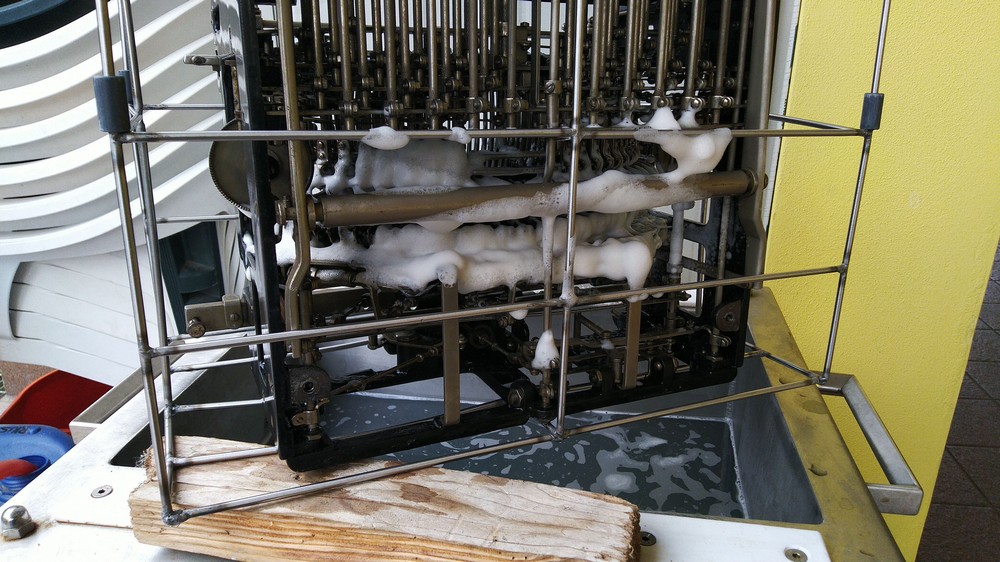
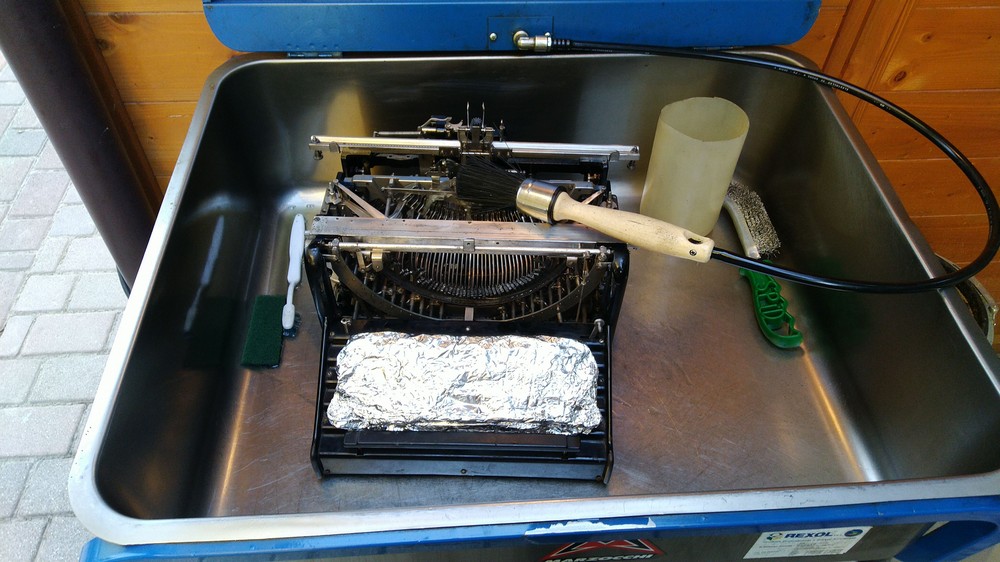
Typewriters are made primarily of metal: cast iron, steel and brass, with light alloys being used rarely. Cast-iron and light-alloy parts are generally painted, while steel and brass parts are nickel-plated. Over time and with use, this thin layer of nickel, applied through electroplating processes, tends to deteriorate, peeling away or developing extensive and highly visible areas of oxidation.
A key step in the restoration process is therefore the removal of this oxidation. For this purpose, a jeweller's rotary tool fitted with specific Scotch-Brite abrasive wheels of various grades, progressively finer, is used. The parts are then hand-polished using fine abrasive polishing compounds. Finally, the parts are re-plated with nickel.


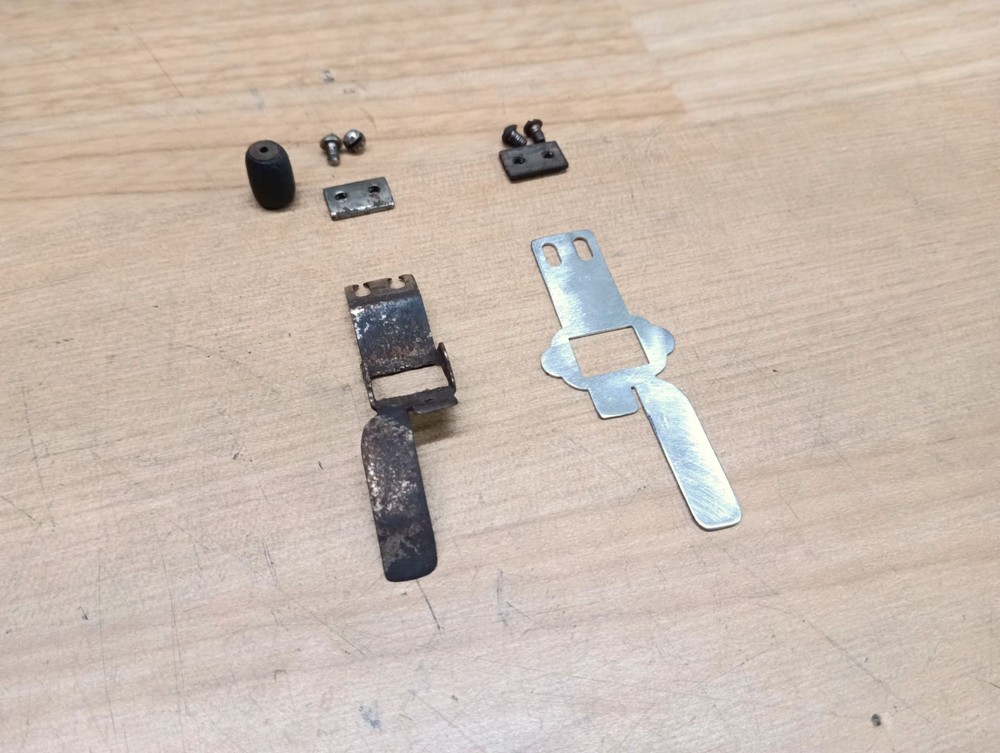
To restore an Olivetti M1 typewriter to perfect working condition, it is essential to rebuild the various rubber components, which over time tend to harden and eventually crumble completely. Feet, main platen, and both lower and front paper rollers—all must be renewed. Everything is made possible thanks to experience and specialized equipment. For more information, please visit this page.




The mainspring is dismantled and thoroughly cleaned before being inspected for wear, corrosion, and any signs of damage. It is then reassembled with fresh grease, ensuring consistent spring tension and smooth, reliable carriage movement.

At the end of the restoration, the typewriter undergoes a complete functional test. A final test certificate—typed on the machine itself, signed, and stamped—is issued as proof of successful inspection and completion of the service.
