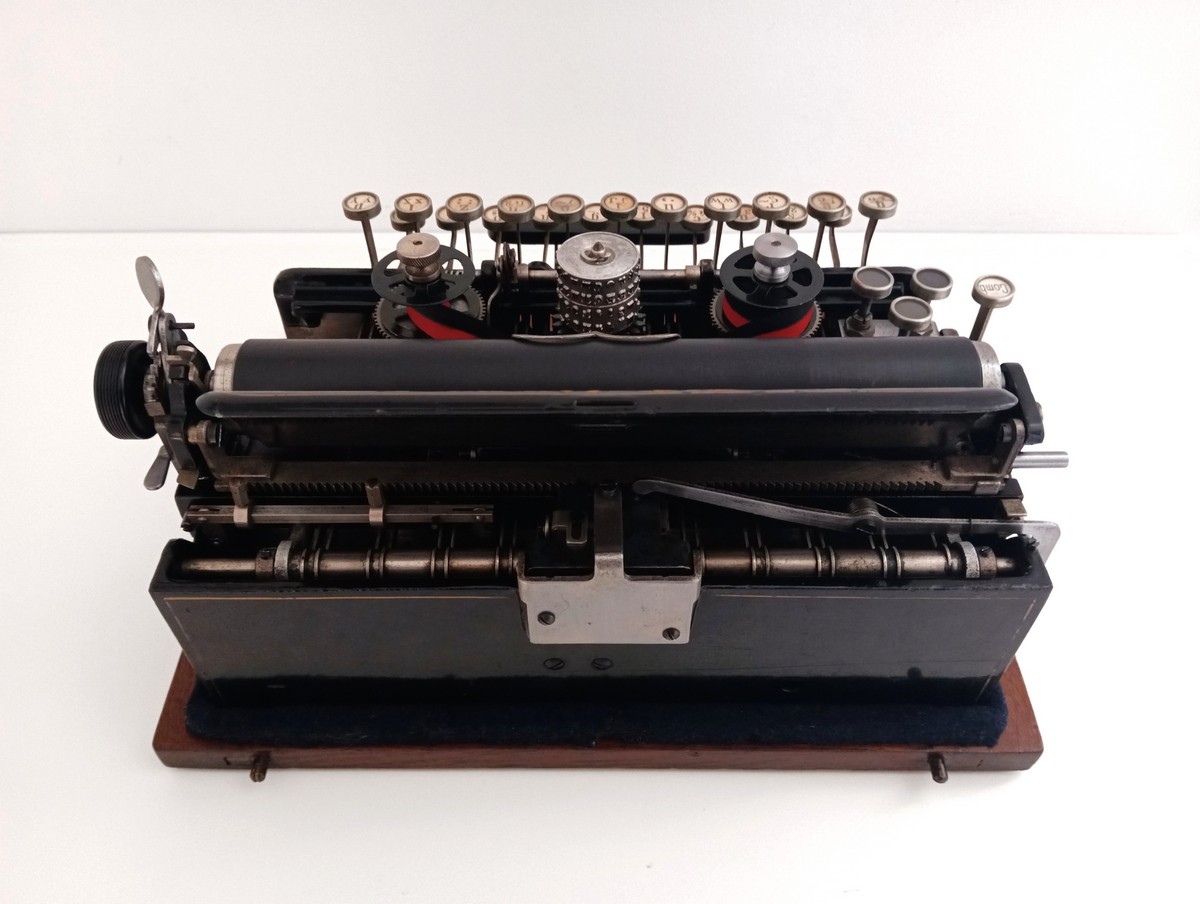
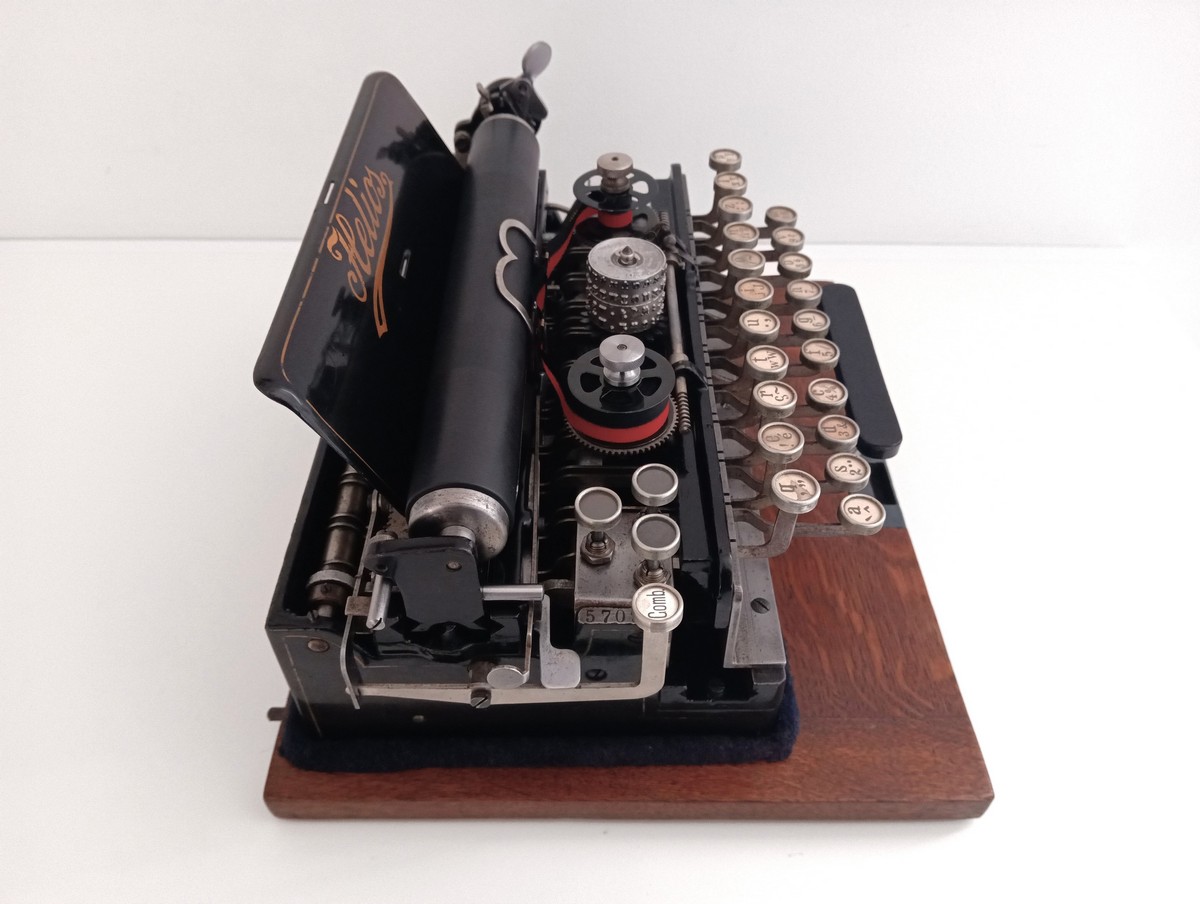



The Helios was invented by Justin Wilhelm Bamberger. This small German typewriter was initially sold in 1908 for 98 marks, which, adjusted for inflation, would correspond to about €686 today [Historical Currency Converter]. This price could be considered competitive compared to that of other typewriters of the same period.
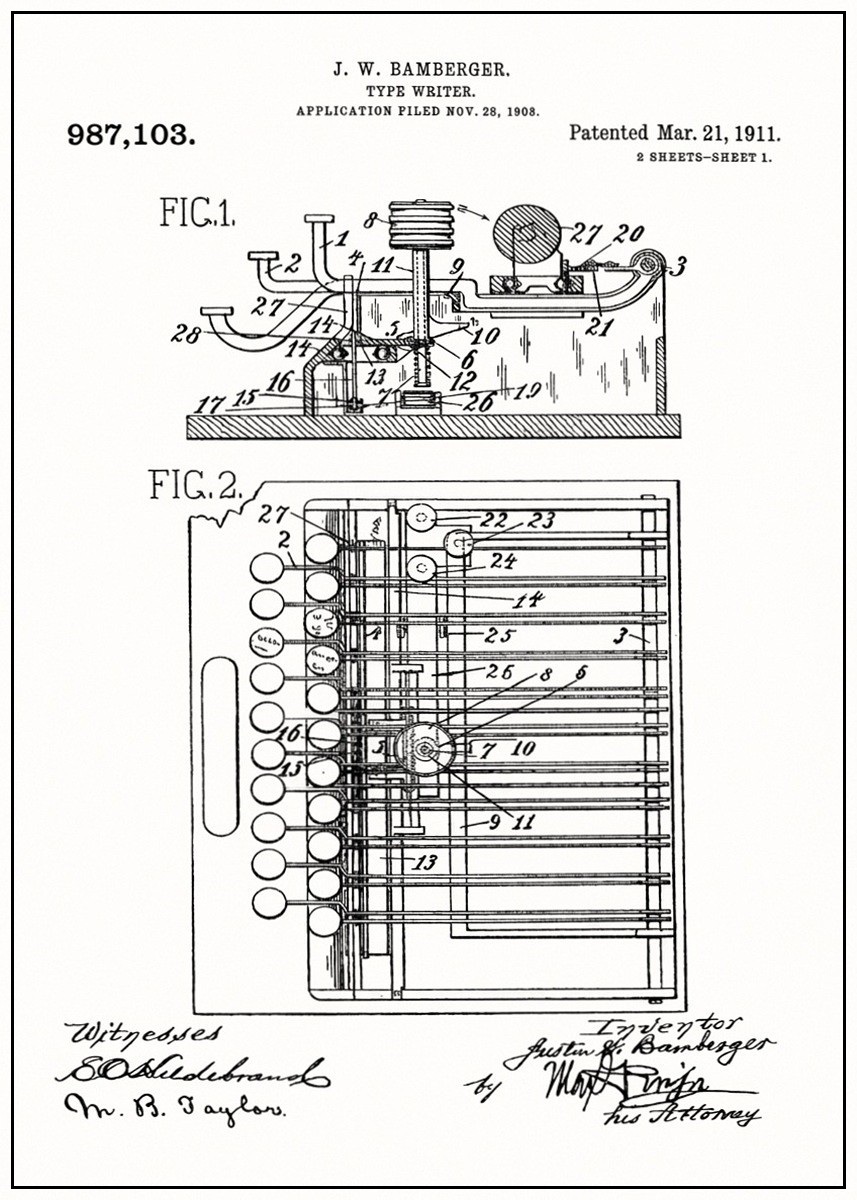
In the same year, Bamberger also filed a patent application in the United States of America, as confirmed by documents available on the American Patent Public Search portal. The patent was subsequently approved on March 21, 1911.
 Unfortunately, the first manufacturing company established by Bamberger failed almost immediately, so from 1909 to 1914 the Helios machines were produced by Kanzler Schreibmaschinen A.G. of Berlin and marketed by Bamberger through Helios-Schreibmaschine-Gesellschaft. The example whose restoration will be discussed in this article dates precisely from this period of production, as can be seen from the decal located beneath the keyboard. In 1914, both Kanzler and Bamberger closed down, and the rights to the Helios typewriter were taken over by A. Ney & Co., also based in Berlin. The company produced a slightly different version of the typewriter from 1914 to 1925 under the name Helios-Klimax. It differed from the original Helios by having redesigned body panels that offered better protection against dust. It was also easier to type capital letters with, thanks to the three capital-letter keys being aligned with the keyboard.
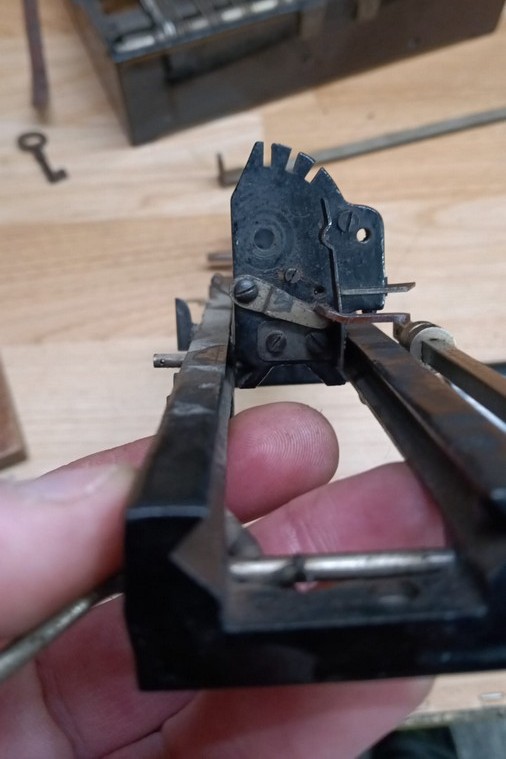
 The Helios is an extremely compact typewriter thanks to a number of ingenious technical solutions, including a keyboard with only two rows of keys. From these 21 keys, the user could access 84 characters by means of a four-level cylindrical aluminum type shuttle. The mechanism is minimalistic yet overall well engineered. The carriage runs on trapezoidal ball-bearing guides, while the rotation of the type shuttle is achieved through a unique mechanism that could be described as a “shark fin” system, clearly visible in the scans of Bamberger’s patent reproduced here. In practice, when the operator presses a key, the key lever engages with a small triangular metal piece (the “shark fin”) and moves it either to the right or to the left. All of these triangles are mounted on a ball-bearing rack guide, which in turn rotates the type shuttle to the right or left by the exact amount required to bring the desired character into position.
I would advise the fortunate owners of this unusual typewriter to use it only with a platen fitted with new rubber, since the aluminum characters of the type shuttle are extremely prone to damage when striking against hardened rubber.
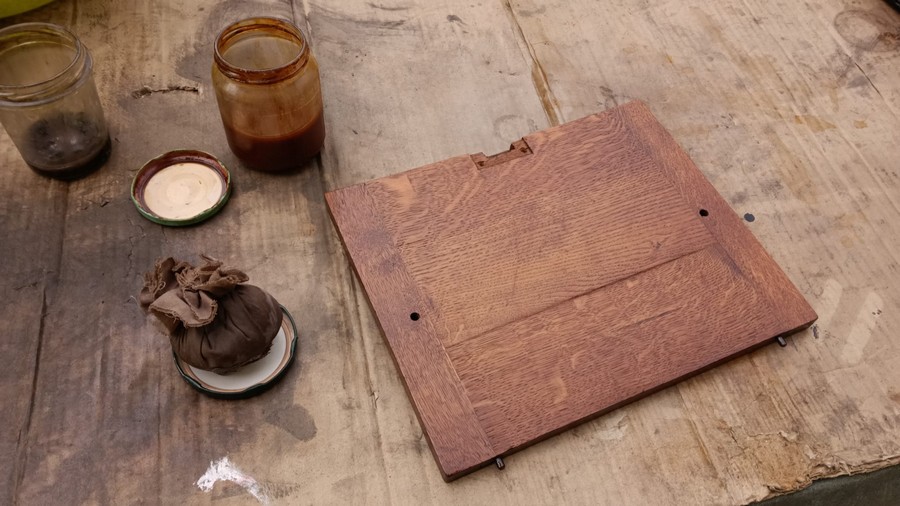
A complete restoration of a typewriter begins with the disassembly of the machine, followed by a thorough cleaning of all mechanical components, first using an ultrasonic bath and then rinse using a petroleum-based solvent.
Once cleaned, every component is carefully dried and reassembled, and then the internal mechanism is precisely lubricated to guarantee optimal performance. The mainspring is also dismantled, cleaned, and reassembled with fresh grease, ensuring consistent tension and smooth carriage movement.
The machine then undergoes a comprehensive adjustment process, including fine-tuning of the kinematics, ribbon lift, and upper/lower case alignment. Components subject to natural wear, such as the ink ribbon, rubber grommets, carriage drawcord, and any weakened springs, are replaced with new parts.


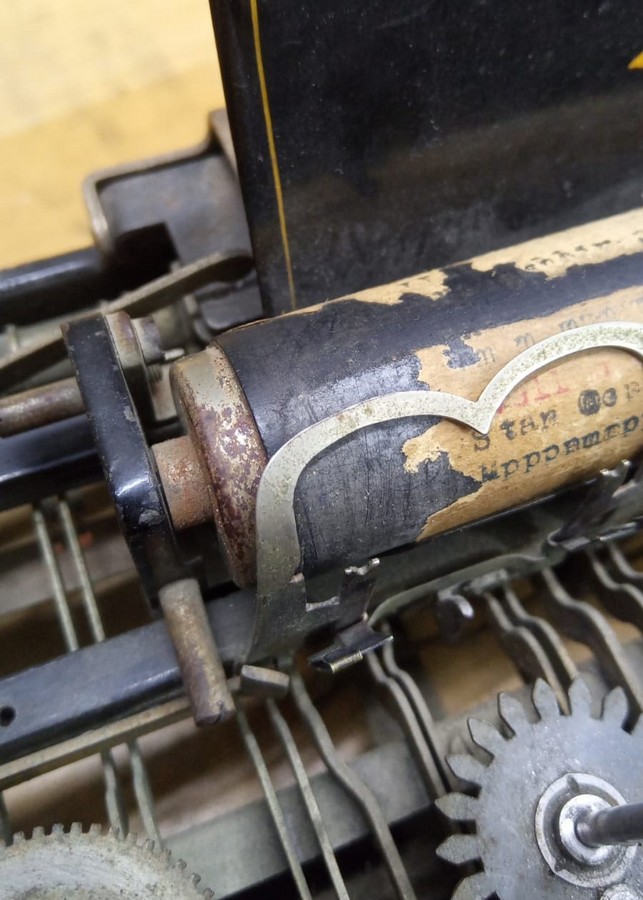
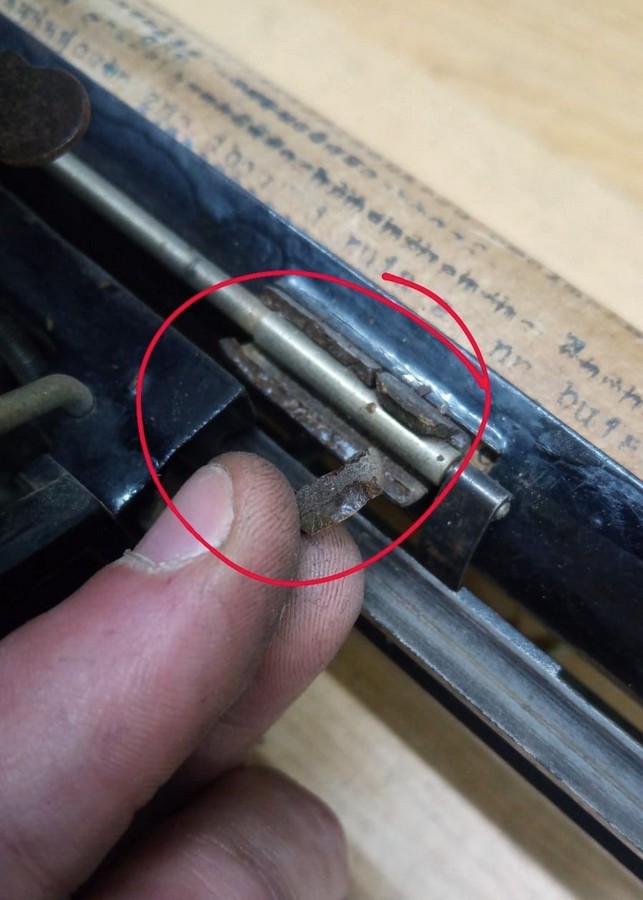


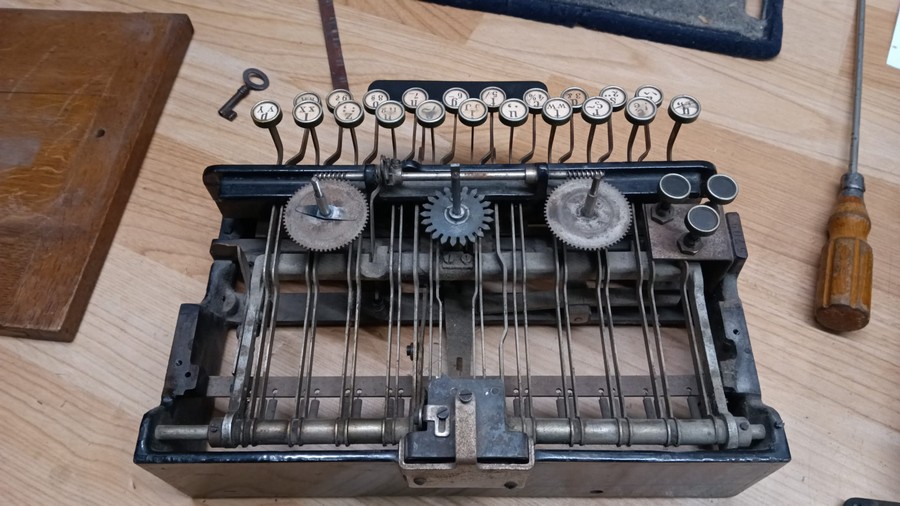
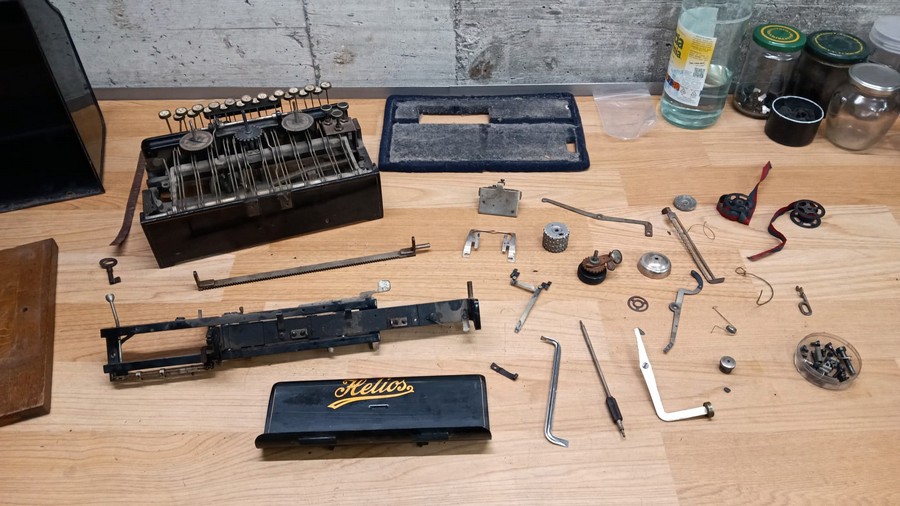

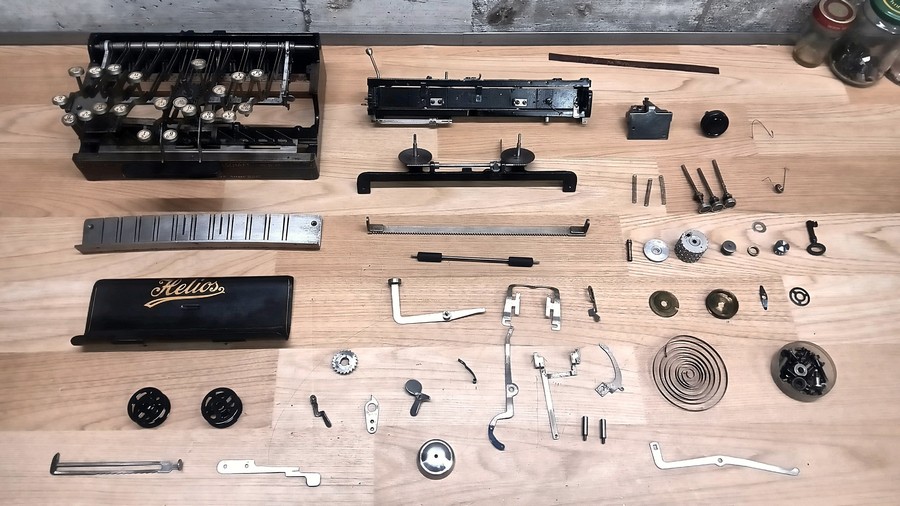

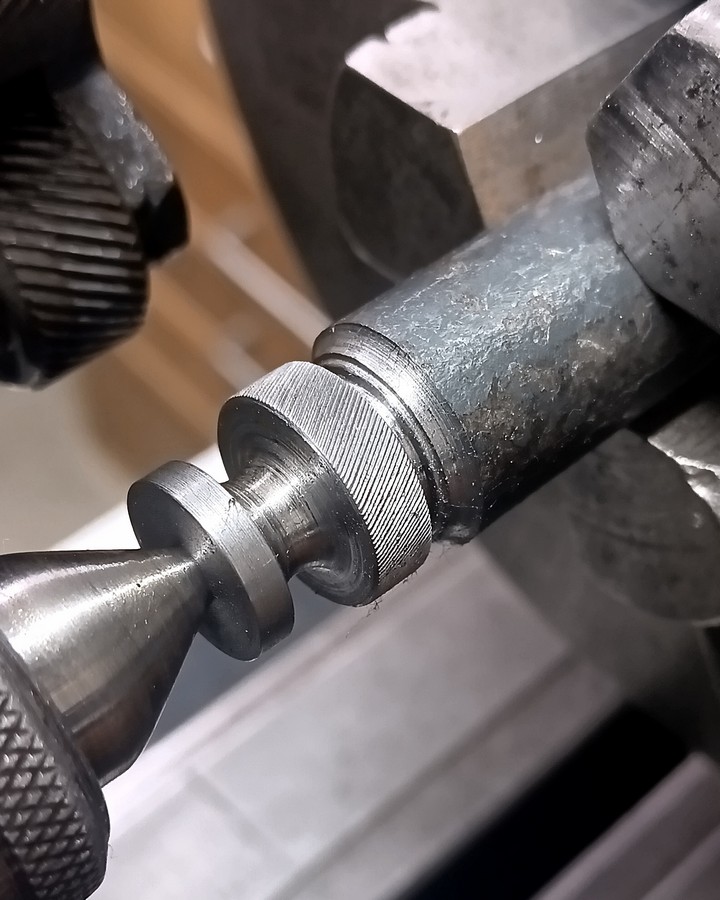

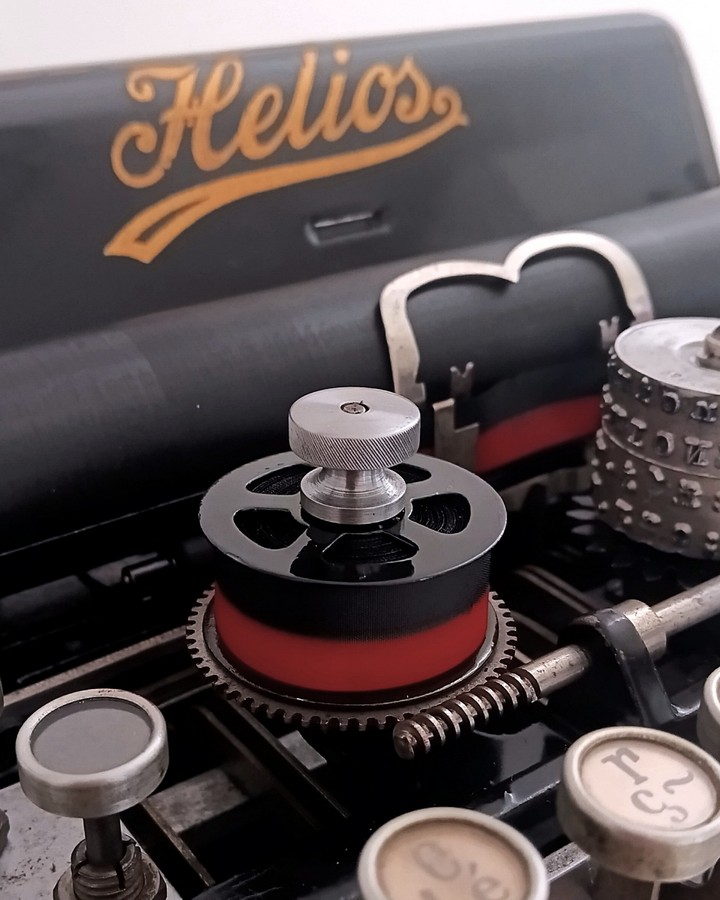
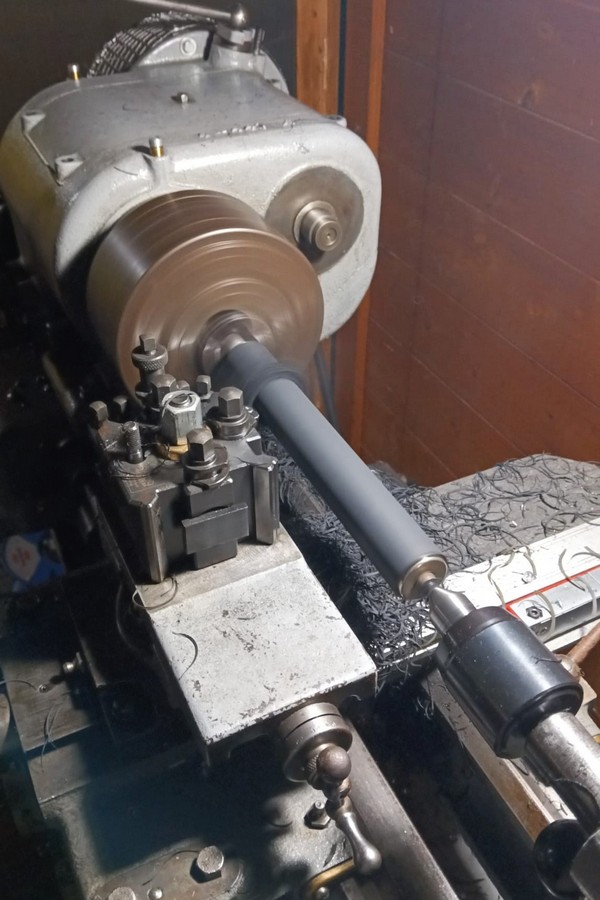
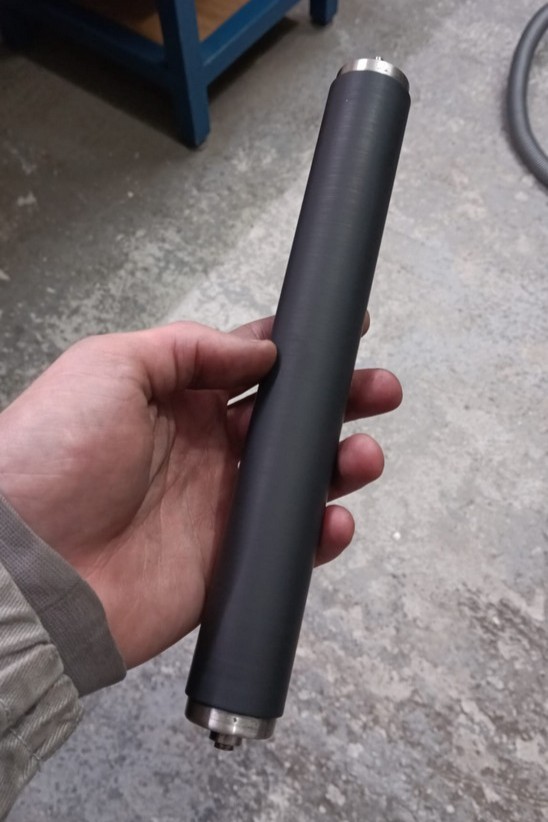
To restore a Helios Typewriter to perfect working condition, it is essential to rebuild the various rubber components, which over time tend to harden and eventually crumble completely. Feet, main platen, and both lower and front paper rollers—all must be renewed. Everything is made possible thanks to experience and specialized equipment. For more information, please visit this page.




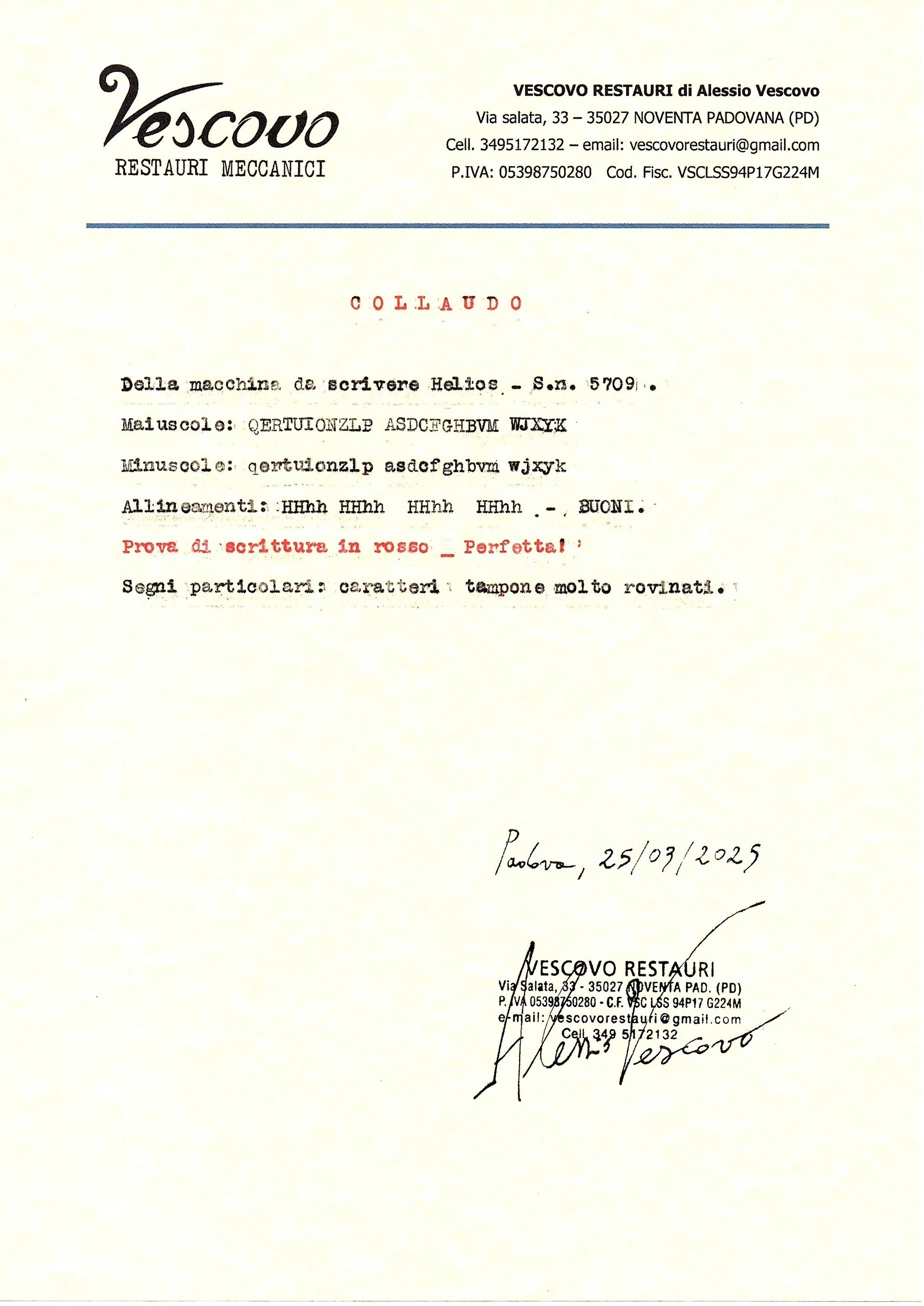
At the end of the restoration, the typewriter undergoes a complete functional test. A final test certificate—typed on the machine itself, signed, and stamped—is issued as proof of successful inspection and completion of the service.