


You can contact the company by filling out the form below. Vescovo Restauri will never send promotional emails or share your data with third parties. If you are writing to us about a typewriter restoration, we recommend first reading the Restoration section of this website: you will find answers to common questions, pricing information, and gain a clearer understanding of the services offered, helping you determine whether they meet your needs.
You can contact the company by filling out the form below. Vescovo Restauri will never send promotional emails or share your data with third parties.
If you are writing to us about a typewriter restoration, we recommend first reading the Restoration section of this website: you will find answers to common questions, pricing information, and gain a clearer understanding of the services offered, helping you determine whether they meet your needs.
Please note: due to the high demand, the current waiting list for restorations exceeds one year. Access is regulated, and detailed scheduling information will be provided together with the estimate. All services featured on this website are currently offered exclusively to clients within the European Union.
Vescovo Restauri by Alessio Vescovo
Via Salata, 33 – 35027
Noventa Padovana (PD), Italy.
Opening hours: Monday to Friday
9:00 AM – 7:00 PM
Please note: visits by appointment only.
Location of the laboratory: Vescovo Restauri is located in Noventa Padovana, Italy, in an area rich in historic Venetian villas dating from the 15th to 18th centuries (1400–1700 AD). It’s very close to the city of Padua and only 40 minutes from Venice. For this reason, international customers often send their unrestored typewriters by post and later take it home by hand once restored—enjoying the pleasure of a memorable journey through authentic Italy. Curious to discover the most beautiful treasures of this area? Let’s explore them!

Villa Pisani National Museum: Known as the “Queen of Venetian Villas,” Villa Pisani is one of the Veneto region’s top tourist attractions. Located along the enchanting Brenta Riviera, just two minutes from our laboratory, this majestic residence of the noble Pisani family has welcomed doges, kings, and emperors. Today it is a national museum, preserving 18th- and 19th-century furnishings and artworks, including Giovanni Battista Tiepolo’s masterpiece, Glory of the Pisani Family, painted on the ceiling of the ballroom. The park still amazes visitors with its scenic views and unique architectural features from the Coffee House to the the famous hedge labyrinth, one of the largest in Europe. The greenhouses host an exquisite collection of citrus trees and orangerie plants, offering “everything that delights the eyes and satisfies the senses,” as Almorò Pisani proudly claimed.

Astronomical Clock of Padua: In the heart of Piazza dei Signori stands one of Padua’s most fascinating historical treasures; more than a simple timepiece, it represents the culmination of the knowledge of the universe and mechanics possessed in fourteenth-century Padua—a golden age for the city. For those who know how to read it, the clock reveals not only the passing of the hours but also the phases of the Moon and the positions of the planets. The original mechanism was designed by Jacopo Dondi, a physician and astronomer who received the commission from the Prince of Padua. His creation in 1344 would have been about a century older than the world’s oldest surviving astronomical clock, the famous Prague Astronomical Clock, built in 1410. Unfortunately, Dondi’s original clock was destroyed in 1390 during fires and wartime events. The clock we see today was reconstructed about fifty years later, in 1437 faithfully following the original design, when Padua was under the rule of the Republic of Venice. Even in its rebuilt form, it remains a remarkable testament to the scientific curiosity and ingenuity that flourished in medieval Padua. An interesting detail: the Venetians considered it such a marvel that a few decades later they built a similar astronomical clock in St. Mark's Square, in the heart of Venice—a masterpiece that still exists today.

Tractatus Astrarii Manuscript and Astrarium: Giovanni Dondi, son of Jacopo Dondi, began working in 1365 on a machine that would surpass his father’s remarkable clock. His research is preserved in the Tractatus Astrarii, one of the most important medieval manuscripts on applied mechanics. Dated around 1370, it is about 200 pages long and contains the complete design of a complex geared machine known as the Astrarium. Compared to his father’s clock, this machine was much more advanced: it featured seven main dials, which, through a complex system of gears, indicated the positions in the zodiac of the seven “planets” recognized at the time: the Sun, the Moon, Mercury, Venus, Mars, Jupiter, and Saturn. In addition to the planetary positions, the Astrarium displayed the calendar and religious feasts. It could also predict eclipses by calculating the points where the Moon’s orbit intersected the ecliptic, known as the “Dragon’s Head” and “Dragon’s Tail.” It is known for certain that at least one working machine was built in the late fourteenth century. Acquired by Gian Galeazzo Visconti, it was placed in the castle library of Pavia. Later, it passed into the hands of the Sforza court in Milan, where it was admired and used by court astrologers, reflecting the strong connection at the time between astronomy, astrology, and medicine. This was the last known record of the object's location, after which it disappeared.
 The original Tractatus Astrarii manuscript is preserved at the Biblioteca Capitolare di Padova. Thanks to its detailed 200-page explanations, historians of science and master clockmakers were able, during the twentieth century, to reconstruct several working models—now preserved in museums around the world, including one in Padua Palazzo del Bo. These reconstructions allow modern audiences to appreciate the ingenuity of a machine that once amazed visitors across Europe. The Astrarium was not only a masterpiece of medieval engineering but also a symbol of the intellectual culture of its time. Through the Tractatus Astrarii, Giovanni Dondi left an enduring legacy: a detailed record of a mechanical universe in which science, craftsmanship, and philosophical inquiry were united in a single extraordinary instrument.

Scrovegni Chapel: The Scrovegni Chapel, is one of the greatest masterpieces of the Italian painter Giotto, completed in 1305. Located in Padua, the small chapel is entirely covered with a cycle of frescoes centered on the theme of salvation, culminating in the famous dramatic Last Judgment on the entrance wall. With these paintings, Giotto introduced a new sense of realism, emotion, and human expression. His vivid colors, lifelike figures, and powerful storytelling make the chapel a milestone in the history of art and a key step toward the Renaissance. For many art experts around the world, this extraordinary fresco cycle is considered comparable only to the Sistine Chapel in Rome, painted by Michelangelo more than two centuries later. During World War II, the chapel narrowly escaped destruction. Allied bombings struck the surrounding area, and one bomb fell only a few dozen meters away. Miraculously, the chapel survived intact, preserving Giotto’s extraordinary frescoes for future generations. Today it remains one of Padua’s most precious treasures and an unforgettable experience for visitors from around the world.
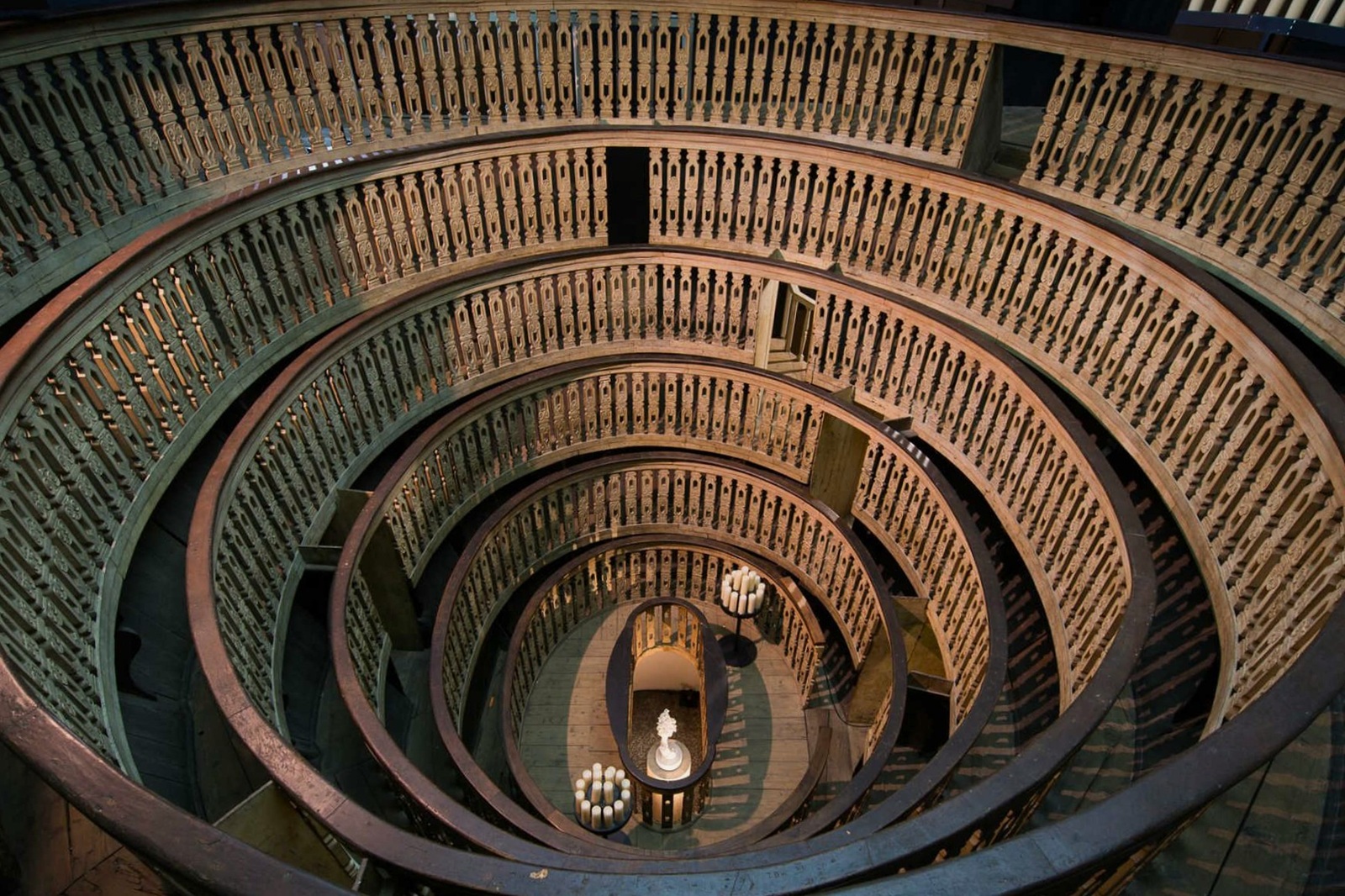
Anatomical Theatre: The Anatomical Theatre of Padua, built in 1594 within the Palazzo del Bo, the historical seat of the University, is the oldest permanent anatomical theatre in the world and a symbol of Renaissance scientific innovation. Its wooden tiers, arranged in concentric circles, and the central dissection table once welcomed students eager to learn directly from human anatomy, breaking with centuries of tradition that relied solely on ancient texts. Padua became an international centre of medical and scientific study not only because of its university but also due to its unique political context. For centuries the city was part of Republic of Venice, a state where scientists enjoyed an unusual degree of freedom. Unlike much of Europe, where the Holy Inquisition could act independently to arrest and punish thinkers, in Venice the Inquisition needed explicit approval from the secular government to make an arrest. This protection made Padua one of the rare places where researchers could pursue cutting‑edge ideas without fear of persecution or, in the worst case, of being burned alive for accused of heresy.
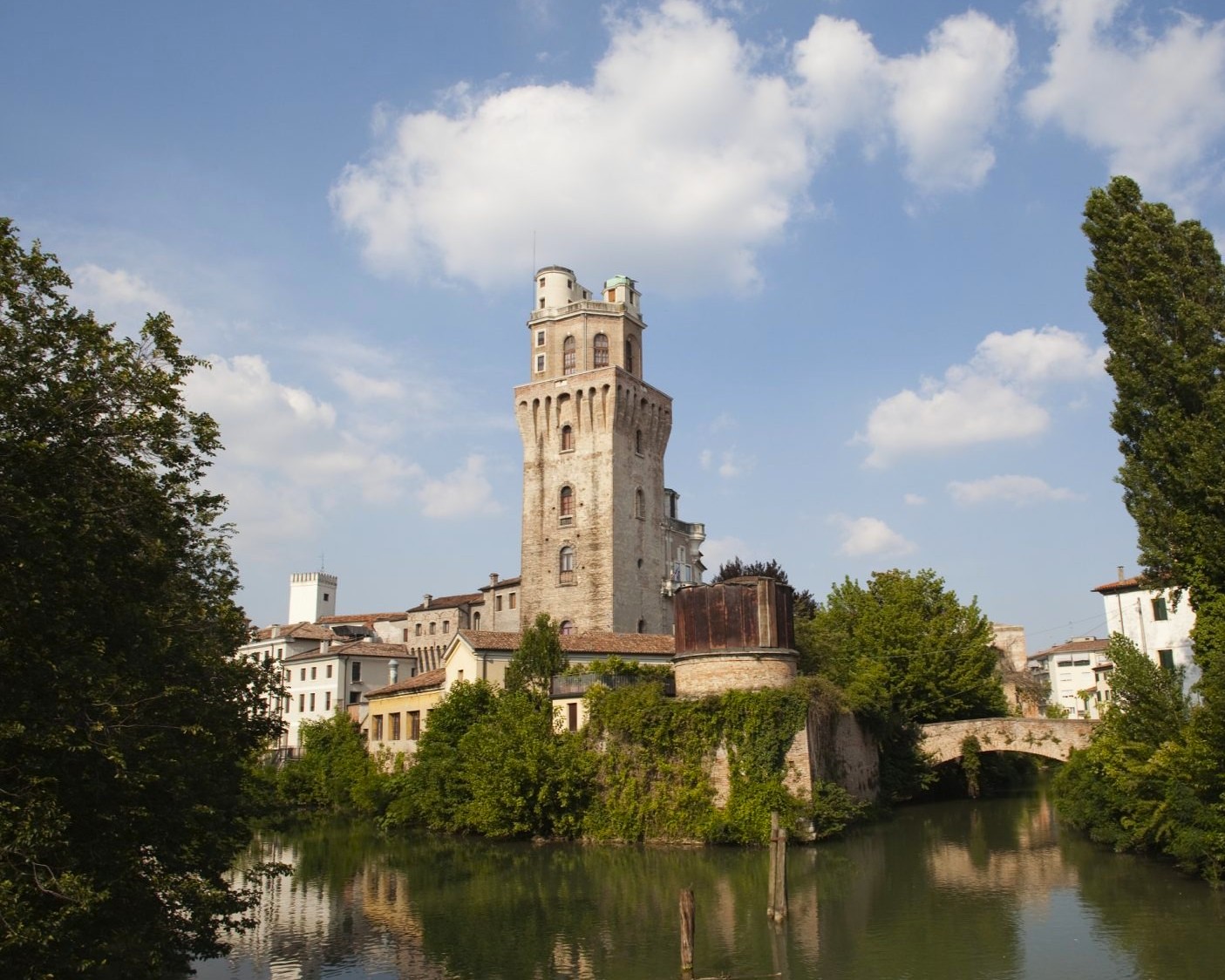
Galileo's Tower: Among the many brilliant minds drawn to Padua was Galileo Galilei, born in Pisa in 1564 and today celebrated worldwide as a father of modern science. He was appointed to the chair of mathematics and physics at the University of Padua from 1592 to 1610. He described those 18 years as “the best of his life”, a period of intense creativity and discovery when he developed foundational ideas in physics and astronomy and helped advance the scientific method, earning international recognition that still endures today. During his years in Padua, Galileo was denounced several times to the Holy Inquisition because of his revolutionary research. However, the Venetian government never granted permission to arrest him, reflecting the unusual degree of intellectual freedom that characterized the city. Eventually, Galileo accepted an invitation from the wealthy Medici family in Florence, which promised him financial support and protection. There, he wrote his most famous book, Dialogo sopra i due massimi sistemi, advocating the heliocentric model. This work nearly cost him his life, as it led to his trial and forced abjuration before the Inquisition. The Medici could not offer the same level of scientific freedom that he had enjoyed in Padua—a reminder of how unique the city’s environment had been.
Nowadays, visitors of all these historical sites can still sense the dynamic atmosphere of the Renaissance, where freedom of thought, daring investigations, and a spirit of curiosity—so brilliantly fostered and organized within the universities—made Padua a leading center of research and innovation, contributing significantly to the development of science as we know it today.
Photo Credits:
Museo Nazionale di Villa Pisani, Zairon, Biblioteca Capitolare di Padova, Museo Nazionale Leonardo da Vinci, Musei Civici di Padova, Università degli Studi di Padova.